Better late than never?!
During the four years we lived in Seoul, were able to visit with our dear friends Alex and Laura Hanson in Asia. They first joined us in Seoul before heading to Hong Kong for Alex’s annual business trip. The following year, we decided to meet in Vietnam, a relatively close destination that appealed to all of us and with the help of the travel team at Crossing-A Travel Company we snuck in a great long weekend together. While Vietnam is only 4 1/2 hours from Seoul, it was quite a jump for the Hansons, but given their boundless curiosity and tireless energy, we knew they would rally to overcome the jet lag and relish the opportunity to explore Vietnam’s culture, sites and food.
Vietnam offers many unique and appealing destinations, but our time was limited so we chose to visit the capital city of Hanoi and nearby Halong Bay, recognized repeatedly by UNESCO as one of the world’s natural wonders. Conveniently, our flights landed within 30 mins of each other and we were quickly met by Sam, a local guide who took us to a few of Hanoi’s highlights and lunch before we could check into our hotel.
We visited the heart of Hanoi and Ba Dinh Square where in 1945 Ho Chi Minh, considered the father of Vietnam, gave his famous speech announcing the birth of the Democratic Republic of Vietnam and independence from France. Today, the large Parlimentary building is located on the lawn where Ho Chi Minh made this important proclamation so it was only fitting that following his death in 1969, a maosoleum was constructed nearby in his honor. Although the public has been granted access to the mausoleum to view this iconic leader’s embalmed body, we arrived too late (SHOOT!) to wait in line with the many, many visitors who come to pay their respects daily. The square reminded us of the Red Square in Beijing and was modeled after Lenin’s mausoleum.


As we drove around Hanoi with Sam he gave us some “fast facts”: Vietnam’s current population is 94 million people, two thirds of whom live very modestly, though this has recently improved considerably. Certainly Hanoi and Ho Chi Minh are modern cities and the vast investment in infrastructure was visible as we toured around. Even though there are 54 indigenous tribes with the country, 90% of the people belong to the Kinh tribe and speak Vietnamese. The capital city of Hanoi is located on the eastern banks of northern Vietnam’s largest river, the Red River, a 500 mile long waterway which flows from China down to the Gulf of Tonkin. The Red River is aptly named for the reddish cast of its silt-rich waters. Unlike the Mekong Delta in the southern part of the country, however, the Red River is not a source of livelihood for the surrounding residents and is rarely fished at all these days. Sam attributes the demise of aquaculture to China’s heavy of use of agricultural pesticides and subsequent runoff of poisons into the river. The river’s fish population has also decreased due to the electric shock method of fishing which kills many more fish than traditional methods, including ones far too small to eat/sell. China has also built several large dams on the Red River north of Hanoi such that the Red River doesn’t flood anymore during the rainy season. Sadly, this is not the first time we’ve heard about the damaging effects of China’s policies on the environment and it reminded us of similar stories related to us by our guide in Laos.
Although a recent census has not been conducted, Sam tossed out the fact that today, Hanoi is a city of 8 million people and 6 million motorbikes. Ho Chi Minh, nearly 1,000 miles south of Hanoi, is much more populous (20 million people and even more motorbikes according to Sam) because after the war, many northern Vietnamese people were allowed to flee south and very few chose to remain in the north. The masses of motorbikes, often carrying multiple passengers and/or piles of goods, were quite a new site for the Hansons, but one to which we’ve grown quite accustomed in our travels in S.E. Asia. Many riders were wearing masks for respiratory reasons but the air quality was good and there wasn’t nearly the amount of motorbike beeping we’ve heard in other cities, including Ho Chi Minh.
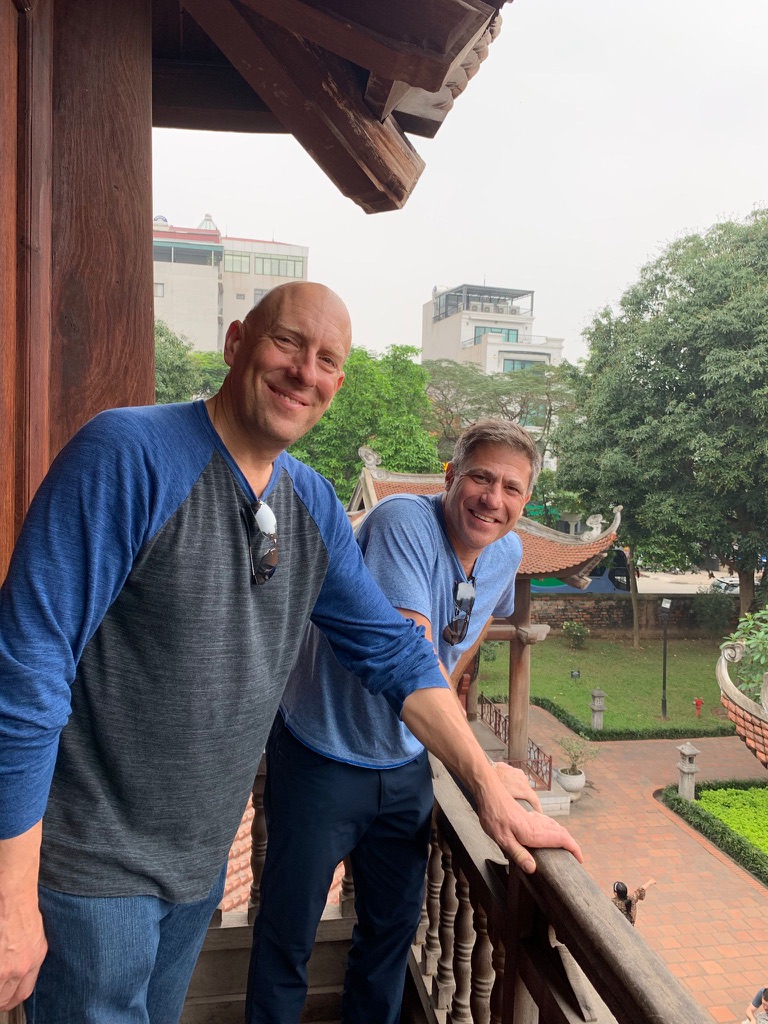
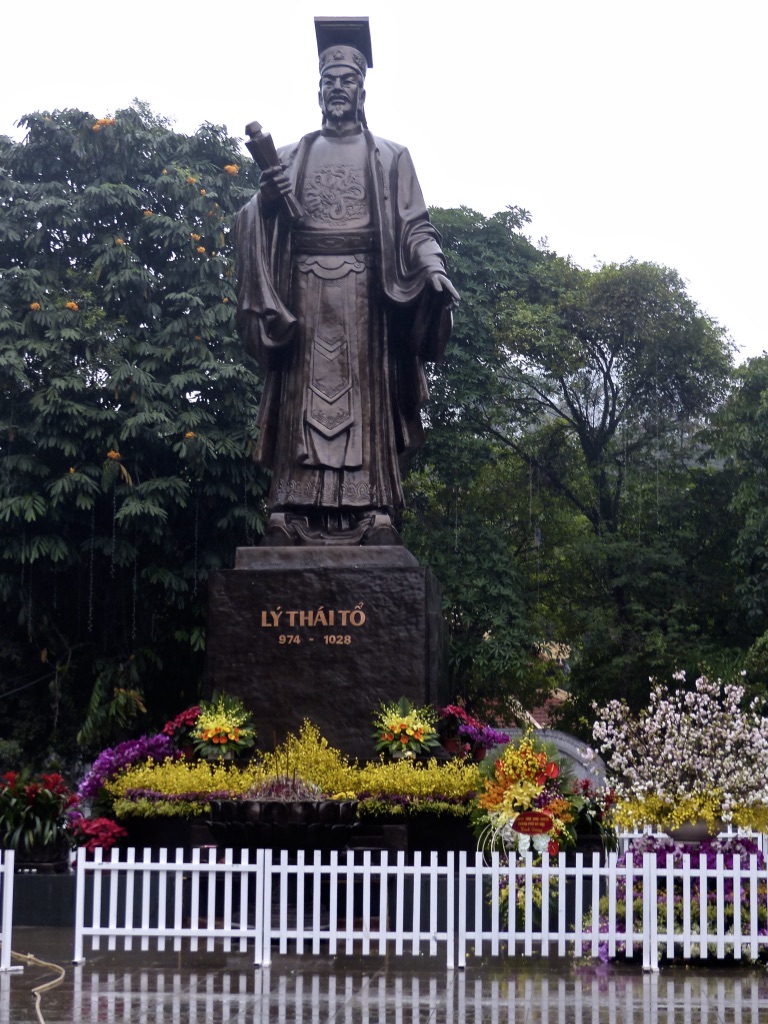
We toured Quoc Tu Giam, the Temple of Literature, one of Hanoi’s most famous Confucius temples. It was built in 1070 by Emporer Ly Thai To, the famous Emporer who successfully defended Vietnam from numerous Chinese invasions. On the grounds of this temple, he also established Vietnam’s first national university, the Imperial Academy, and thus it is still today an important site where students visit and/or commemorate graduation, like the ones lined up below. 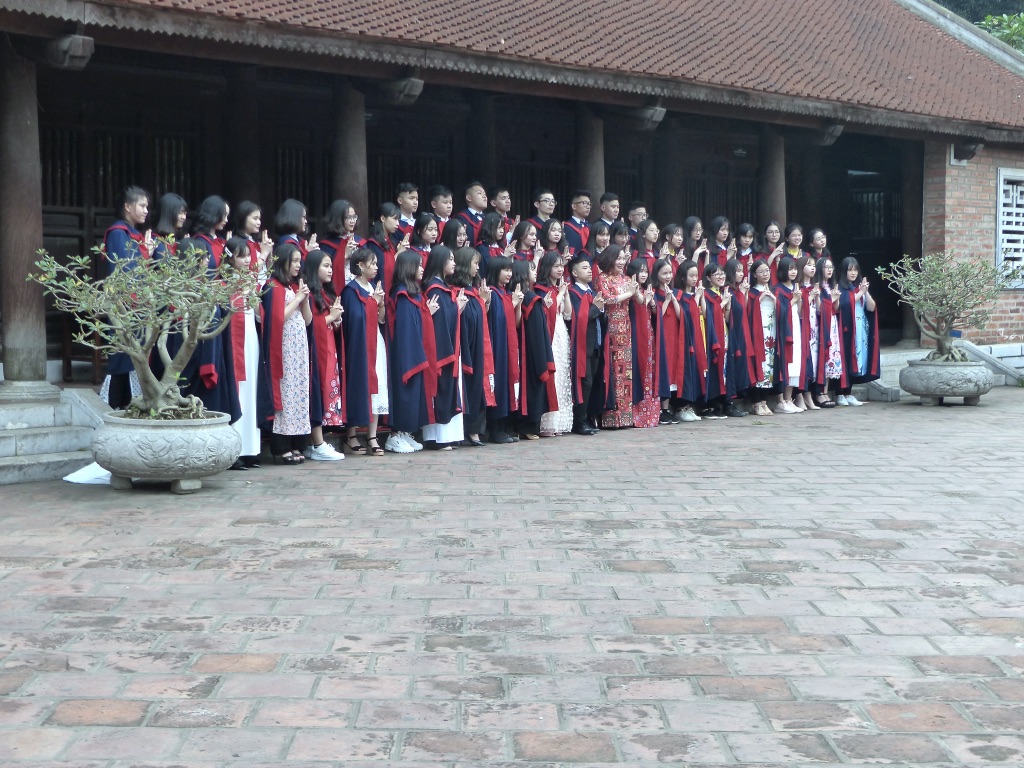
Laura and I loved the numeous large bonsai trees displayed all over the temple’s grounds and coveted the gorgeous carved planters in which they grew. We just couldn’t figure out an economical way of bringing these heavy items home, however. As we expressed our admiration, Sam piped up enthusiastically explaining that he too cultivates bonsai trees and has, in fact, been tending one at home for over 10 years. Bonsai trees in Vietnam, are deliberately quite large and increase in value with size as opposed to the smaller bonsais cultivated in Japan. There are four critical elements to a Vietnamese bonsai tree: age (which Sam referred to as “oldness”, which sadly confused me for several minutes?!) , uniqueness and beauty. Each bonsai tree at this temple was growing on a moss covered rock seated in a small pool of water within the stone planter, a beautiful environment that echoes nature, but requires much attention to maintain the proper balance of water/soil/air to promote growth. Sam only trims his tree twice a year and tries to follow its “lead”. Both Laura and I decided we had neither the patience or skill to nuture a bonsai!
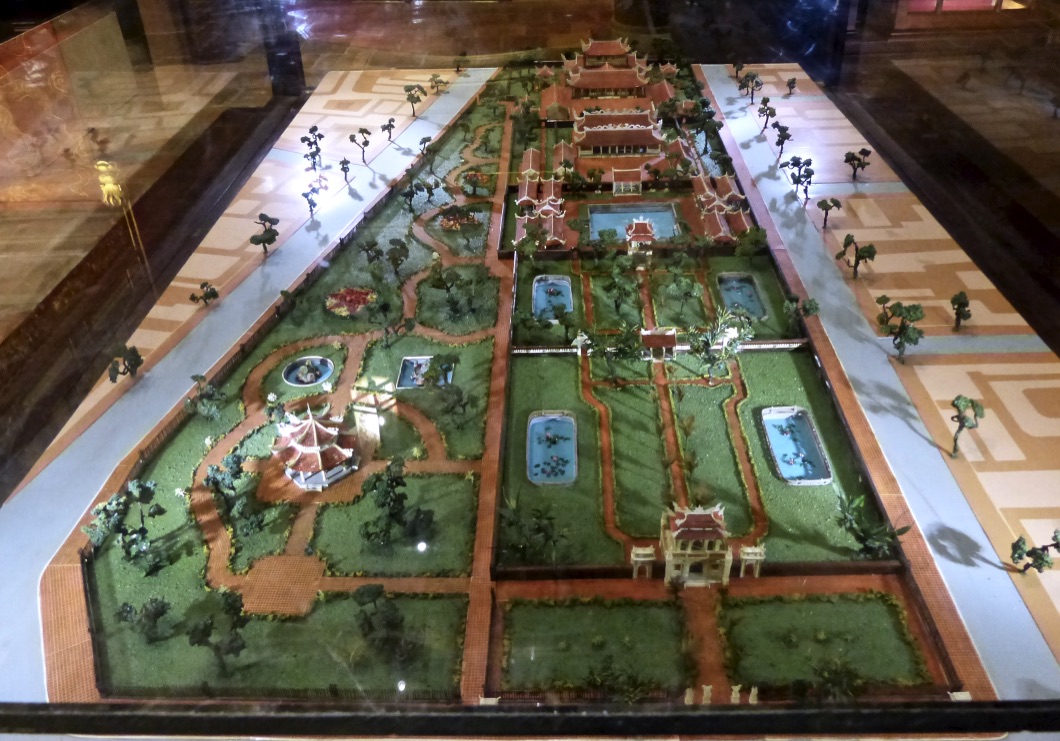
The Temple of Literature consists of 5 courtyards leading towards the main temple building. A bit of cheating below I admit, but a good way to capture the layout and scale of this temple.
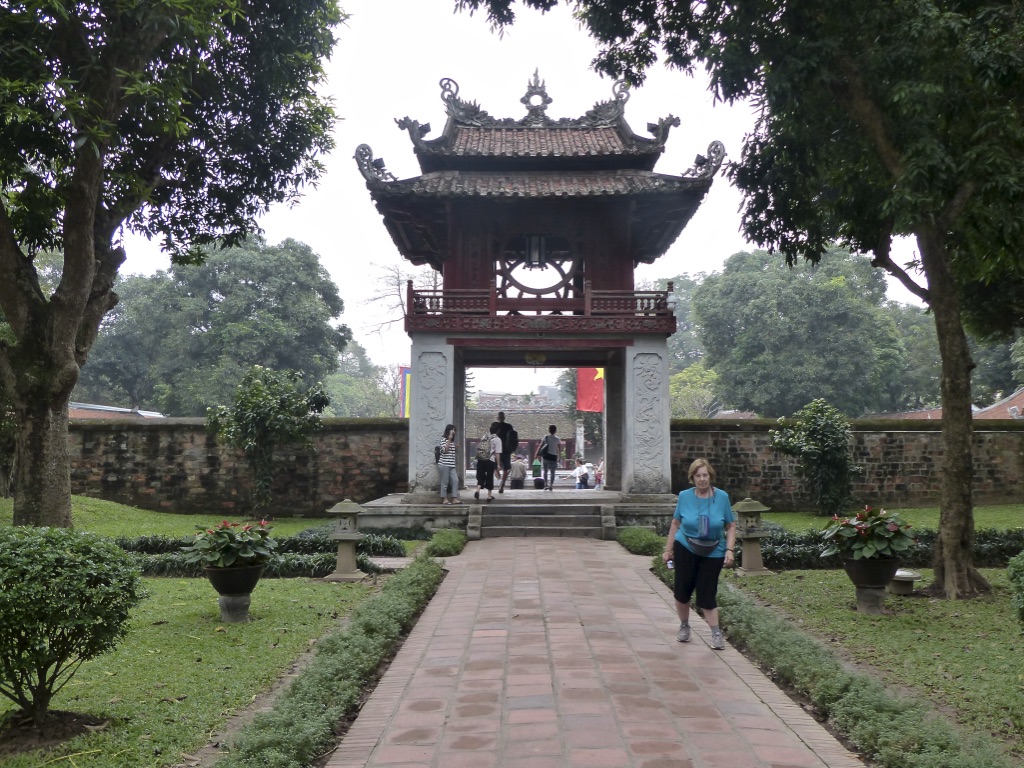
 In these courtyards and under the pavillion below, scholars would congregate to discuss and debate great works of literature.
 For centuries, the annual national exam for Confucian scholars was held here and the names of university graduates are etched in stone stelae (tablets) above the stone tortoise statues.
There is a large lily pad filled pond called the Well of Heavenly Clarity which is decorated with brightly colored festival flags. The concentric pattern represents the Five Elements of wood, fire, earth, metal and water, fundamental to ancient Chinese philosophy. This important pond is the image on the back of the 100,000 Vietnamese dong bank note.


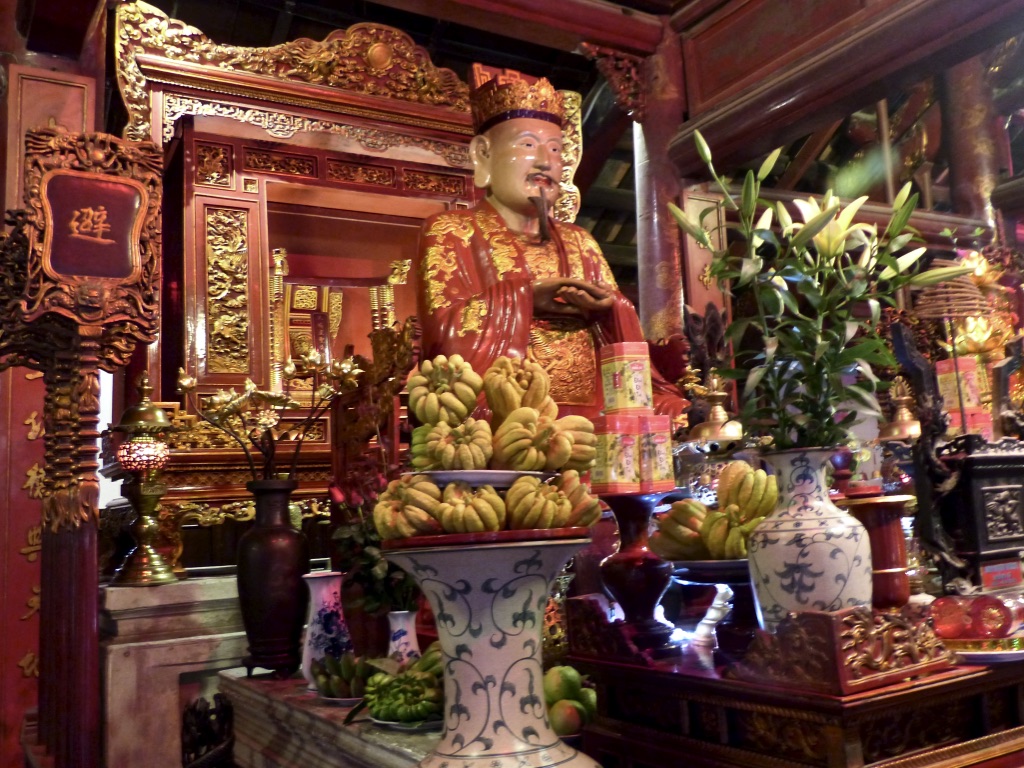
The interior of the temple smelled of incense and the altars were filled with offerings made by visitors. When describing the bird standing on a tortoise statue (symbol of longevity), Sam said “flamingo” instead of crane which puzzled Laura and I as we: a) tried to figure out if flamingoes can be found in Vietnam and if the bird below even ressembled a flamingo; and b) had a difficult time reconciling the image of pink plastic flamingoes decorating suburban US lawns with the ancient Confucist symbol seen below. Clearly, something was lost in translation…!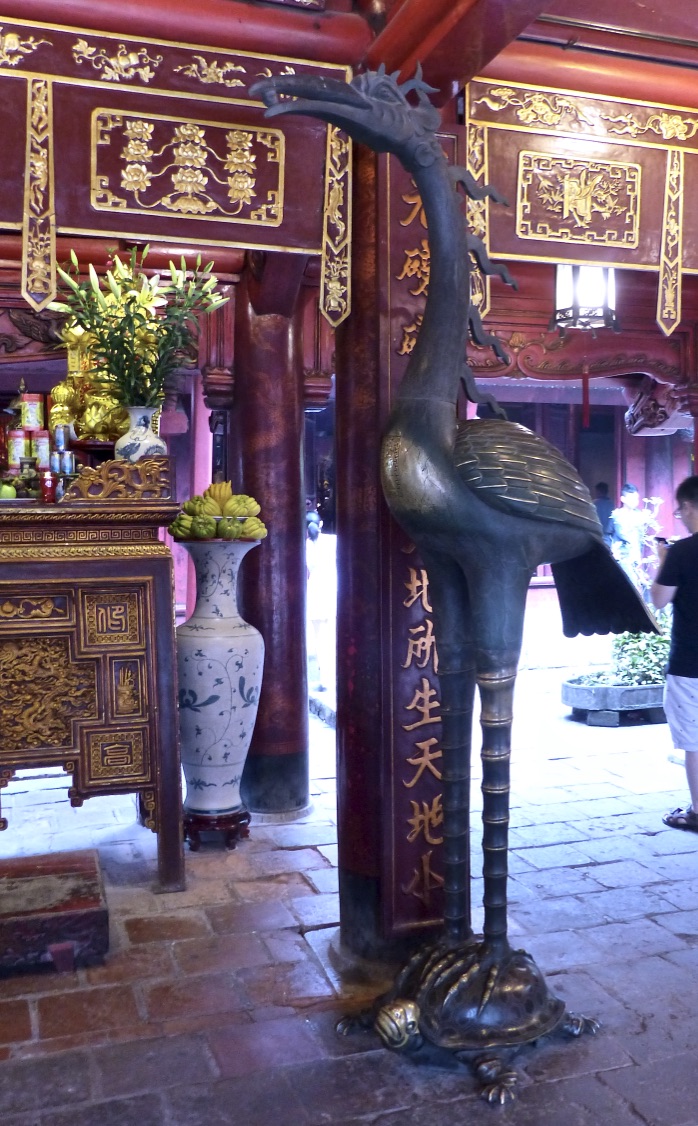
We also got a kick out of the strange Buddha fruit seen below. This fruit is a common temple offering but is never consumed as it tastes terrible, according to Sam. By this point, we were all flagging, beginning to giggle at some of Sam’s facts, and decided we’d better grab some lunch and head back to the hotel. 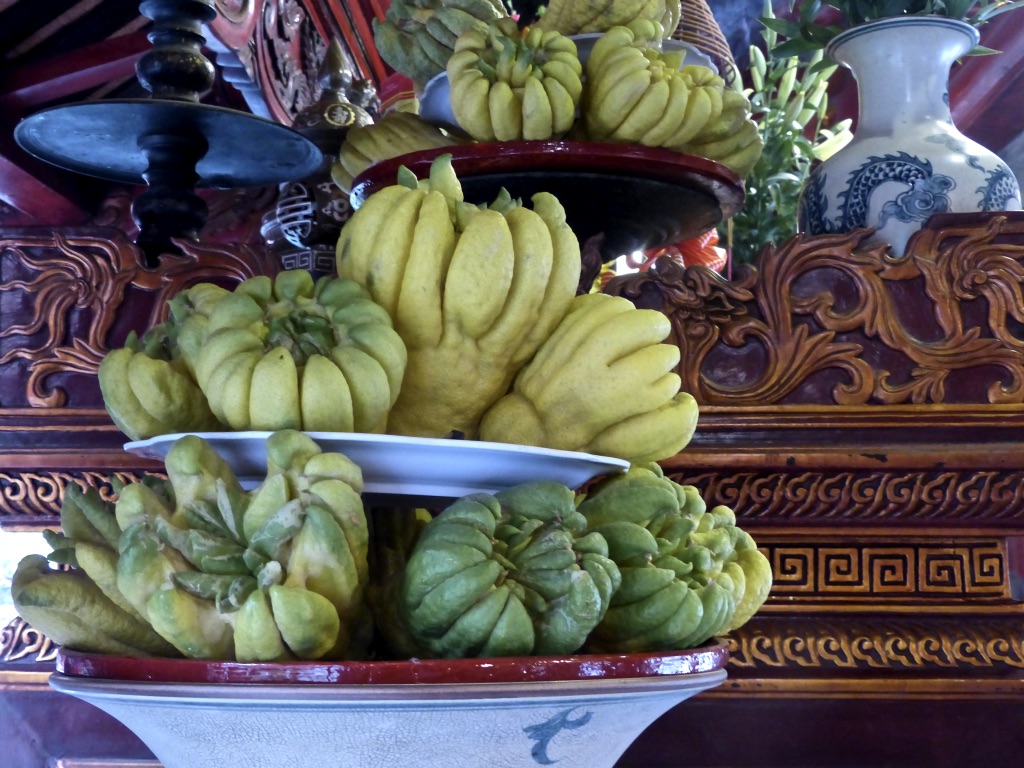
 We had a delicious Vietnamese lunch at a local spot named “Know One, Teach One’, sampling some of many yummy spring rolls, fresh salads and fish dishes we were to have over the next few days. Happily sated, and ready for a break, we headed to our hotel. Fortunately, our rooms were modern, comfortable and we all tucked into the comfortable beds for a nap before the evening.
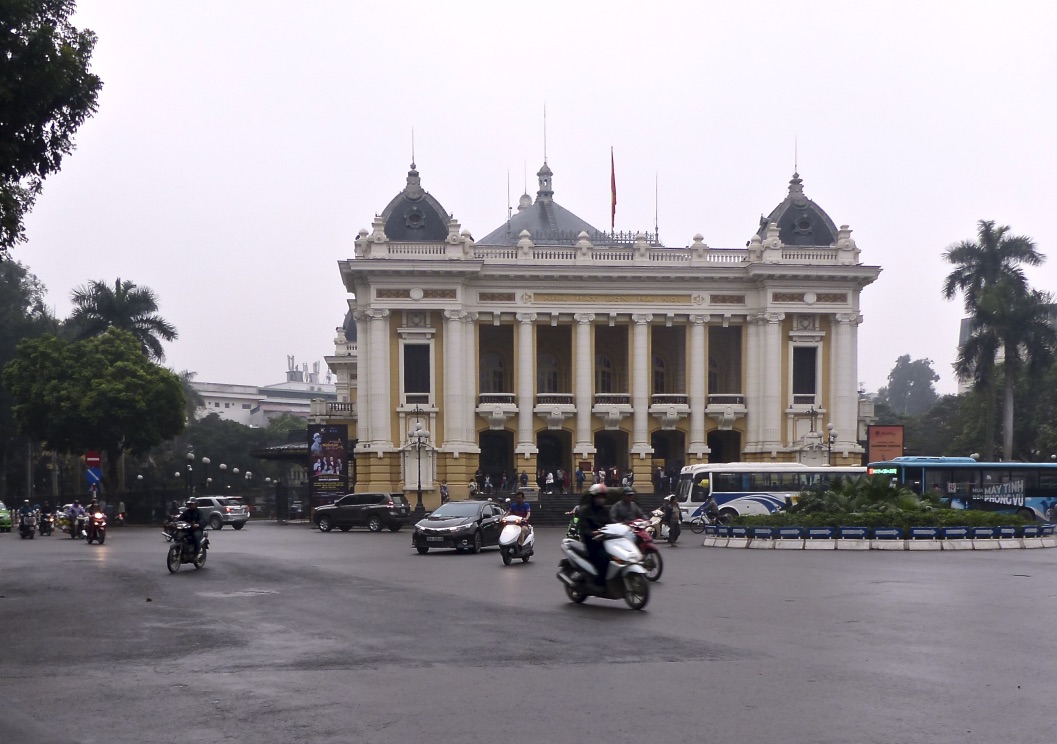
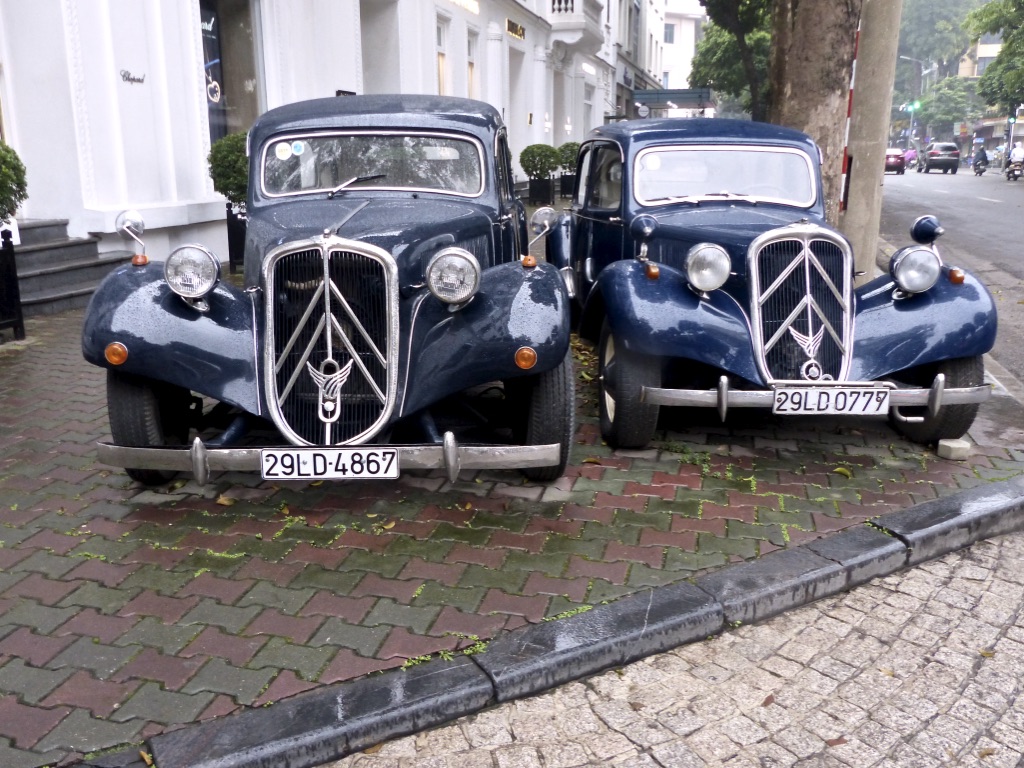
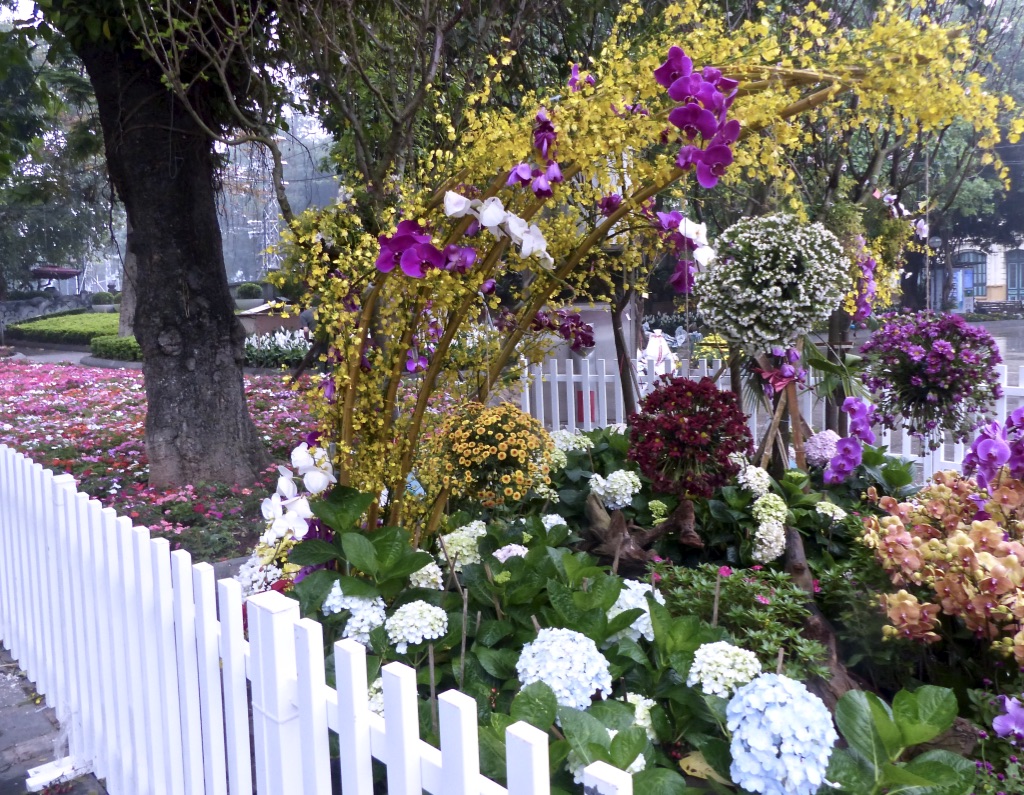
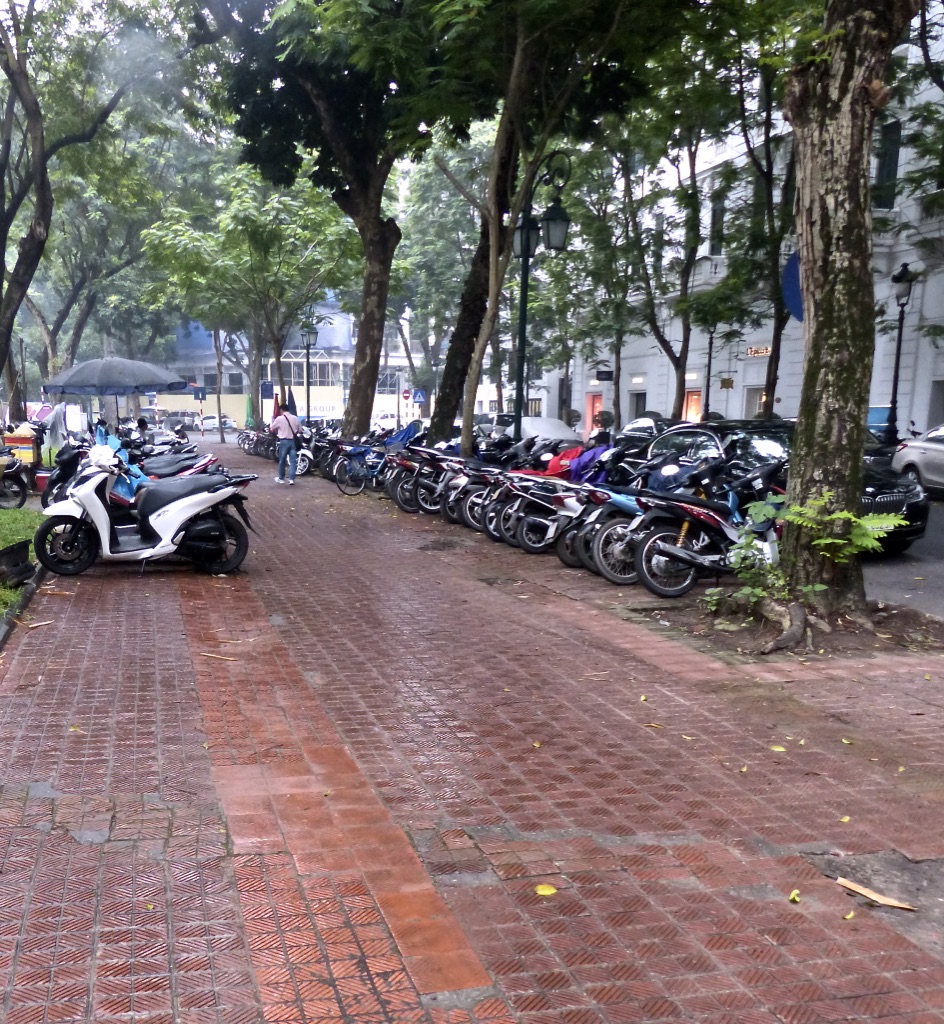
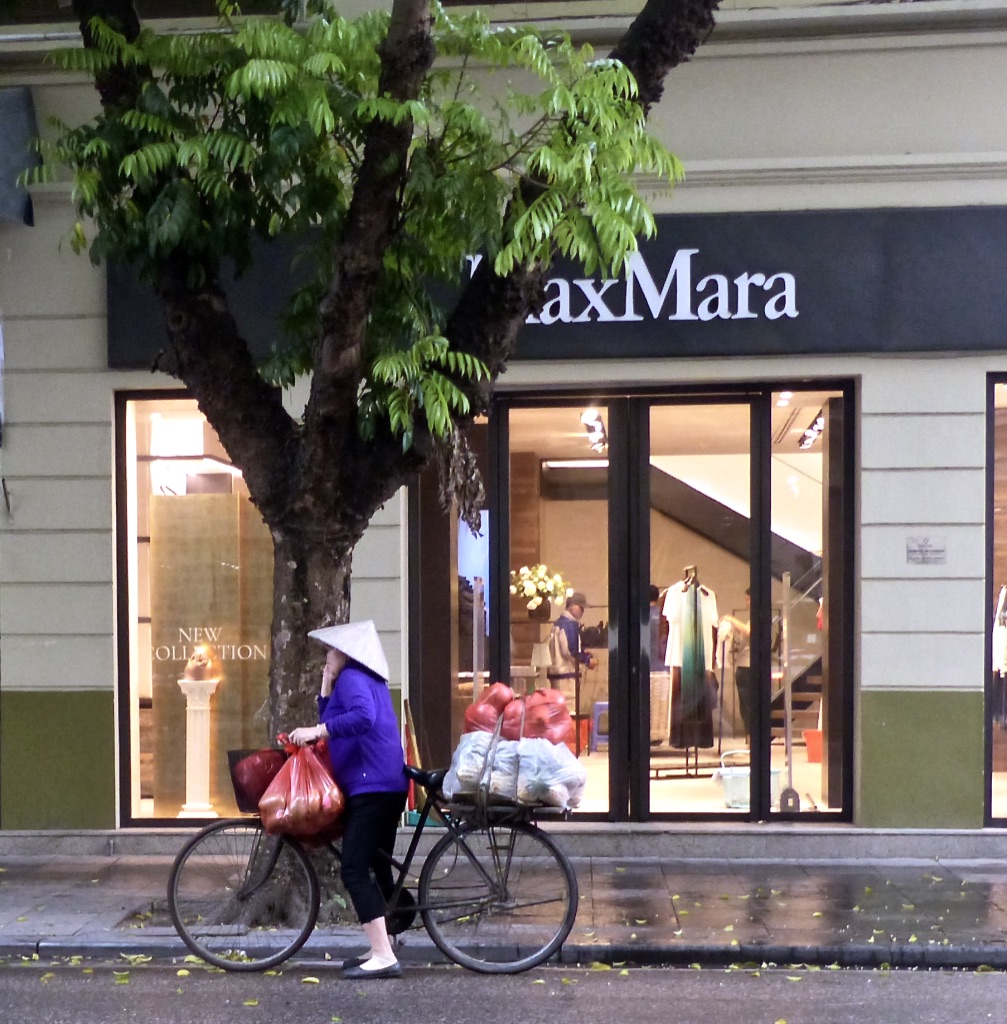
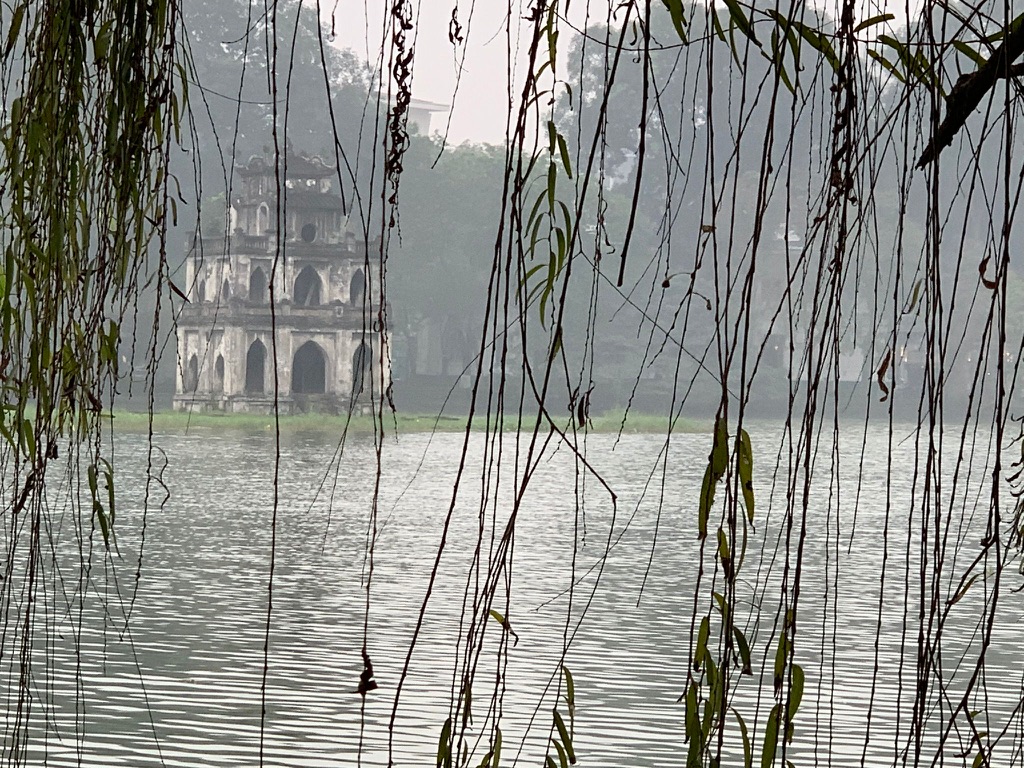
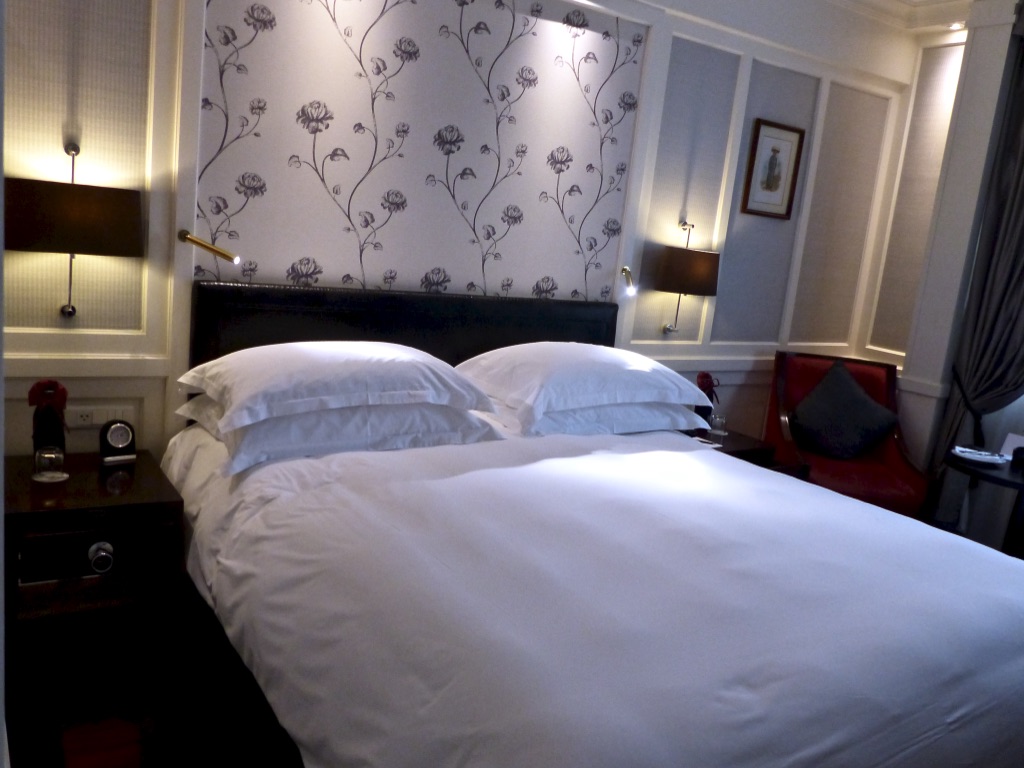 The Sofitel Legend Metropole Hotel, a lovely colonial, neo-classical hotel, is located in the old part of Hanoi, also known as the French Quarter. Situated at the southeastern edge of Hoan Kiem Lake, this affluent neighborhood is home to Hanoi’s Opera House, many embassies, stately government buildings and lovely parks. Before leaving Hanoi, we strolled around the grand avenues, taking in the tropical flora and juxtaposition of the old colonial city (vintage cars, grand avenues and monuments, traditional conical rice hats worn by locals) with modern life (motorcycles, cell phones, designer boutiques).
 A friend in Seoul and the travel team at Crossing Travel had recommended that we join a food tour by Vespa Adventures. Having witnessed the “motorcycle mayhem” of Hanoi earlier, we were all a bit trepidatious, but when the very professional Vespa Adventures team showed up in the lobby with their orange shirts and helmets, we breathed a collective sigh of relief. Each of us had our own local driver and merely doned a helmet and climbed on. This was MUCH SAFER than driving our own vespas at night, on the crowded streets of Hanoi while jet lagged and drinking! There was also no opportunity for the “boys” to get competitive and all of us found this mode of transportation absolutely delightful! The weather was balmy, the sites at night lovely and it was interesting to see local life (including all the green Grab motorbikes which offer Uber-like ride shares) from the backseat of a vespa.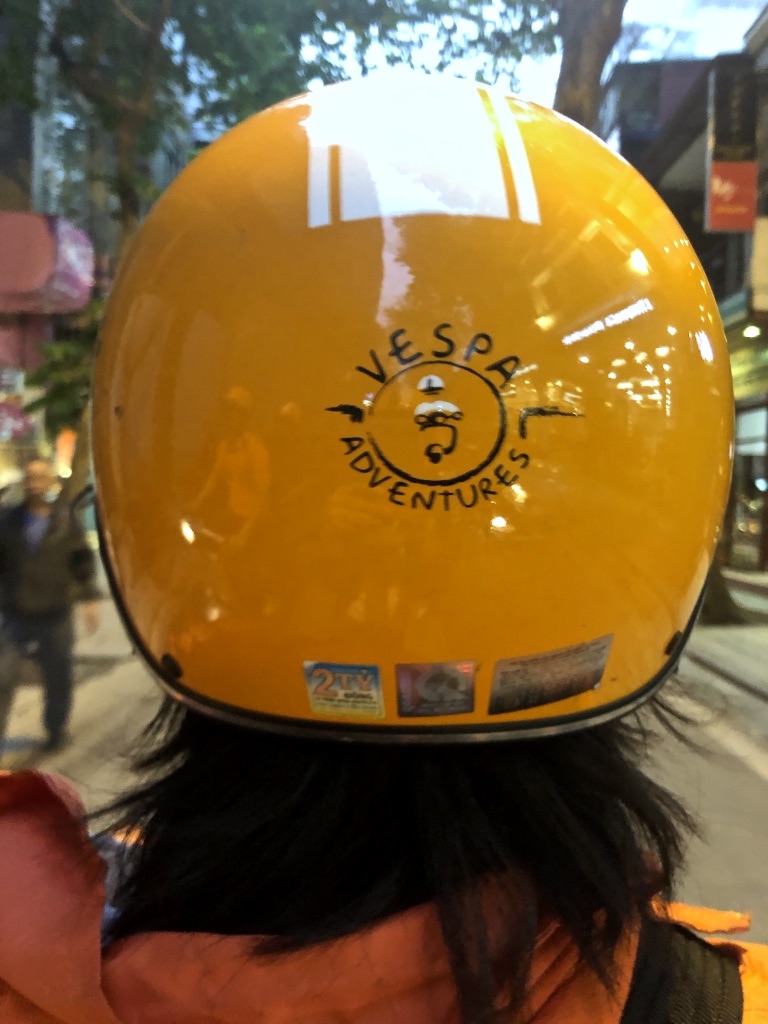
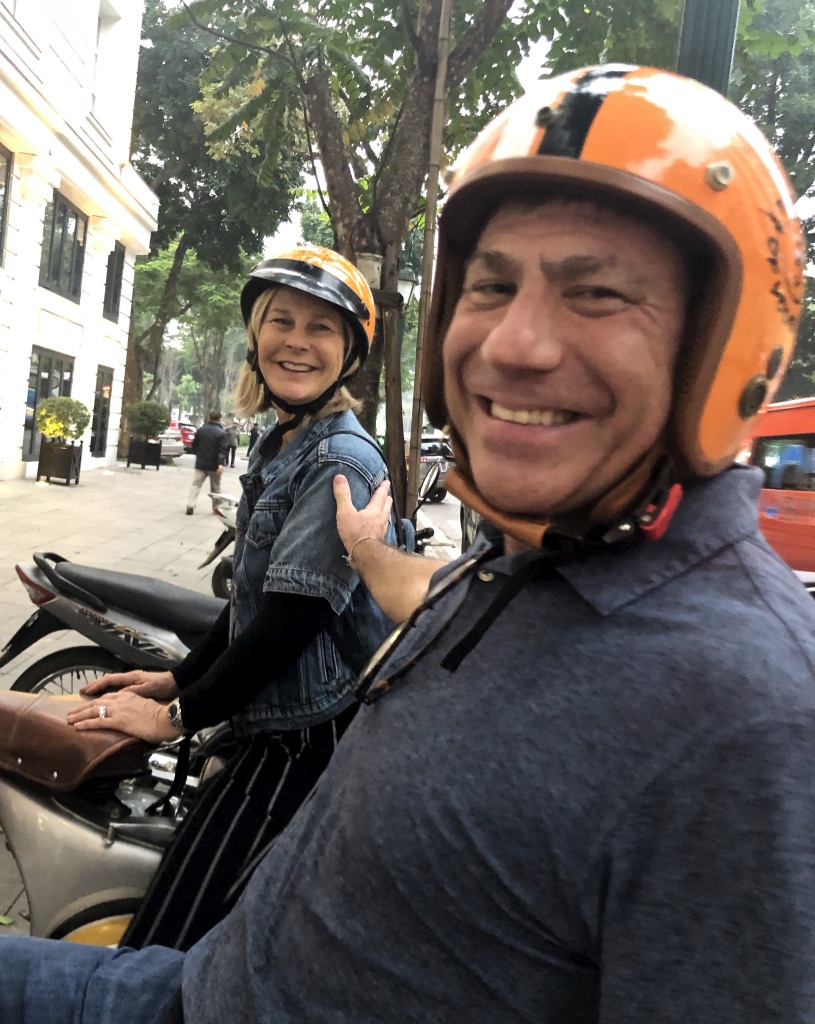
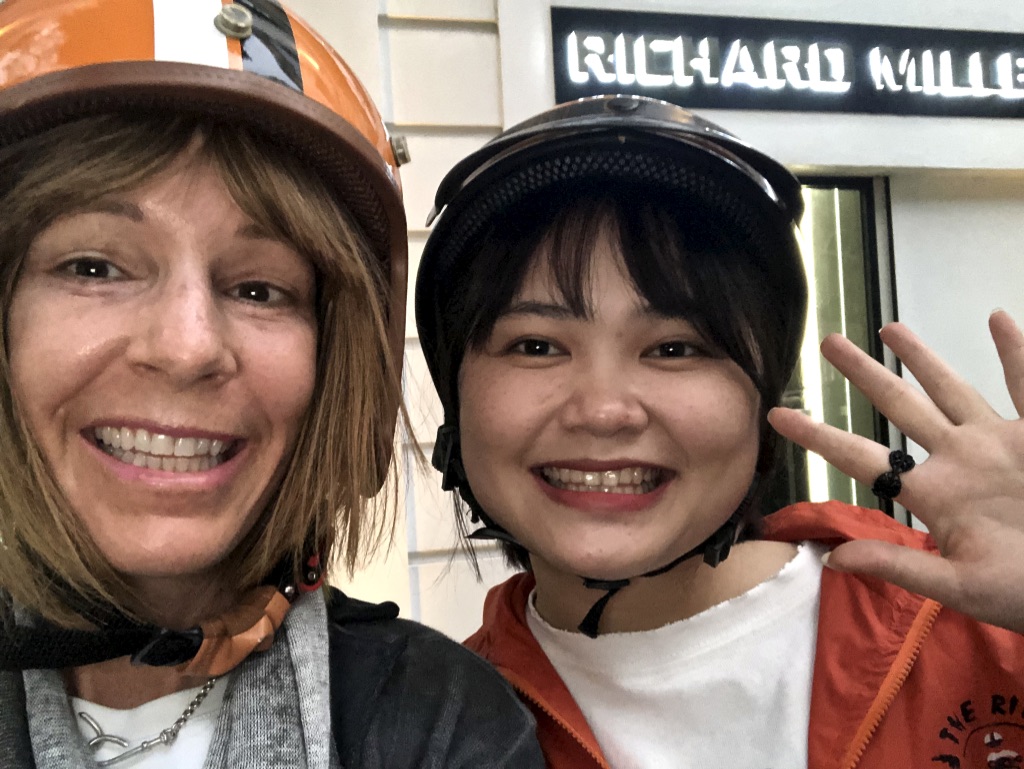
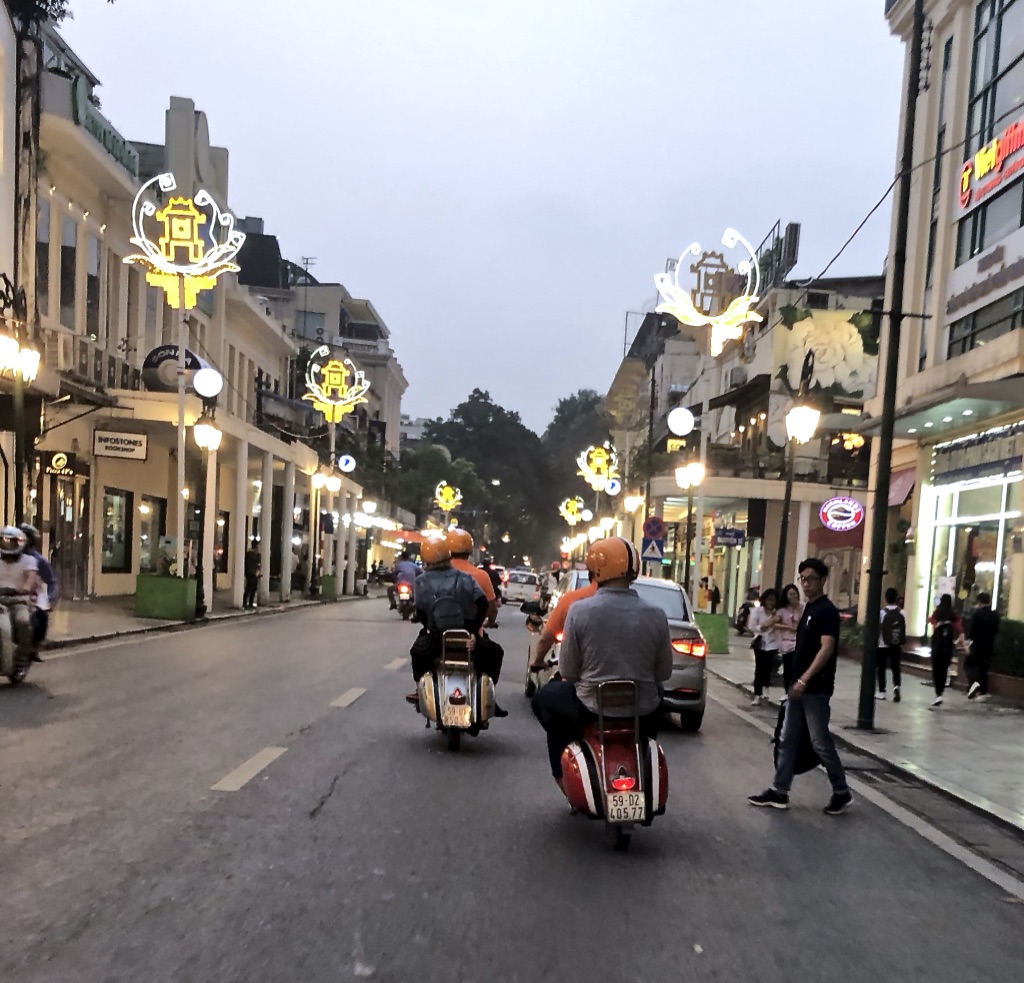
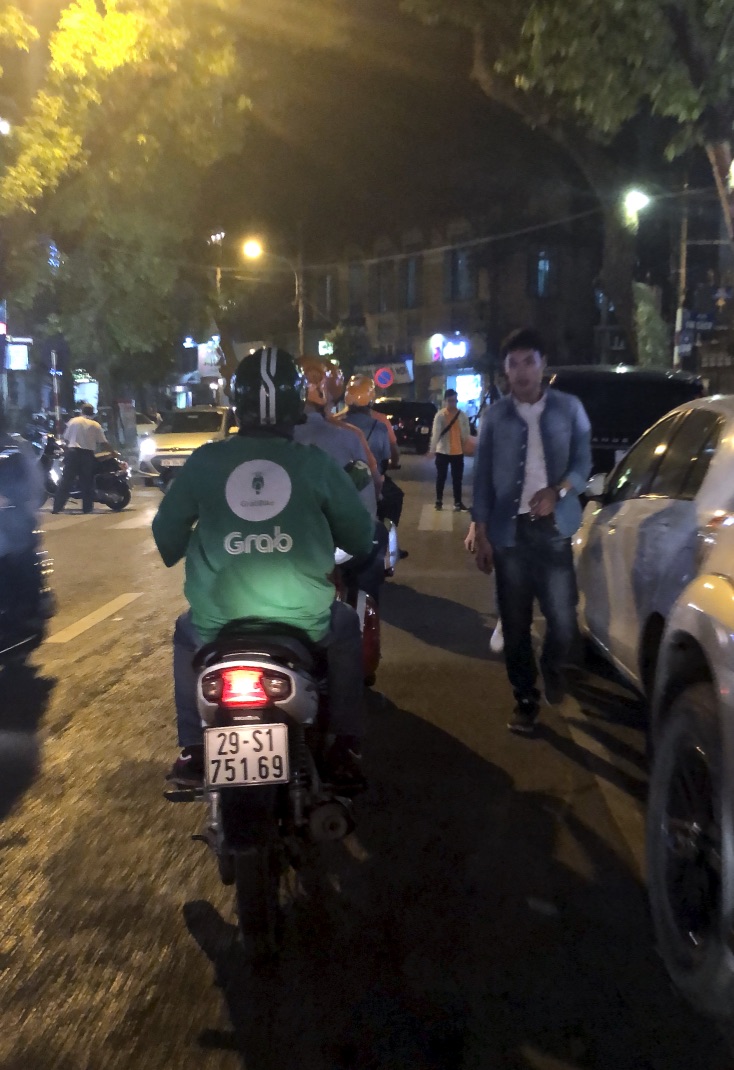
Our tour was led by Casey, an extremely affable, engaging young university student who kept us entertained and organized the whole evening even after he’d sampled several local beverages along wiht us. Casey is studying finance and by the end of the night, Bill was trying to recruit him to join Citibank in Vietnam, but he politely “took a pass”.
Our first stop was a lovely rooftop bar adjacent to Hanoi’s St. Joseph’s Cathedral which dates from the French Colonial period and was constructed in 1886. Today, roughly 7% of Vietnamese identify themselves as Catholic and this cathedral holds several masses daily.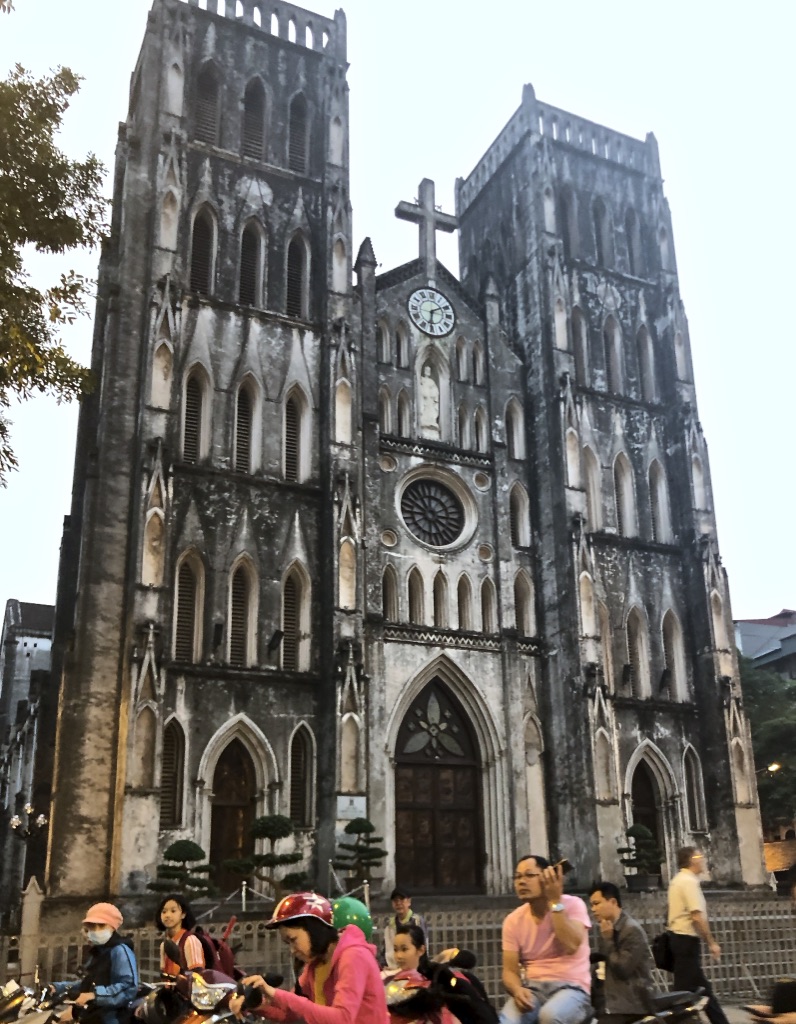
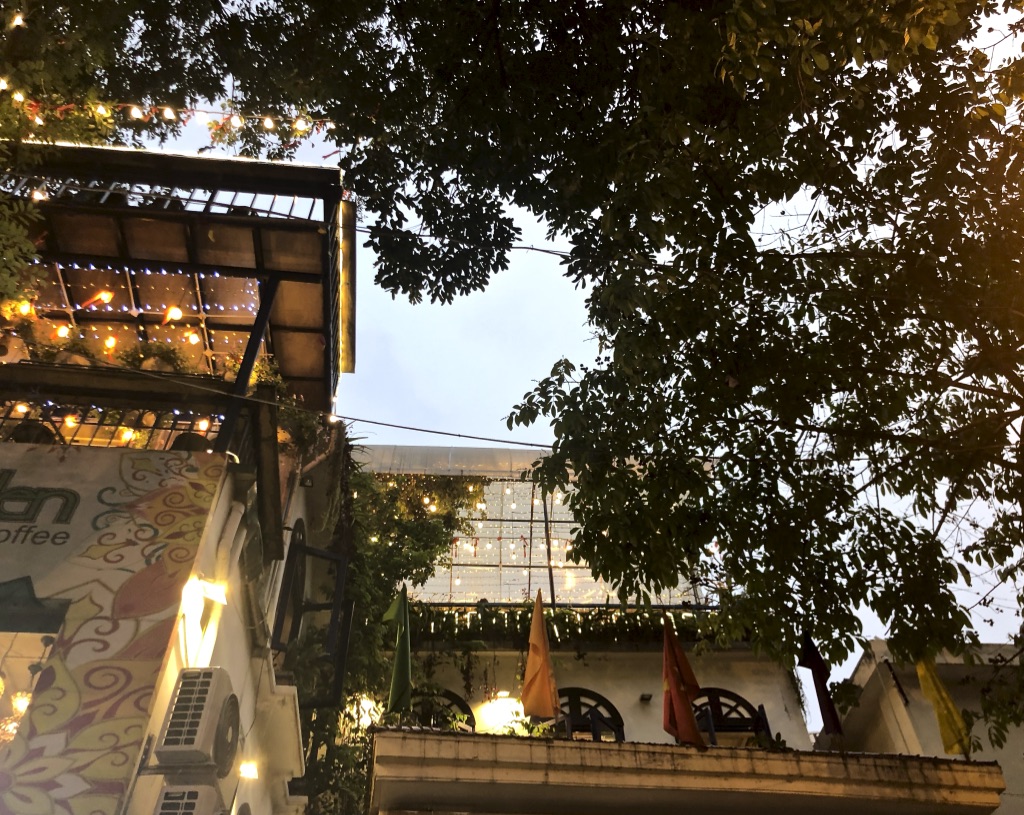
We didn’t need much encouragement from Casey to try some of the drinks on the menu. Bill signed up for the coffee beer while Laura and I were tempted by the “Drunken Princess” beers which combined peach pomelo juice and local beer. Alex took a more conservative approach and sampled the local Tiger brew. Bill tried to “help” me pour mine and managed to create quite a mess. The fried sausages dipped in hot sauce were unremarkable but we weren’t too discerning at this point and were just happy to be enjoying the sunset on a rooftop bar with our good friends!


We LOVED the snacks at the second stop which were roasted peanuts and water buffalo jerky with a slightly smoked flavor and seasoned with black pepper. Absolutely delicious, the jerky helped us down the “fire water” shots of the local rice wine flavored with different fruits that Casey insisted we try, not once, twice but three times so we could properly learn the local drinking cheer.  We became quite proficient at “Mot, Ha, Bahr, Zo!” by the end of the weekend, but were NOT brave enough to try the “special” distilled wine sitting on the counter. In these jars, venomous snakes, ginseng and other spices are used to flavor the alcoholic rice wine purportedly infusing the drink with medicinal qualities. The tall jar was an extra special connoction called three-penis liquor, wine infused with seal, deer and Cantonese penises that is believed to enhance potency and virility in males.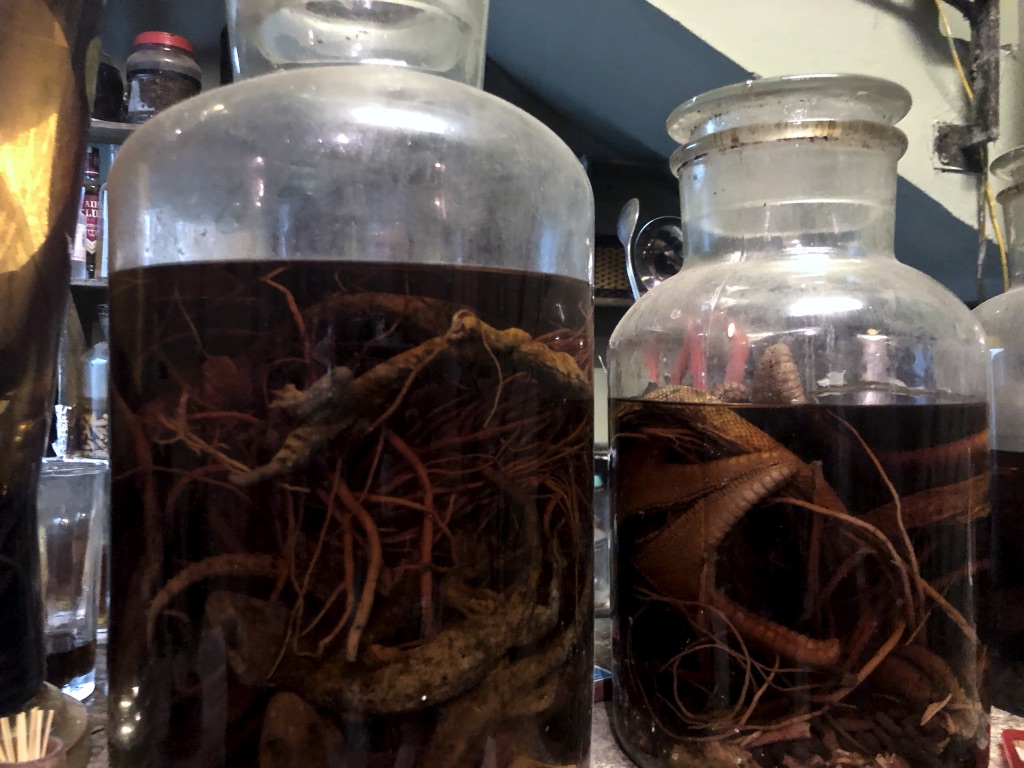

This fun fact provided endless fodder for puerile jokes amongst us for the rest of the weekend. Everytime the “boys” needed Vietnamese currency, known as “dong”, to pay for something, the DONG jokes got trotted out. Some things never change…fortunately!
Once Casey discovered our interest in beer, he ran next door to get some of the craft beer that is brewed daily throughout the city. This beer is made fresh each morning, does not have any preservatives and is tossed if not consumed at the end of each day. Laura and I felt it had a sour taste…a bit like spoiled milk…but Bill prefered it to the Dam Viet beer. We liked the simple pull caps of the beer bottles too.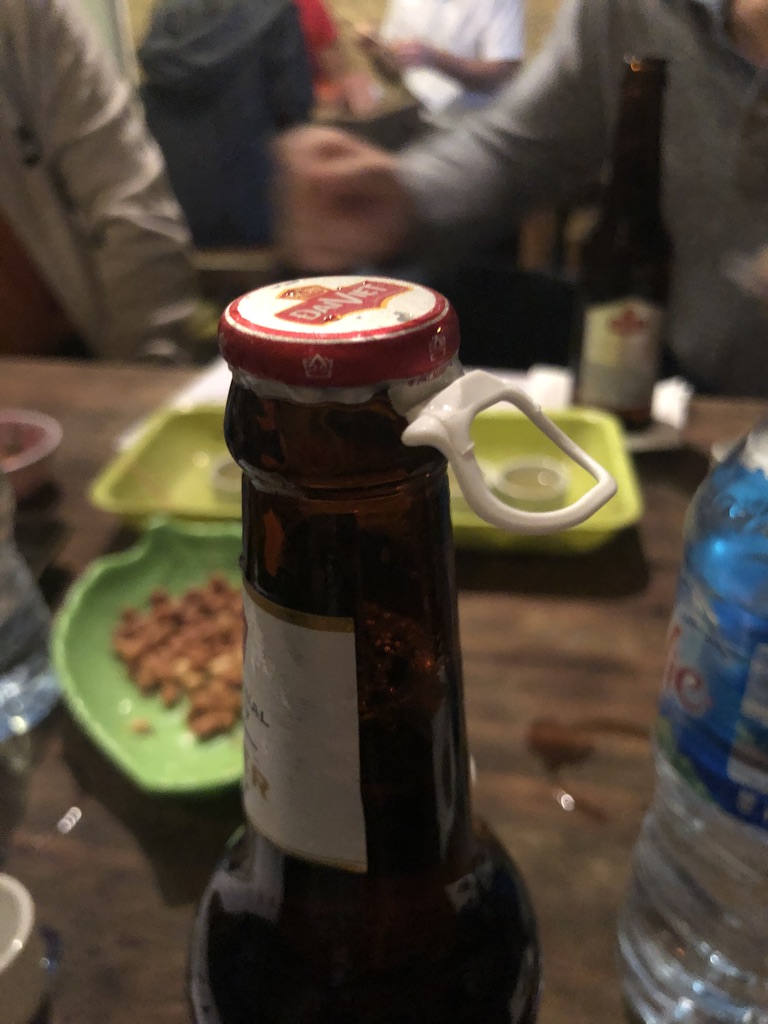
This bar was located practically ON the tracks of the local commuter train that runs through the old part of Hanoi 6-8 times/daily. In between trains, nearby residents and shop owners use the tracks as if it were a normal street, quickly crossing and avoiding trains when they do roll by, but otherwise carrying on with their daily lives. As we left the bar, this brightly colored blue, white and red train rattled by while locals jumped out of the way and tourists like ourselves gawked. I reached out and touched the car as is sped by. 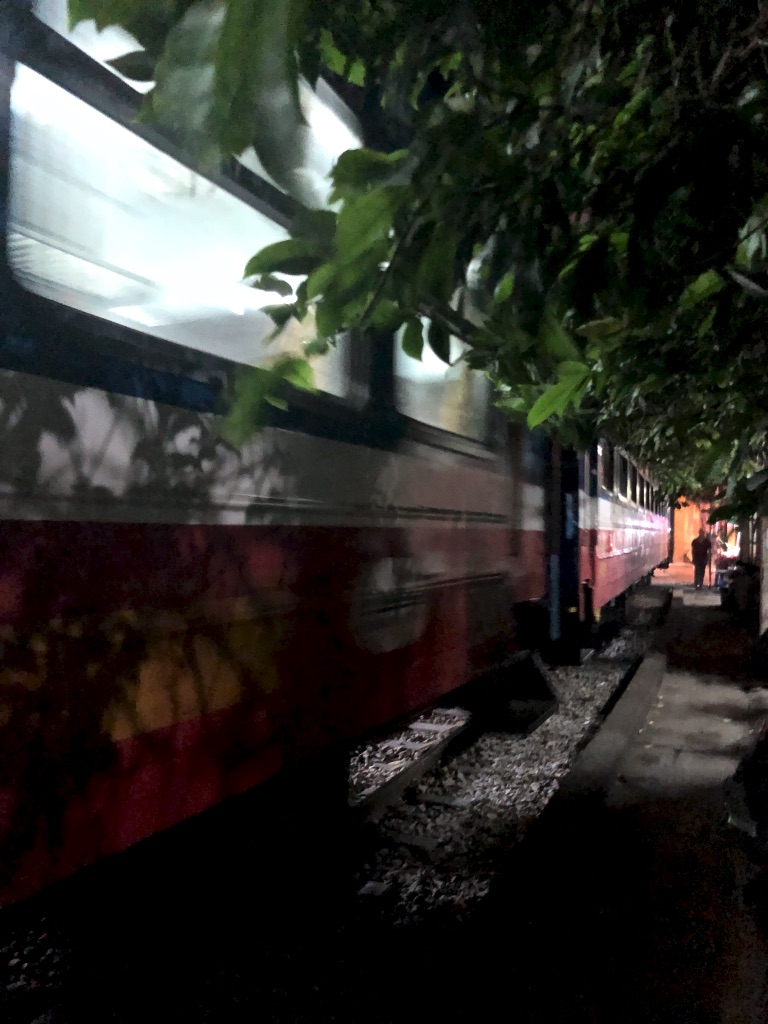
Our third stop on the tour was a local Bun Cha restaurant that leapt to great fame when President Obama dropped by for a meal. Today, his table is specially preserved and displayed under the photo of his visit. 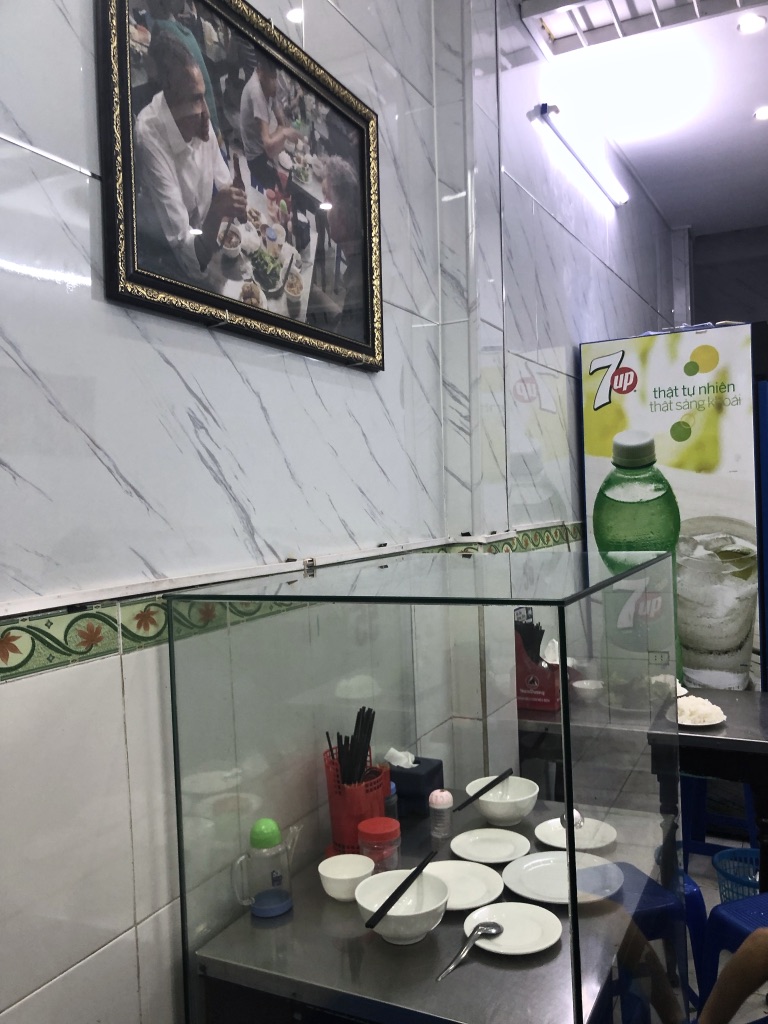
Here, we sampled Bun Cha which is a delicious clear soup with bbq pork to which one adds the short circular bun cha noodles and various other ingredients. I loaded my Bun Cha bowl up with fresh perilla, coriander, lettuces, sliced chilies and garlic. Yummy! All of us opted to only drink water at this stop.
By the fourth stop we weren’t hungry but kept eating the delicious Vietnamese food. This restaurant was known for its fresh pho which are actually the rice noodles in the famous Vietnamese soup also known as Pho. Here Casey kindly arranged for the some fresh spring rolls to be made out of pork for Laura while we sampled the more traditional ones made with beef, fresh lettuce and coriander, dipping them into yummy sauces. We didn’t like the fried Pho noodles as much, but enjoyed the freshly sauteed vegetables and delicious banana flower salad sprinkled with fried tofu and peanuts. 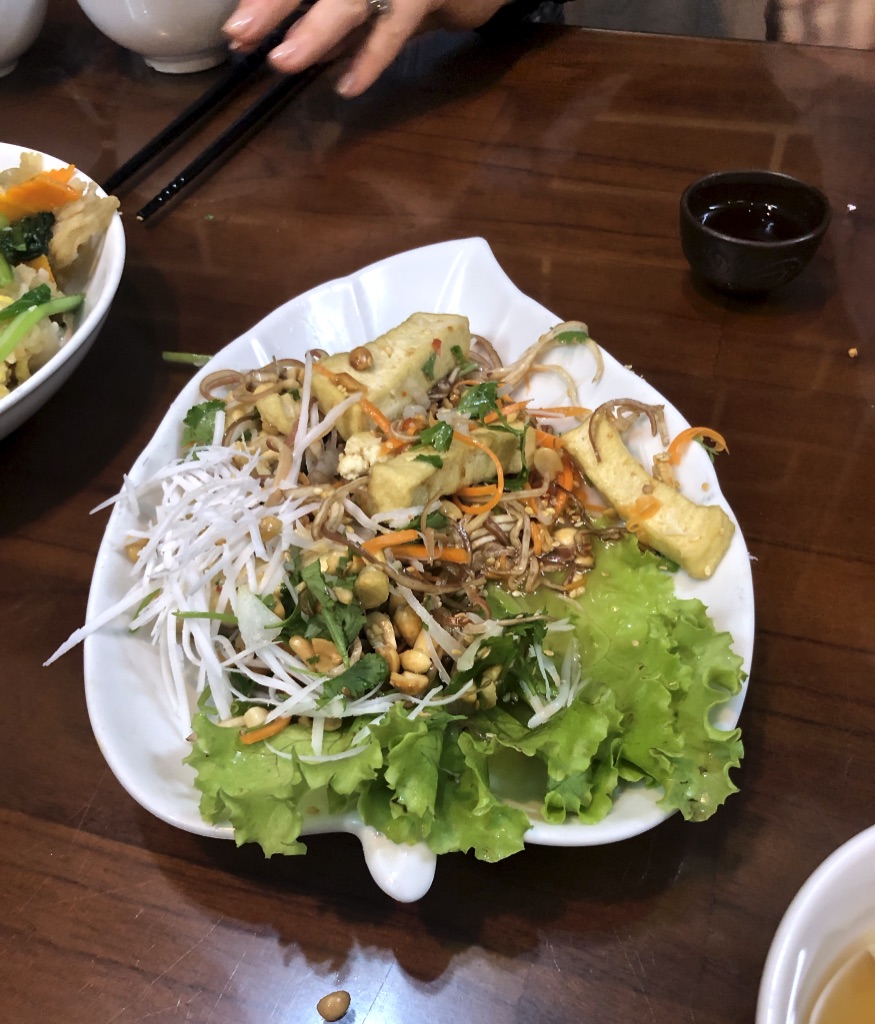
Over still more shots of yet another type of fire water, we learned a bit more about Vietnamese life from Casey and how Confucianism still influences the culture today, causing tension between the older and younger generations. For example, Casey’s parents do not approve of his girlfriend and refused to speak to her the entire weekend when she recently visited. His girlfriend is university educated, a teacher, and yet her family is not from the same class as Casey’s. His parents exerted a similar influence on his brother’s relationship with an “undesirable” girlfriend, ultimately causing a breakup and forcing him to marry someone of their choosing. Casey seemed a bit resigned to a similar destiny, sadly.
Our final stop was jazz bar a few blocks from our hotel that features live music nightly. Bill is quite sure he discovered this same bar on another business trip since it is just around the corner from the hotel where he stayed. I wasn’t surprised as Bill LOVES live music. Laura and I chatted away the whole time, barely listening to the music while the “boys” drank beers and paid a bit more attention to the talent performing. Packed with an international crowd and a quick walk from our hotel, this bar was a perfect ending to our Vespa Adventure.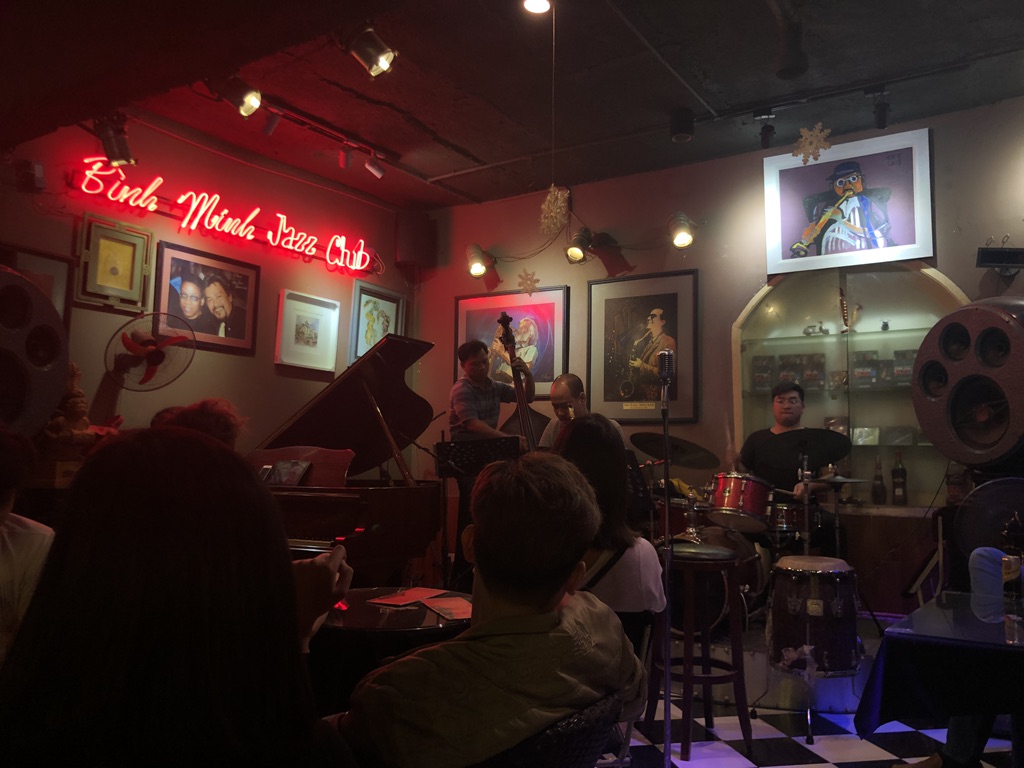
The next morning we enjoyed the hotel’s buffet breakfast (especially the fresh mango juice and various other tropical fruits) and then waited in the lobby for our pickup. As the clock ticked by and we all became increasingly concerned, checking our phones for messages from the Crossing team, it dawned on us that, in our sleep deprived state, we had misread the itinerary and were now were a whole hour early. Not ones to sit still, we decided to stroll around the neighborhood, grabbing umbrellas to protect us from the warm drizzle. When the van finally arrived we were ready to kick back and take in the scenery along the drive east to Ha Long Bay. Repeatedly, we remarked on the massive infrastructure products underway in the countryside outside of Hanoi, whether it was apartment complex, bridges, ports or highways being constructed. Rice paddies, full of Buddhist pagodas honoring the deceased, sat next to cranes and other heavy machinery.
After 2 1/2 hours, we arrived at Ha Long Bay Port, checked in the Paradise Peak cruiseline and then walked around the harbor until we could board our boat. Our Paradise Peak vessel was made of wood and looked somewhat like an old Chinese junk boat but was actually built just 7 years ago. Fittingly for the Stantons, who wore the numbers “5” and “6” throughout their sports “careers”, we set sail on QN 6565. 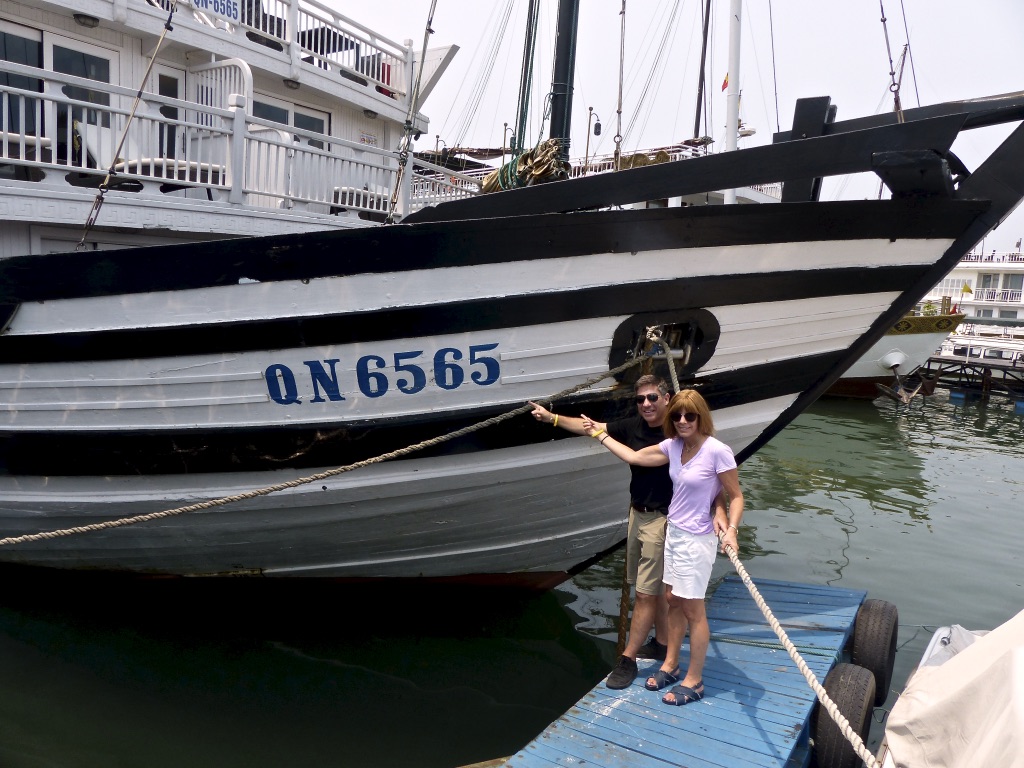 Once aboard, we relaxed over a lovely Vietnamese lunch full of fresh vegetables, light, but flavorful chicken, beef and fish dishes and delicious mango and watermelon for dessert.

It was hard to stay at the table once the boat got underway because the unique scenery of Ha Long Bay and its 1,969 islands was breathtakingly beautiful and other-worldly! The islands are made mostly of limestone, appear volcanic but were actually formed by teutonic plate shifts. They vary in size and shape and are at once spectacular and peaceful. Ha Long means “descending dragon” and according to the local myth, the islands were formed when this dragon came down to earth and spit rocks from its mouth. All the islands are quite steep and therefore uninhabitable, though the surrounding waters are heavily traveled by fisherman, tourist cruises and large cargo ships. All told, there are 1,000 cruise boats (including day ferries) that operate out of Ha Long Bay Port and four overnight lines with official government approval! At night, all cruiseboats tuck into areas that are designated as “safe” since the weather can be wet, windy and rainy, especially during the monsoon season. Fortunately for us, the weather was cooperative and we could enjoy the whole host of activities offered by Paradise Peak. We grew to love the overcast early morning light which was quite atmospheric and added to the silent, still beauty of the magnificent islands. By midday, the sun broke through the clouds but the breeze on the sundeck of the boat as we cruised along kept us comfortable. And the sunsets were stunning! There were caves and grottoes to explore with kayaks, peaks to ascend and gain a bird’s eye view of Ha Long Bay and a few beaches where one could soak in the sunset. Sadly, the waters of Ha Long Bay are very polluted and jellyfish infested. Thus swimming was not at all appealing. Thankfully, there are no sharks in the Bay and the water is rather shallow, averaging only 20-25 meters. The tides are significant though and water levels vary by 4 meters daily.
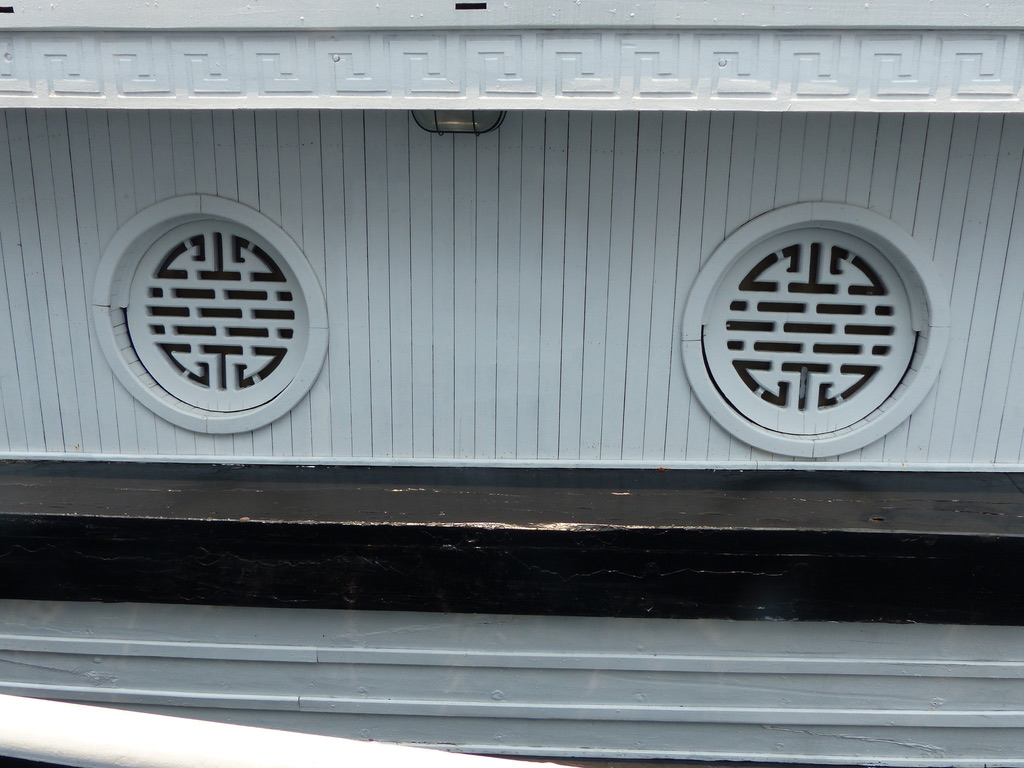
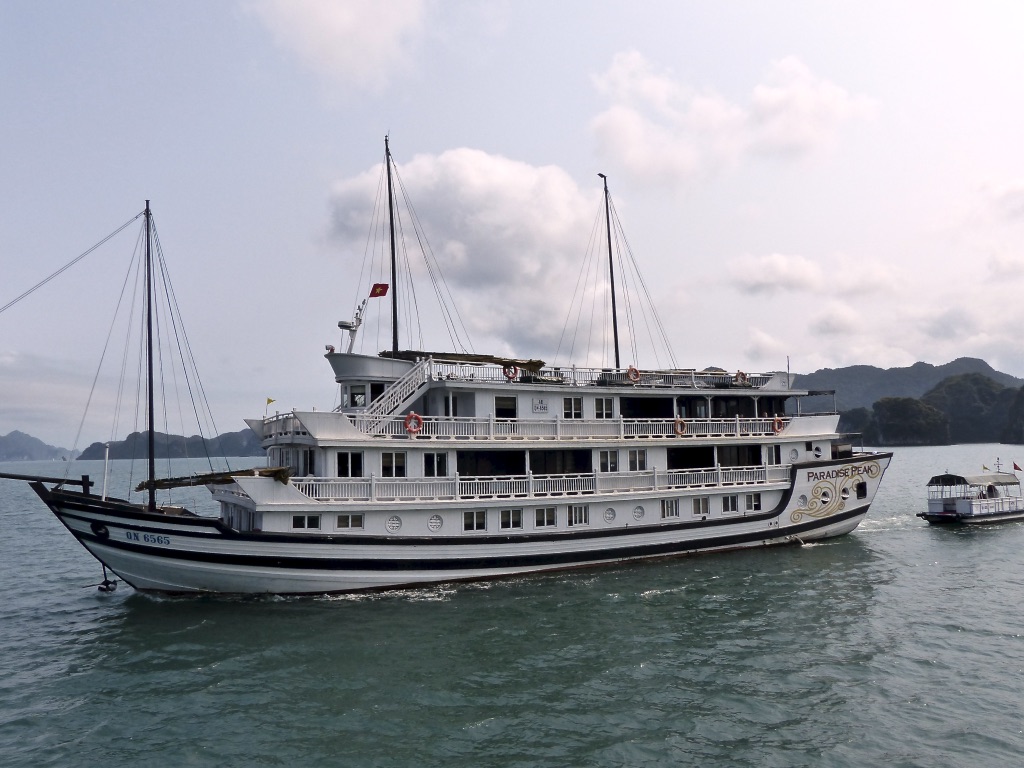 I also loved the Asian portholes of these Chinese junk boat/cruise ships.
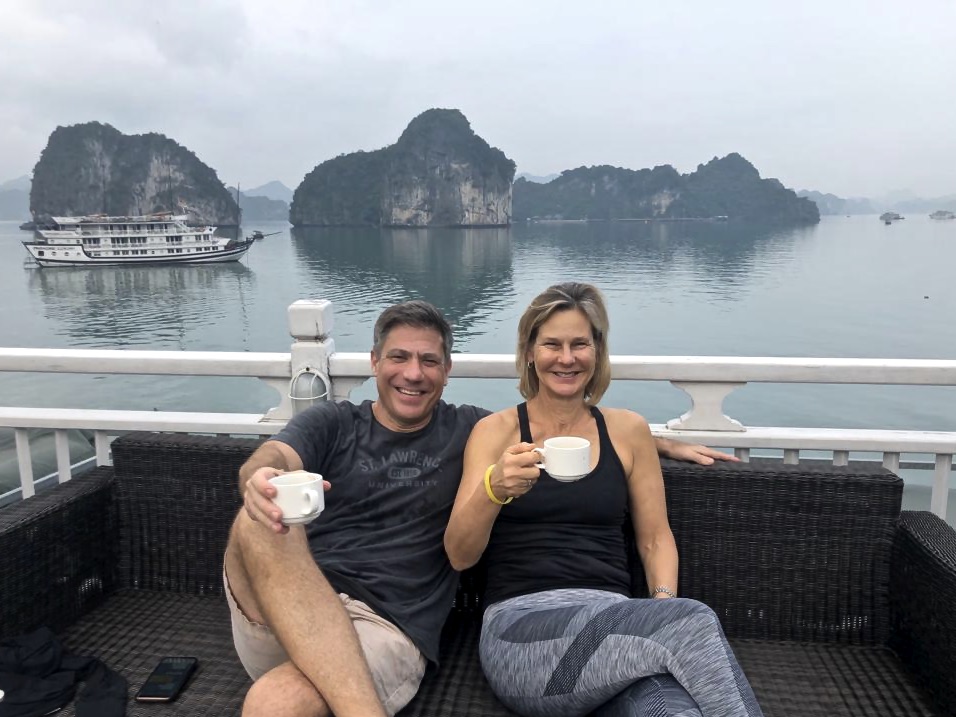
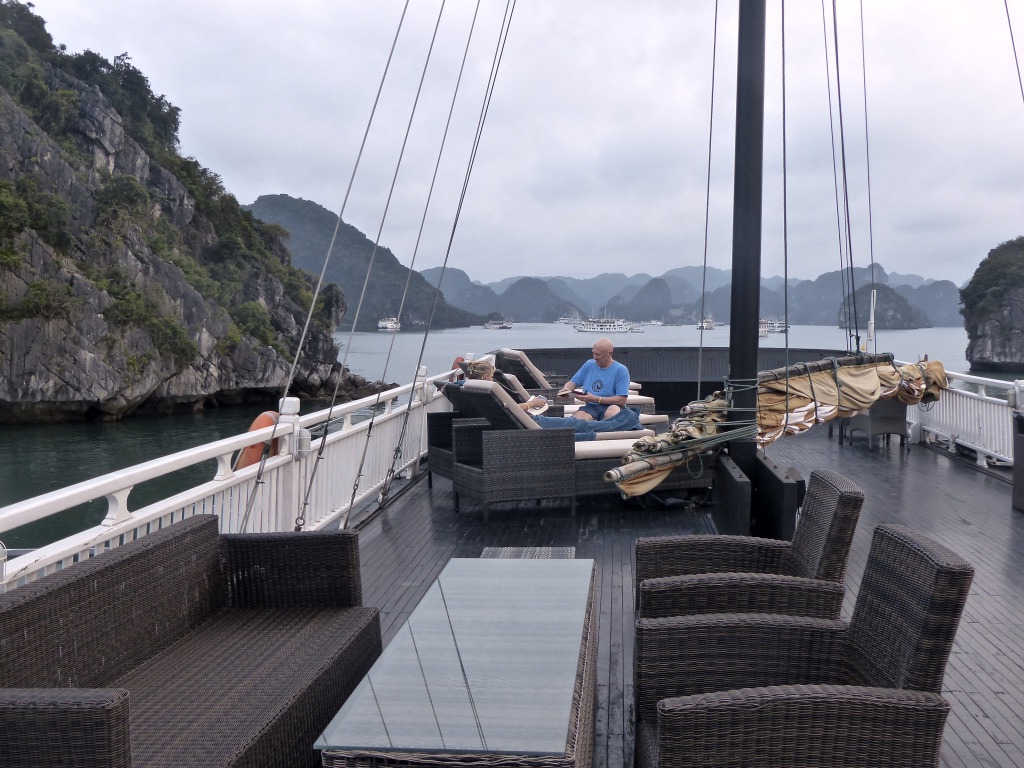
 The boat had a lovely upper deck where we lounged and enjoyed a range of activities, sipping coffee and cocktails on either side of the day, reading our books and taking in the stunning views. On deck, we also participated in cooking classes and even did early morning Tai Chi.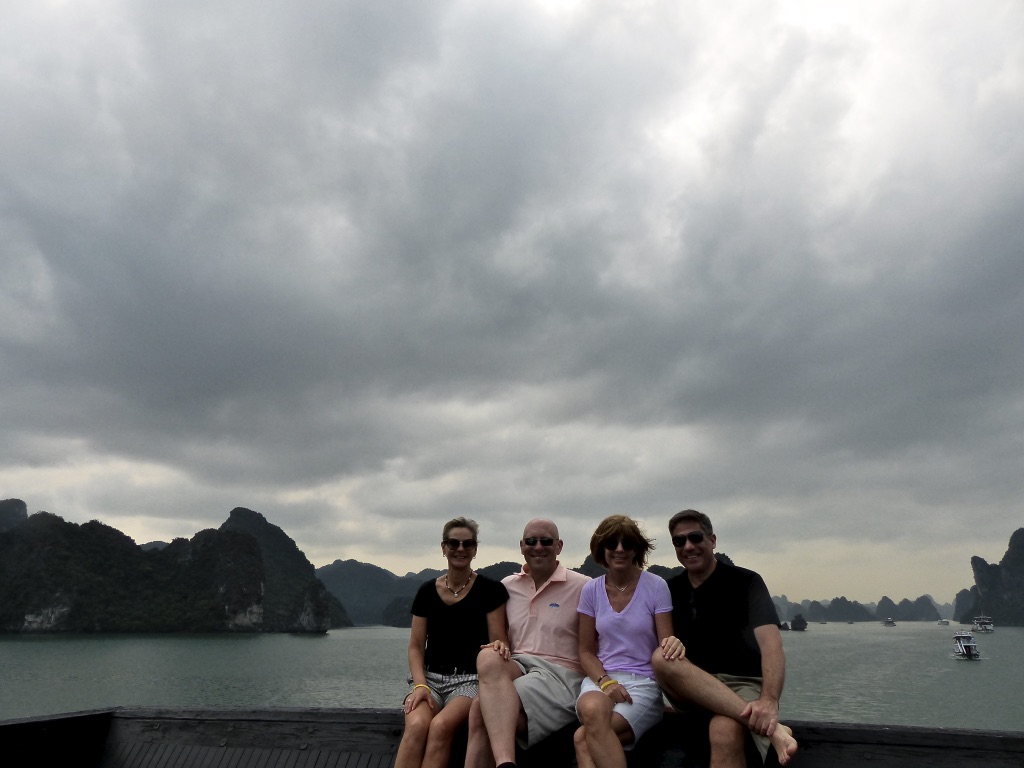
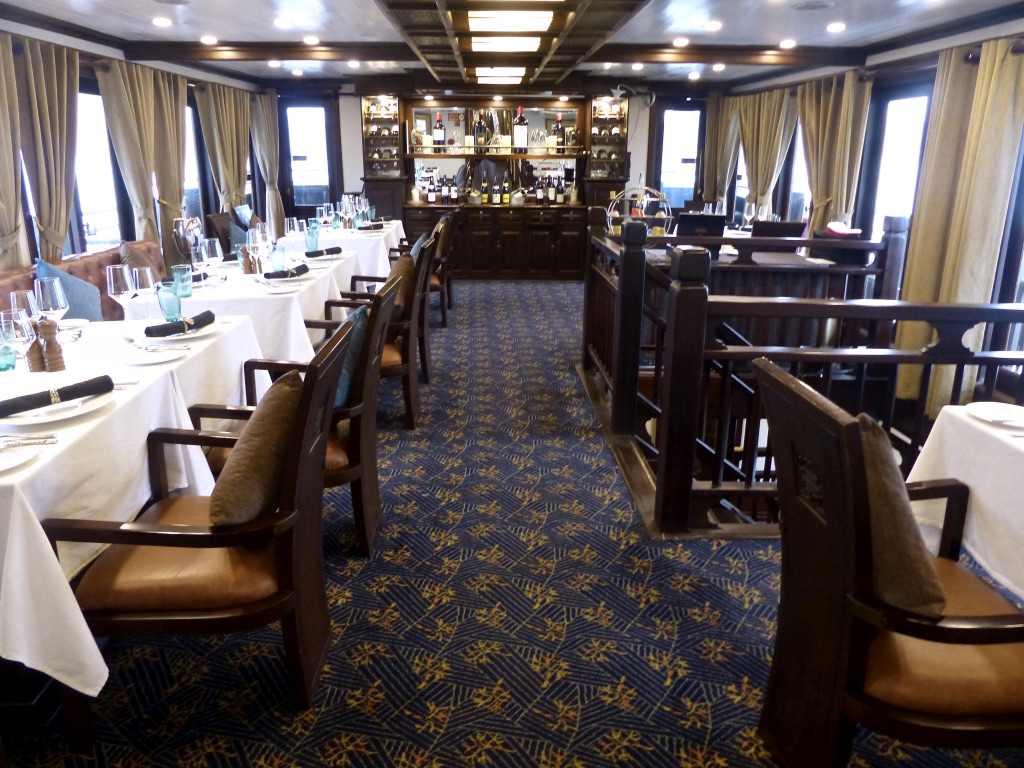
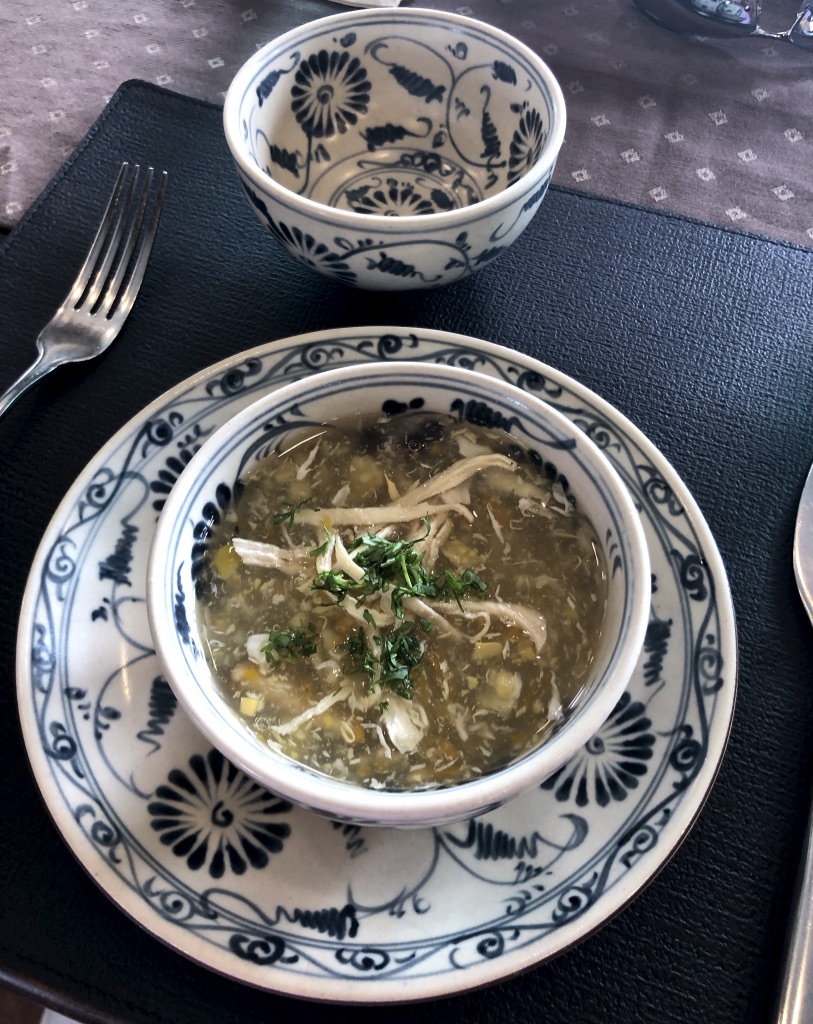
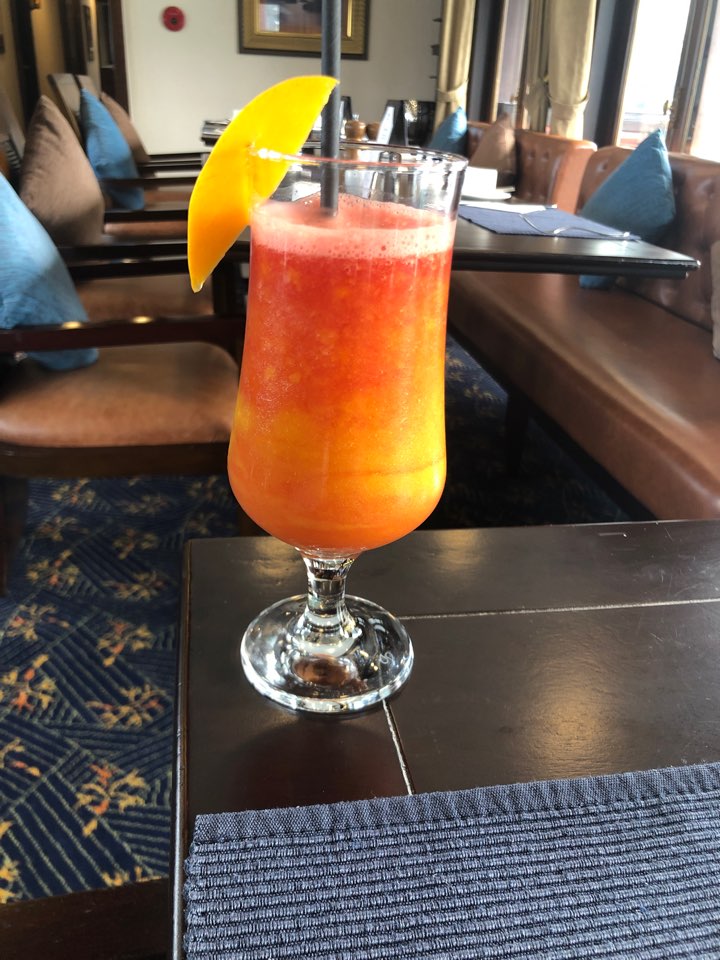
 On the floor below, we at our meals gazing through the windows at all the surrounding islands and enjoyed pre-dinner cocktails at a bar on the stern. Below you can see some of the delicious local cuisine (chicken with lemongrass, fresh spring rolls, pho, mango watermelon juice, etc) all served on pretty china. Breakfast and dinner menus featured plenty of Western cuisine options too. I ordered pho each morning which was so so so good. Laura took the “plunge” as well on the second morning, but the boys stuck to more familar fare.
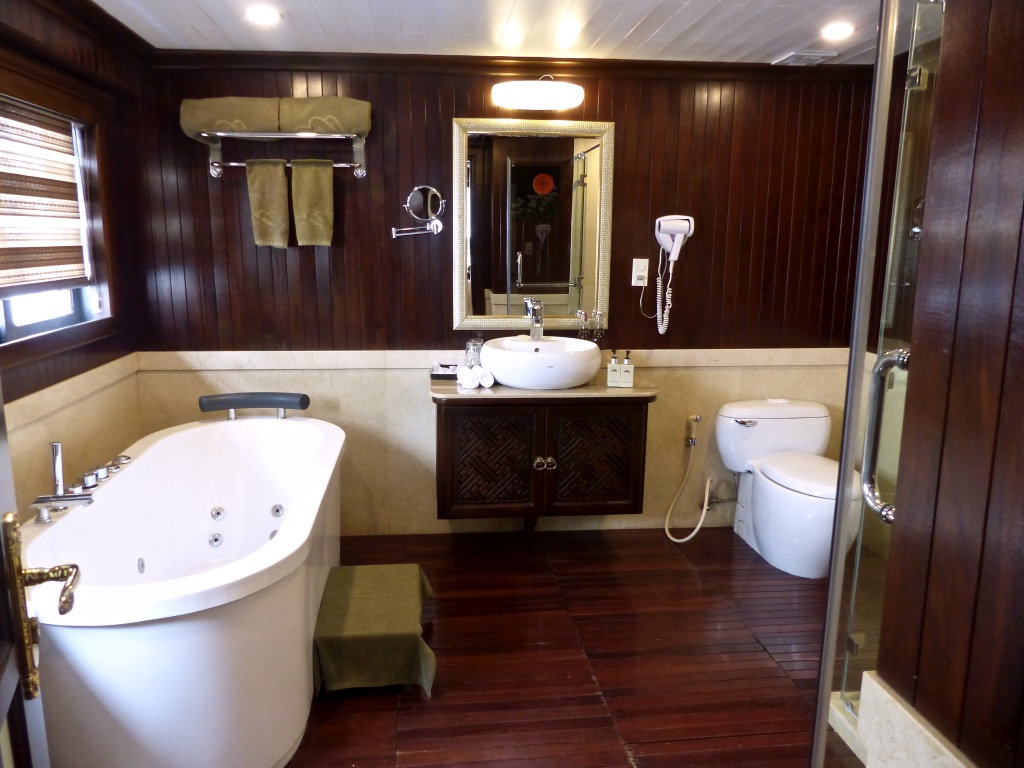
The ship only had 8 roomy staterooms, all of which were located on the lower two floors, as was the spa where Bill and I managed to “squeak” in a treatment. 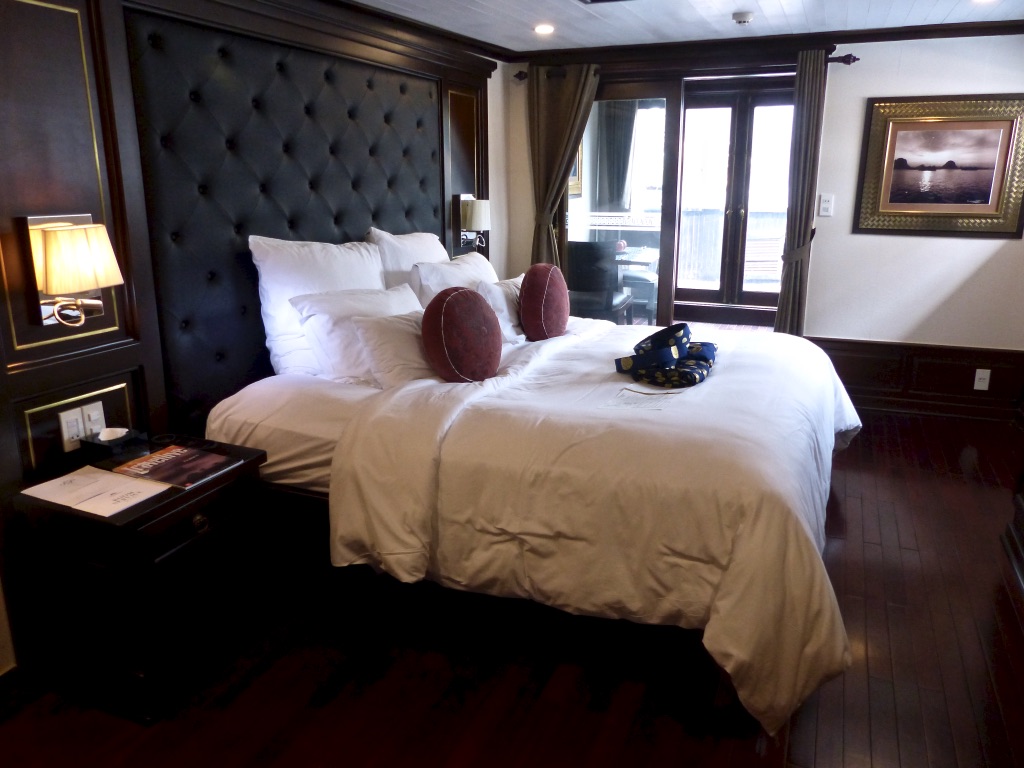
On our beds were traditional Vietnamese robes which we were encouraged to wear to dinner. Bill tried on the headress but found the long silk robe too hot so shut down the suggestion. 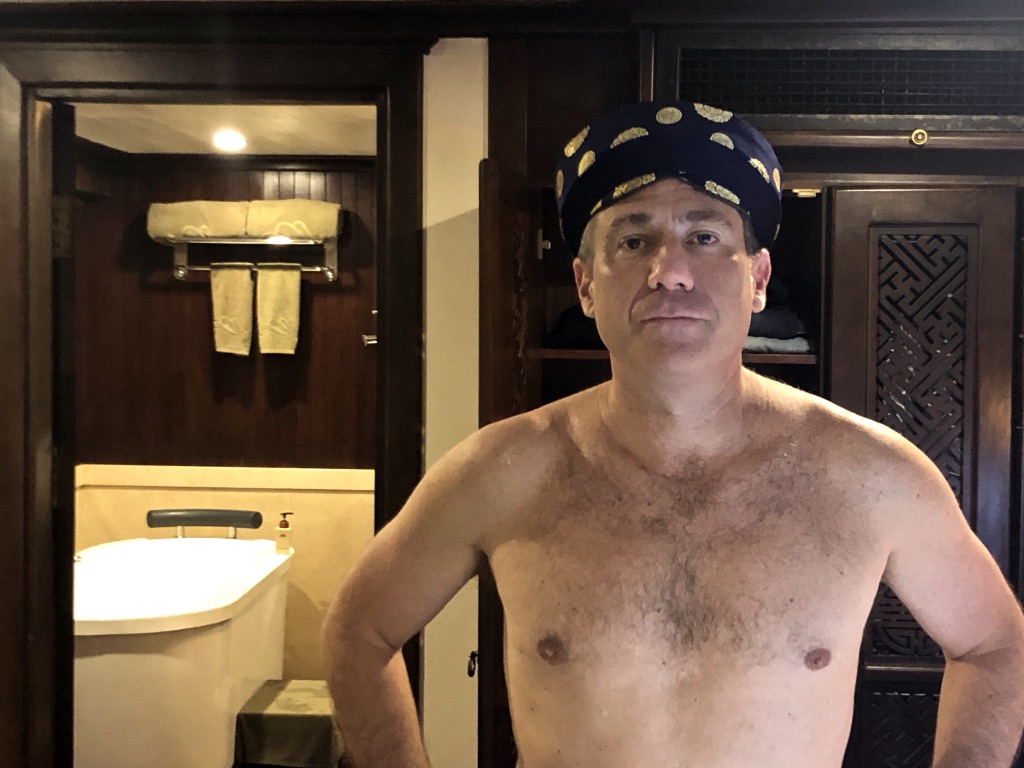 The Hansons arrived at a similar decision so when we entered the dining room in our Western resort clothes, we were all very surprised to see the other 7 guests “en costume”! There was a friendly group of middle aged Mexicans gathered to celebrate a birthday but they didn’t speak English well so our interactions were limited to passing smiles and singing “Happy Birthday” when the cake was presented.
A young Italian couple sat at the other table, glued to their phones and spending an inordinate amount of time taking selfies everywhere they went. The woman was strikingly beautiful, but we still managed to make several snarky remarks about their incessant phone usage before properly introducing ourselves and learning that Christina and Abero had a baby boy only 3 months old who was at home with Abero’s parents. Not only were they viewing baby videos/photos but we also learned that Christina had been modeling around the world for the past 15 years but now works as a DJ at fashion house parties so her obsession with photography/social media made a whole lot of sense. They couldn’t have been nicer and we all had misjudged their behaviour.
Later, Alex and Bill bonded with Abero who was sipping whiskey on the stern while fishing for squid. He wasn’t having much luck so Bill offered to take a turn and caught a large squid in less than 5 mins. Everyone was very excited and helped Bill net the squid and pop it into a plastic bag without getting squirted with black ink. 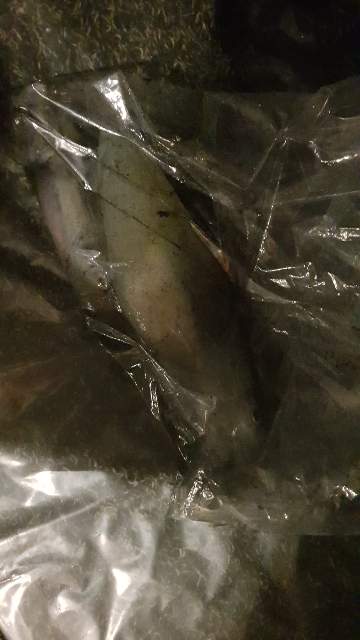 The staff promised to cook it for us the following morning for breakfast, but Bill said he prefered his bacon and eggs and kindly offered the prize squid to the ship’s captain.
The first afternoon, we went kayaking near an oyster farm, and enjoyed the opportunity to paddle Ha Long Bay’s towering islands that seem to jump out of the water in crazy shapes.


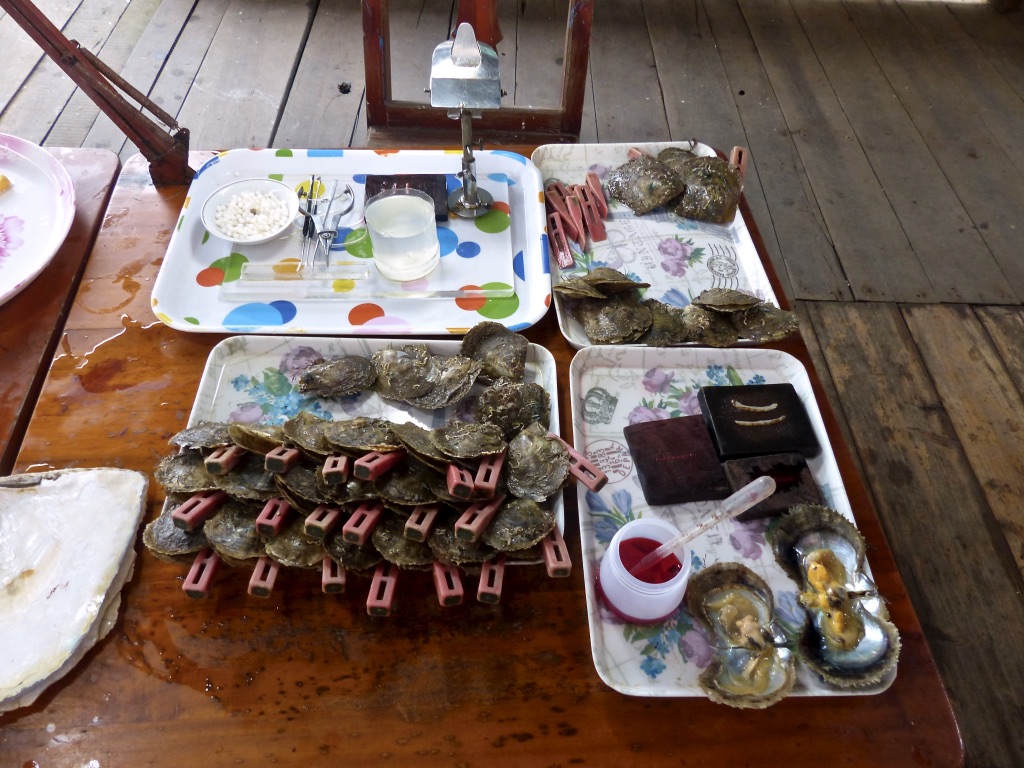
Also visible in the above of Laura, Alex and Bill is the active oyster farm located at this spot. In fact, Ha Long Bay is home to many Akoya (type of oysters that Japan’s Mikimoto began cultivating in 1916 for its classic white pearl shape) cultured pearl farms. The grey balls shown in the photo are connected underwater by long lines from which baskets or vertical strings of oysters are suspended while the pearls are grown. Ever curious, I got quite close to the operation and snapped these pictures of the underwater production.


After kayaking, I also toured the oyster farm operation on the docks to learn how the membrane from a live oysters is first harvested, cleaned and then cut into tiny pieces. A small bit of this membrane is then combined with a round nuclei or “bead” (machine-made ball of oyster nacre) and carefully inserted into another oyster’s ovary. This work was being conducted by scientists in white lab coats who worked under microscopes in a very precise manner. The work must be done quickly since the membrane can only survive outside of the oyster for 30 minutes. Once back inside the oyster, the membrane continues to grow around the bead, adding layers over the next 1-3 years, until it becomes a pearl ready to be harvested. The oyster’s health is monitored every 2 months during this “gestation” period since only 50% of implanted oysters survive. The color of the pearl cannot be controlled and is always a surprise…like a baby!


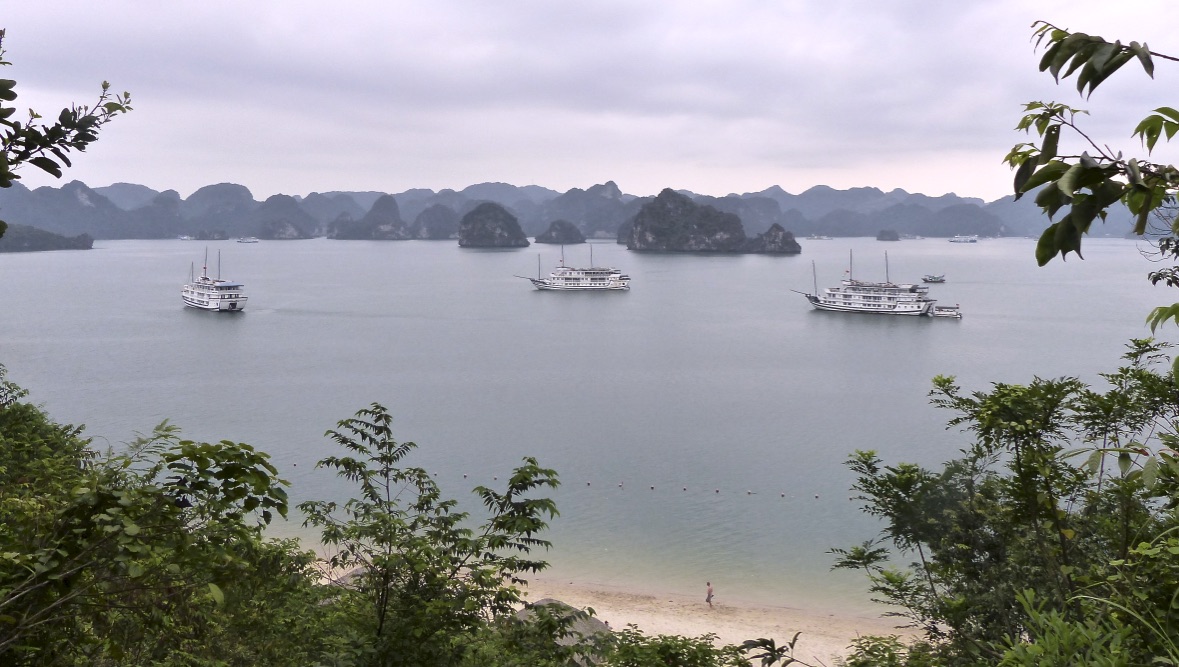
For our last activity, we traveled to Tuan Chau island that had a nice, though clearly man-made, beach facing west full of lounge chairs well-positioned to capture the sunset. This island also featured a wooden staircase and lookout platform that enabled us to view Ha Long Bay’s islands from above.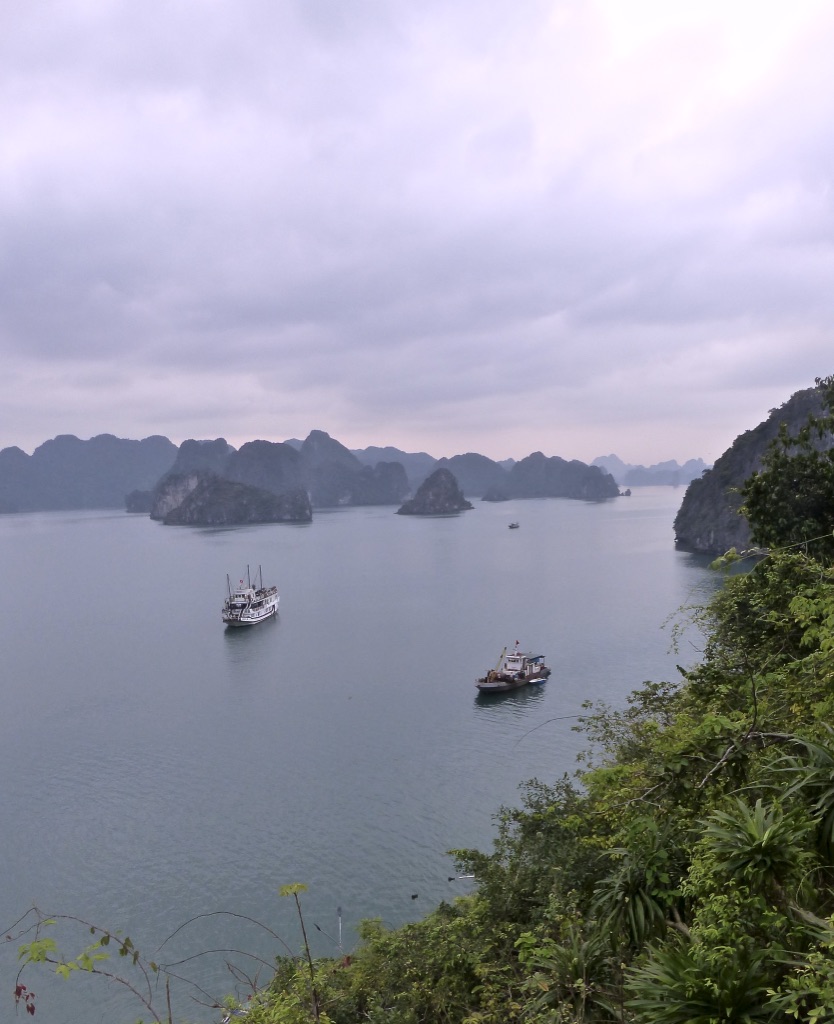
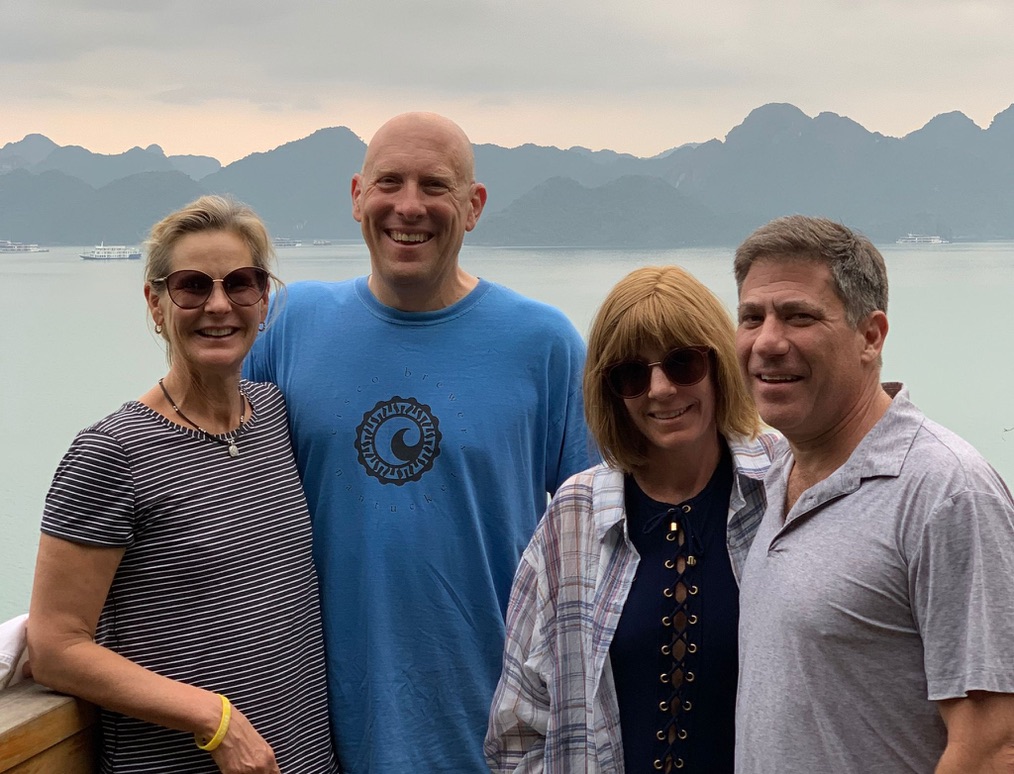 Back on board Paradise Peak, the “boys” headed for some downtime while Laura and I attended the cooking demonstration up on the sundeck. We were taught how to make deep fried spring rolls with pork and lots of fresh veggies and learned a bit about this main staple of Vietnamese cuisine. For centures, spring rolls were only eaten by royalty on special occasions; today, by contrast, everyone eats them almost daily. Consequently, all Vietnamese women learn how to make them before getting married. Below is the recipe that we plan to follow once we are back home, chanting to ourselves “Roll, roll, fold, fold, roll, roll, roll”!
 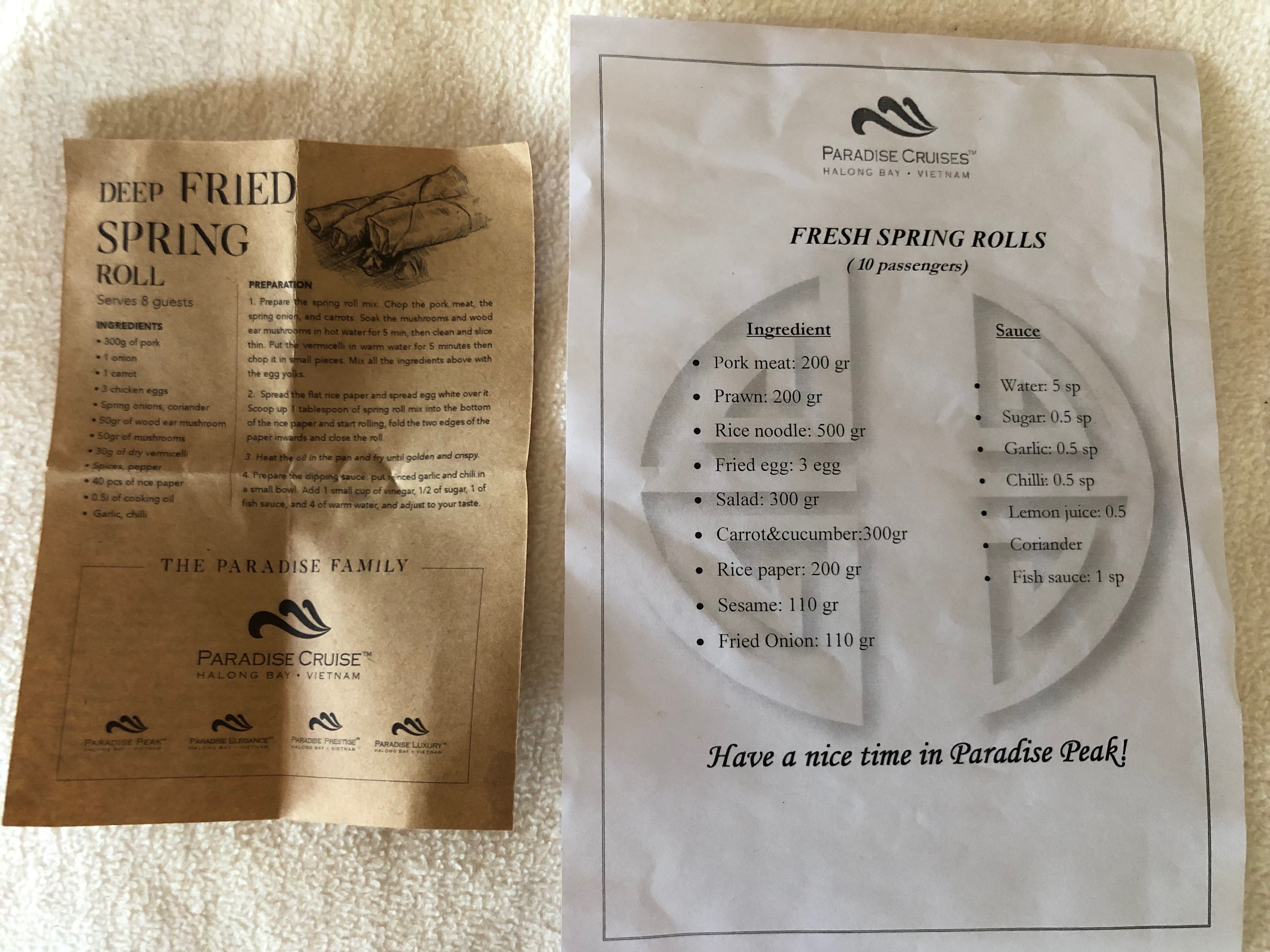 The first day, Laura and I were the only guests who participated in the cooking demonstration led by Ava and Vanje, the two young girls who took care of our every need onboard. The chef had finely chopped/sliced all the ingredients beforehand, and prepared the dipping sauce, so our “work” was light. Both of us were particularly intrigured by the clever use of a lemongrass stalk or spring onion as a brush when speading the egg white (for fried spring rolls) or water (fresh rolls) on the rice paper. Once we had mastered the assembly and rolling technique, the chef deep fried the rolls below deck and then brought them up for us to sample. Delicious!


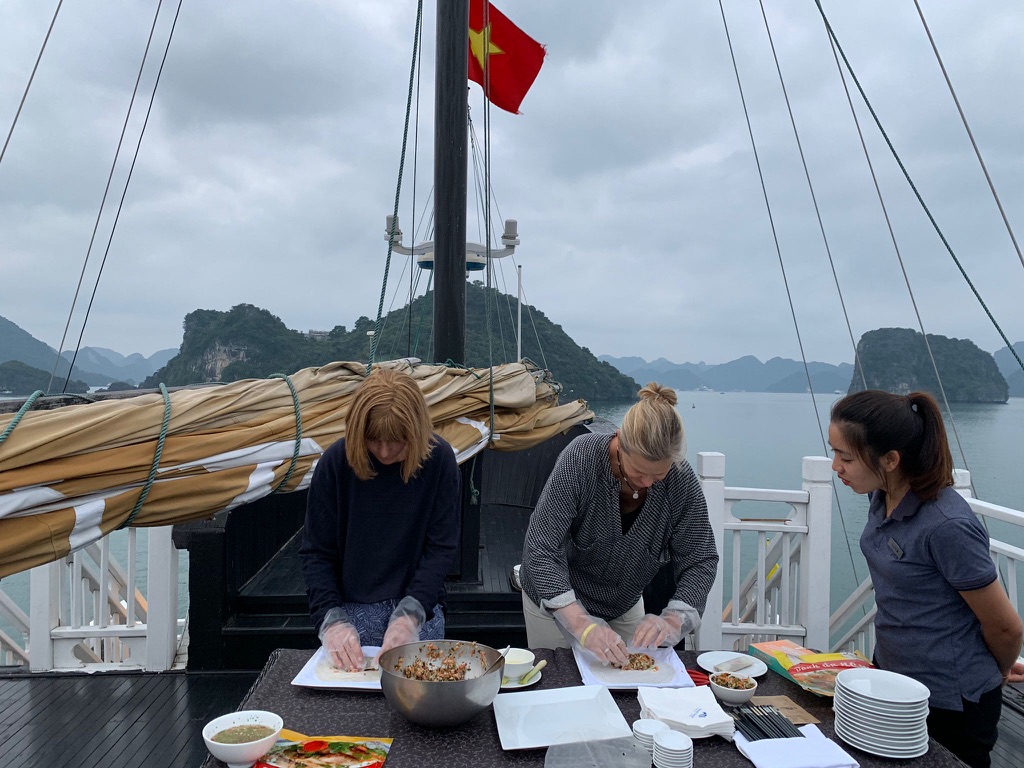 The next afternoon, Alex decided to participate, less perhaps because he wanted to further his culinary skills than he wanted to simply EAT the finished product). Although Laura and I were a tad bored by the same spring roll history lesson on day #2, we did enjoy the watching Alex smiling to himself as he assembled the largest spring roll possible and completed the task!


The views from the sundeck in the evening were equally memorable as you can see below. 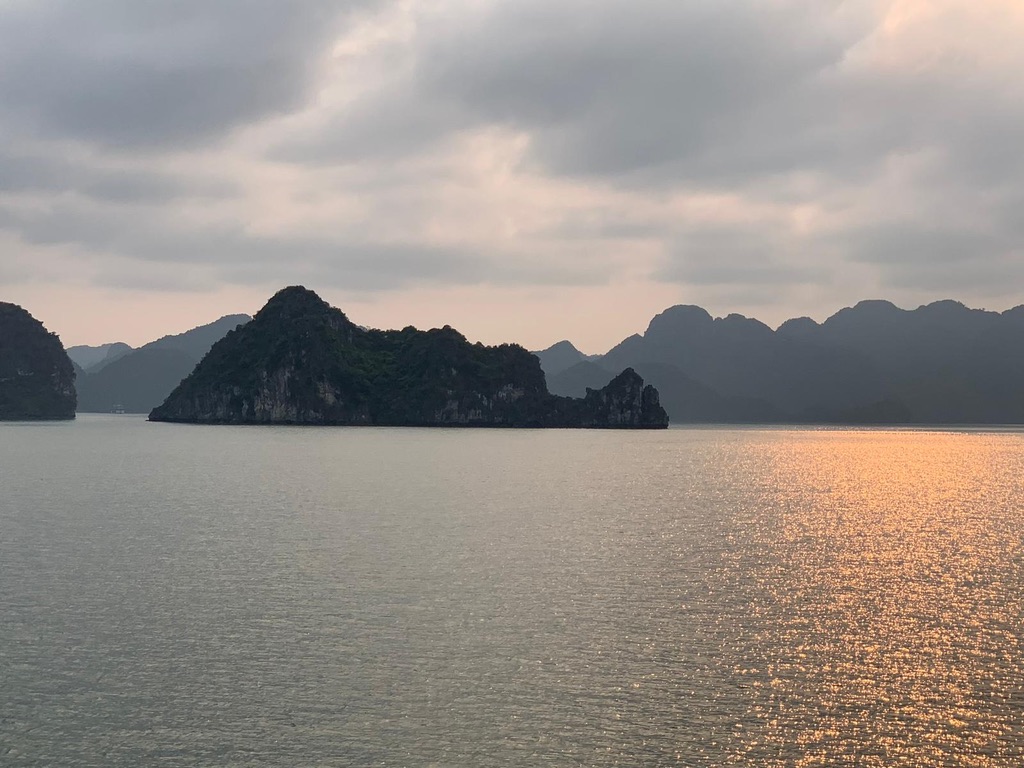
Although we were one of many boats in Halong Bay, we were not bothered by the others in any way and quite enjoyed seeing the deck lights of other ships in the distance.
 Dinner that evening was memorable not only for the food, wine, atmosphere, lively conversation and chance to be with our dear friends who traveled across the world to meet us in Vietnam, but also for all the silly jokes about dongs and pearl necklaces. Clearly, we regressed to children once again as the evening unfolded!
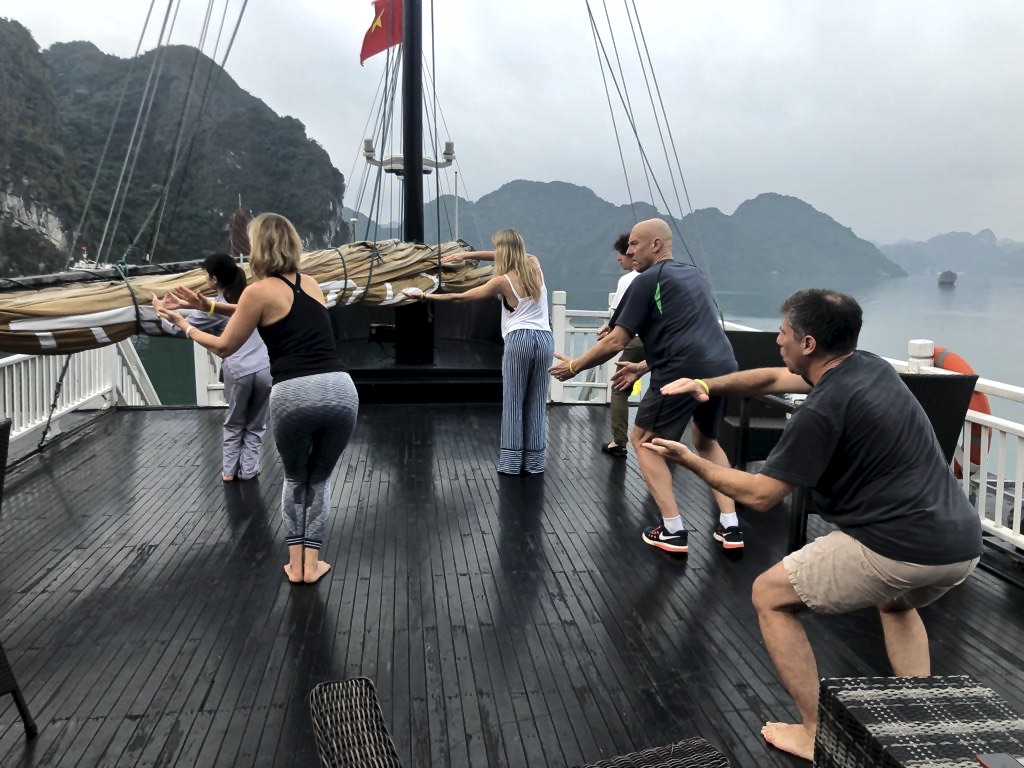
We set our alarms to attend the 6:30am Tai Chi class offered on the deck the following morning and were very grateful when Ava agreed to serve us some coffee beforehand and push back to the class start time. As the day began, with the sounds of birds, small boat engines puttering about in the distance and ancient Chinese music, we slowly followed Ava as she led us through various Tai Chi poses allowing our bodies to gently wake up. The solemn islands under grey skies provided the perfect vista to clear our minds and start the day from a place of tranquility. Breakfast afterwards didn’t taste so bad either…
This day, Paradise Peak was returning to Halong Bay Port to drop off some guests and pick up new ones so we were transfered to a smaller dayboat (Paradise Explorer) until mid afternoon. In order to beat the crowds and avoid the midday heat, we left early for Ti Toh island (named for one of Ho Chi Minh’s best friends) where we were able to trek up a steep stone staircase to a pagoda which afforded stunning 360 degree views of Halong Bay and its thousands of islands. Bill and I felt right at home since the hiking we do in Seoul usually involves steep staircases AND the crowds on Ti Toh island were mostly Korean. We had fun exchanging “Ahnyoung haseyos” with fellow climbers and taking each others pictures, an activity with which, again, we are very familiar after 4 years in Seoul! Alex and Laura elected to double down on the hiking activity, bounding their way up and down twice, while Bill and I savoured the cool breezes and chance to cool down. The boys dipped in the water despite the pollution while Laura and I chatted on the beach.


On the Paradise Explorer we lounged on the rooftop, chatted with guests from other cruise ships, played a brief game of Quidler which Alex was happy to quit, ate yet another delicous Vietnamese lunch and cruised by more islands, each more beautiful and captivating than the next.


Even though by now, we had all taken a million pictures and were a bit jaded, we couldn’t help but admire some of the more spectacular ones we floated by like these below with “holes” in them.
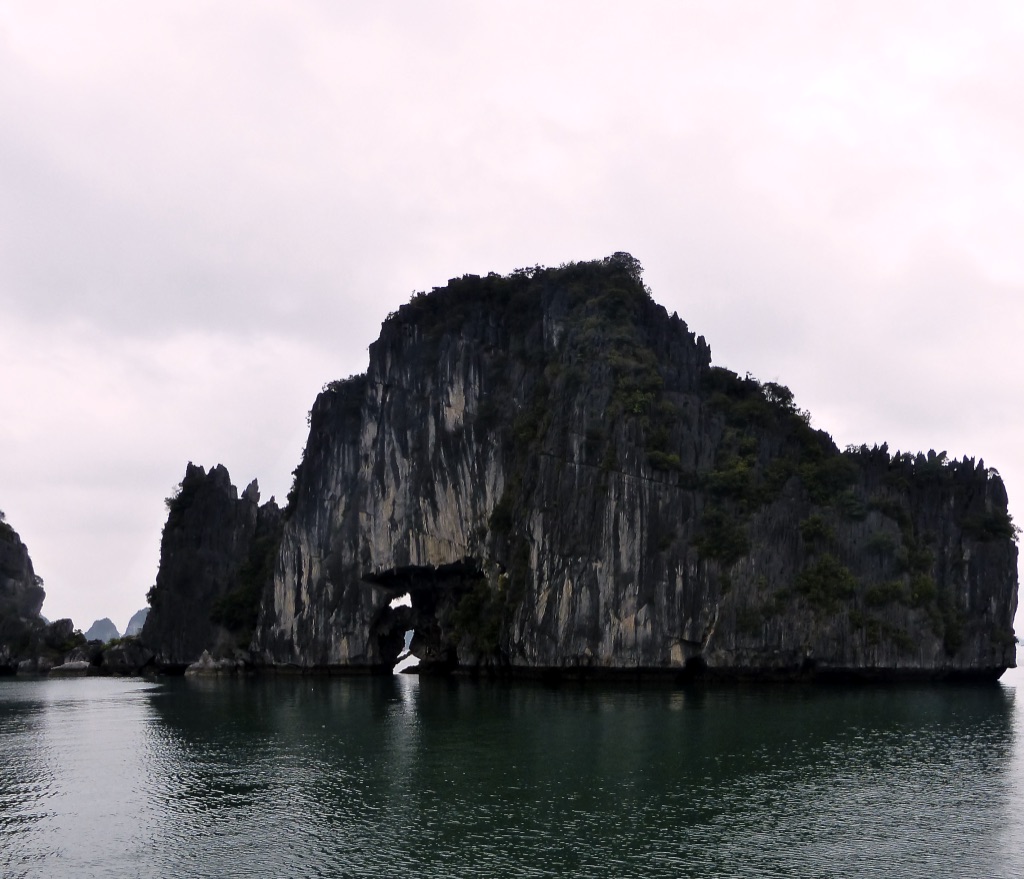
We were also much closer to the international shipping lanes that transverse HaLong Bay so saw several ocean liners. The juxtaposition of HaLong Bay’s natural wonders with one of mankind’s engineering wonders was striking. 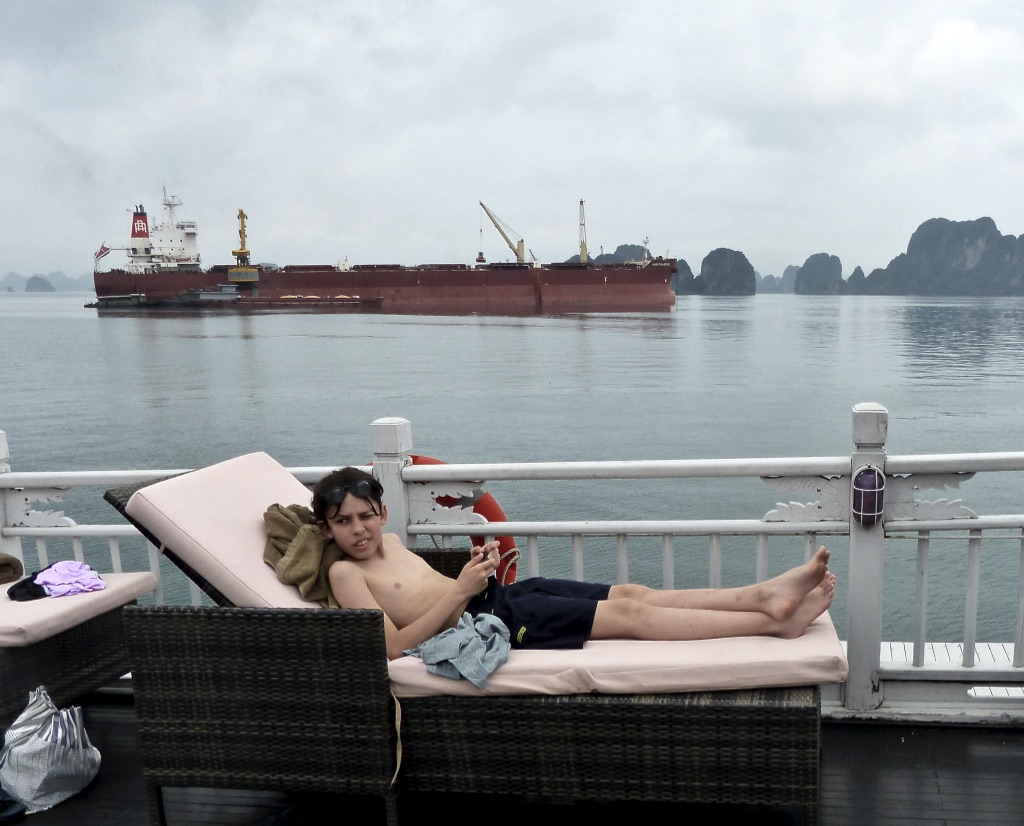 We filled the afternoon with more kayaking in and around more islands, including one that had an extensive cave, complete with bar?!


By this time we were somewhat immune to the natural wonders around us but the caves with their barnacle-like growths and drip-castle shapes were fun to explore.


Our final stop this day was at Cua Van, a Hmong (one of the largest indigenous tribes in Vietnam and Laos) floating village where about 100 people live in a small “water neighborhood”. Hmong tribe members are easily distinguished by their darker skin tone and by the dark clothing they wear. Aside from a simple temple on a nearby island, the entire Cua Van village community lives on the Bay. 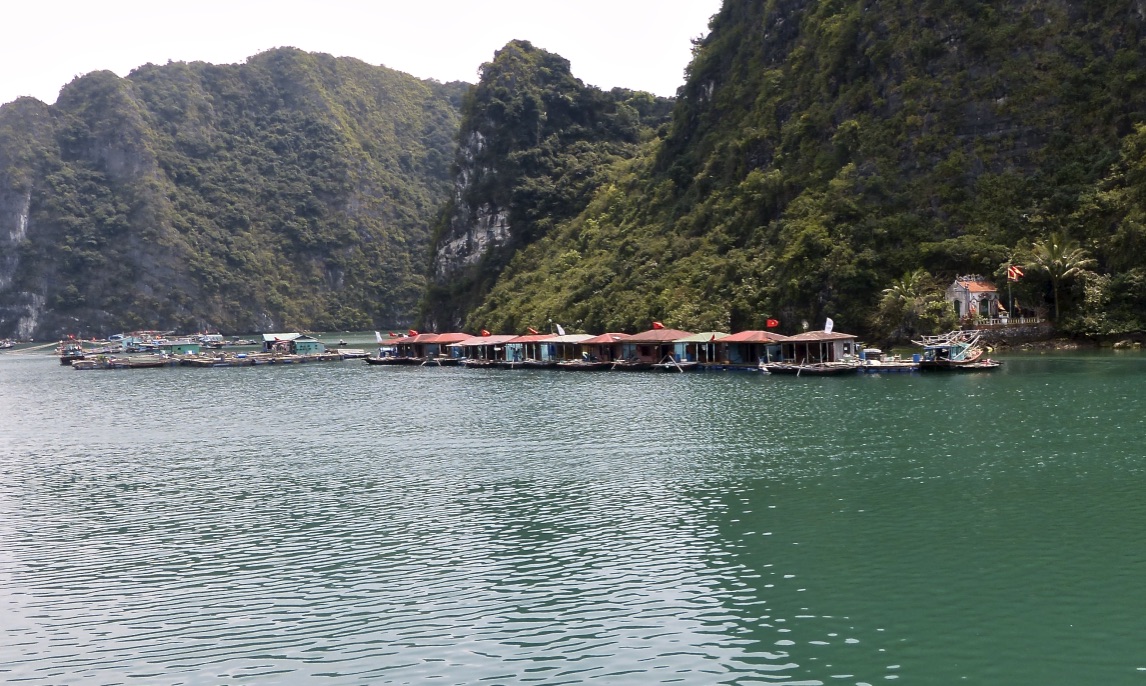 The waters here are very protected from storms by the surrounding islands so this Hmong village has been granted permission by the government to remain as is. It is, however, one of only two remaining villages of the seven Hmong villages that have been situated on Halong Bay since the 19th century. Since 2014 the Vietnamese government has been aggressively encouraging the relocation of the folks living in these fishing villages and has built a resettlement village on land that has schools, hospitals and other social support systems for the Hmong people. Today, the government has forced schools in the floating villages to close so the children now have to travel to/from school by boat each day, sometimes commuting an hour plus at considerable time/fuel expense.
The colors of the fishing village were bright and appealing, with many of the wooden houses and larger fishing vessels boats were painted in tropical colors and decorated with hanging plants, laundry and hammocks.


Life in the floating villages, however, is quite difficult in every respect. There is no running water or electricity so the villagers must buy/store water delivered by a water barge and rely on small generators and solar panels for power. Thankfully, there is a garbage barge that collects daily and on the stern of each small bamboo fishing boat we saw nets for collecting floating garbage. Consequently, the waters surrounding the fishing village were considerably cleaner than elsewhere in Halong Bay.
All of the homes were simple one-story wooden structures floating on platforms buoyed by plastic oil drums and /or tires. Attached to each house are square pens in which fish are farmed. The Hmong villages buy baby fish and then raise them in the floating pens covered by nets to protect the fish from birds for 1-3 years until they are large enough to sell at the market for roughly $40/fish. Some “fancier” houses, like the one below, have multiple pens along and underneath the floors of the home as well as solar panels for electricity. 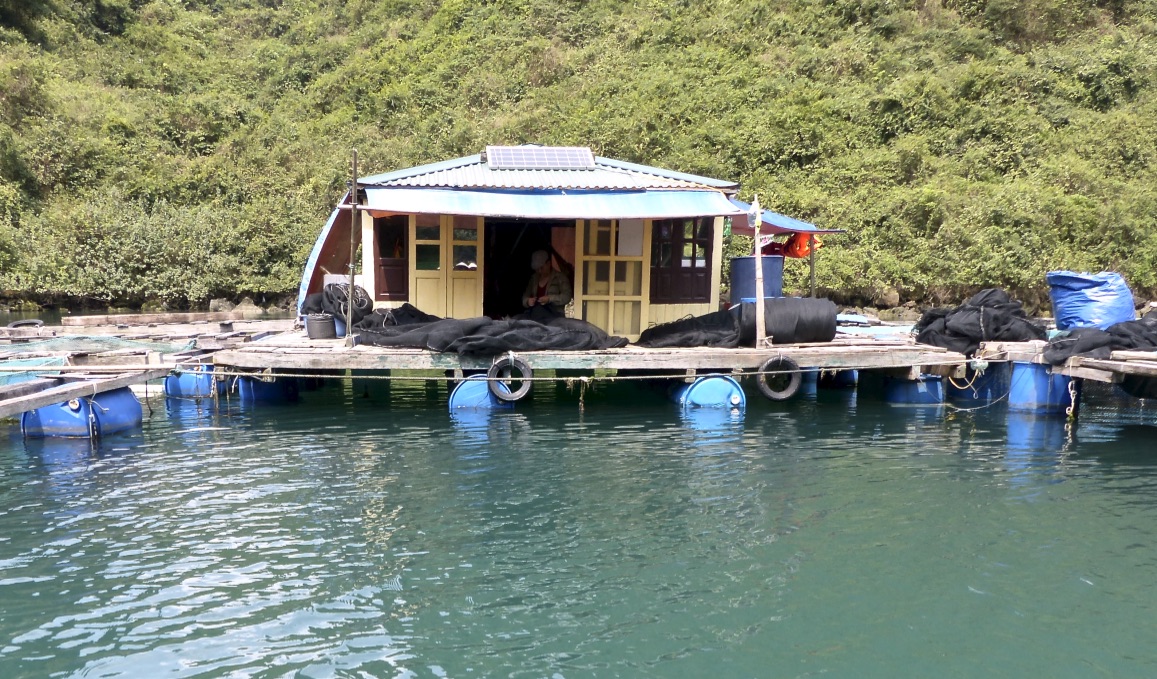
Oysters are harvested with hammers from the base of nearby islands by the elderly and small children who travel in bamboo skiffs. Squid fishing is done at night on the larger vessels with doors that suspend high quality Japanese nets. At night, the squid are attacted to light cast by the giant light bulbs that decorate these boats. 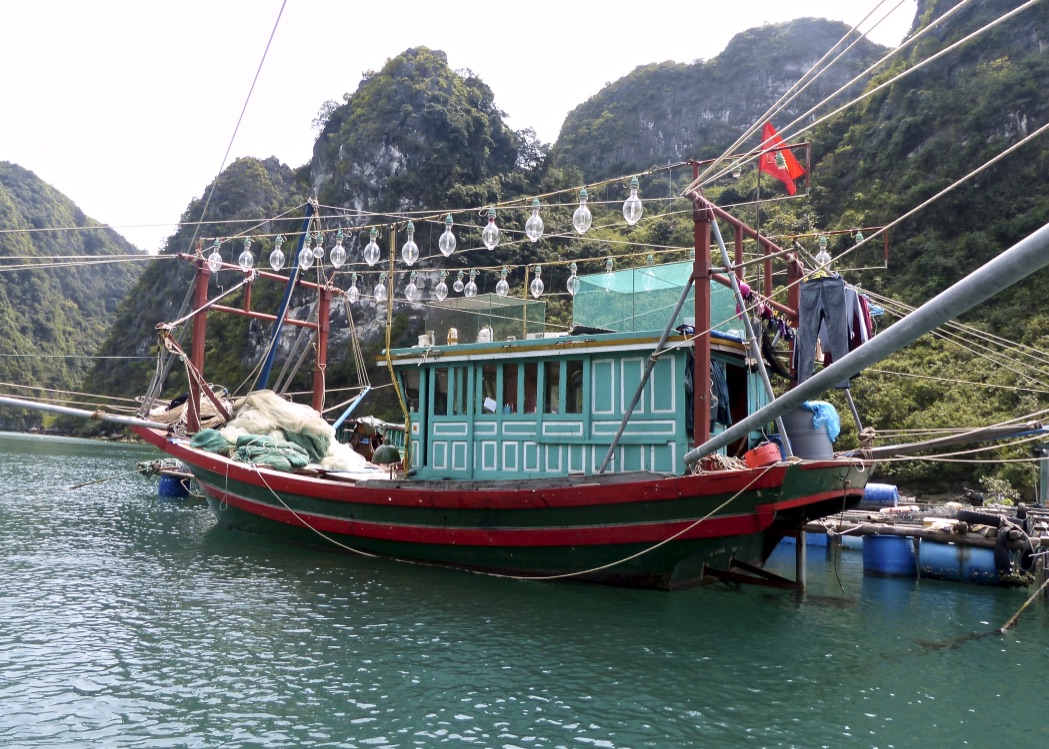
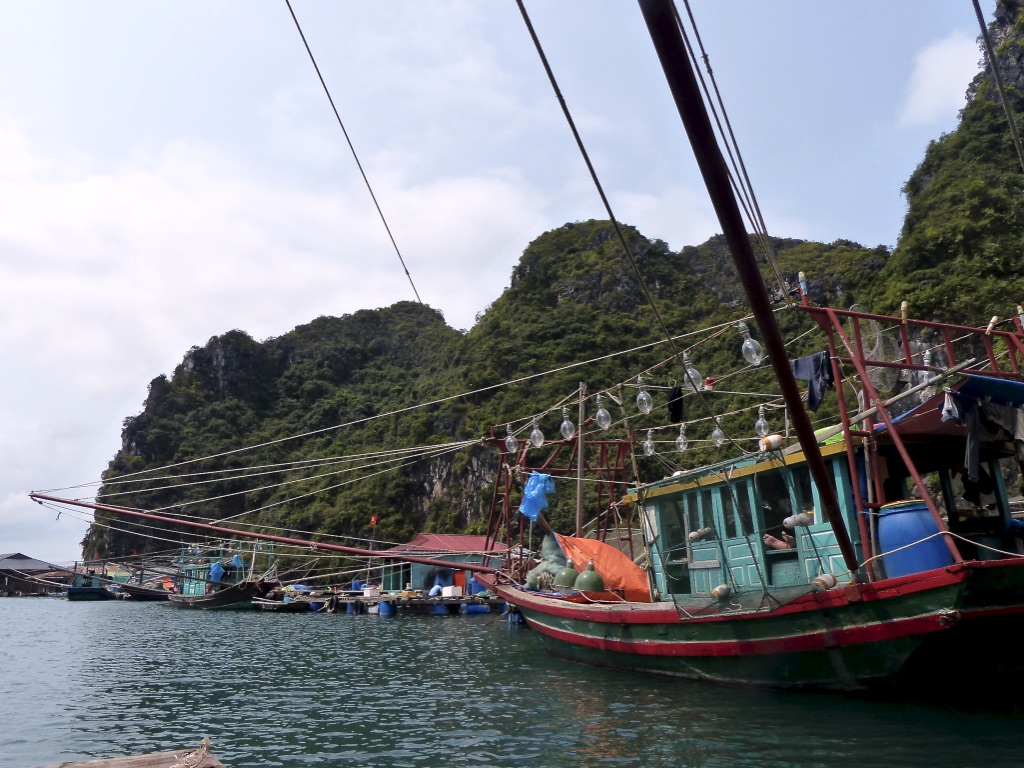
The majority of the Hmong people in these villages depend on squid fishing and fish farming for livelihood though recently some enterprising Hmong folks have started taxi services, food/sundrie delivery businesses and floating cafes. Entire families of 4-5 people also live on small boats like the tarp-covered one below, sleeping, eating, fishing all year long on the Bay. Children who live on these boats do not attend school. Needless to say, the diet of the Hmong people is simple and consists mostly of raw fish!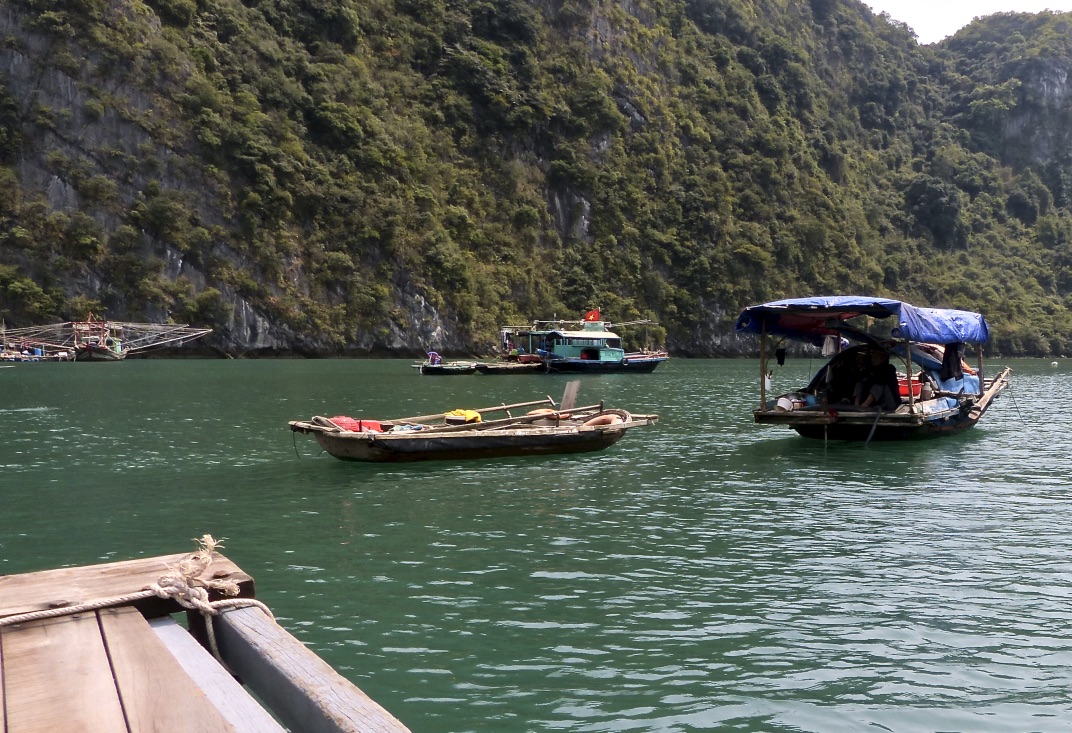
There was a nice museum across from this village that displayed the various fishing tools, types of boats, old pictures and relics as well as modernization efforts and the opening of the resettlement village in 2014. Since the early 19th century the Hmong people have lived on the Bay, adapting to the unique environment and living in a sustainable manner. While one can understand the government’s effort to educate, properly clothe, feed and care for these people living on the periphery of modern society, one also senses the loss of tradition, culture, independence and pride the Hmong must also feel as their home and livelihood are disrupted.
On our last evening we dined at the “Captain’s table” outside on the stern which was a lovely experience. Alex, however, was so very tired he actually fell asleep briefly during dinner.
On our last morning Laura and I chose to practice Tai Chi again with Ava while the “boys” solved world problems over coffee on the stern. Both activities were a serene way to begin our last day on Ha’long Bay. At 7:30am we boarded a smaller vessel for our excursion to Hang Sung Sot so as to arrive before the hoards of tourists that like to visit Bo Hon Island and its impressive cave. Hang Sung Sot (Surprising Cave) is in fact the largest of all the 75 caves in Ha Long Bay and it can accommodate 1,000 people or more. Comprised of two large caverns connected by a 500 meter long passageway, Hang Sung Sot cave encompases 10,000 square meters of space (twice the size of the White House), has 30 meter high ceilings and nicely lit walkways so one doesn’t feel claustrophobic when visiting the site. Look closely at the photo on the right to see the tourists so you can get a sense of the scale of the caverns we explored.


For years, this cave served as a shelter site for locals during typhoons and it wasn’t discovered by outsiders until 1901 by the French who named it “Grotto des Surprises”. It was opened to the public in 1993. This unique limestone cave is full of stalagmites and stalactites which formed over millions of years as teutonic plates shifted and sea levels rose and fell. Stalagmites (piles of minerals and other material that piles up on the on cave floors over time) and stalactities (pointed, icicle like structures that hang down from the cave ceiling as rain water drips into the cave) each “grow” just one inch every 150 years so the tall columns of stalagmites and stalactites that had slowly, slowly joined each other over millions of years are quite a sight to behold. 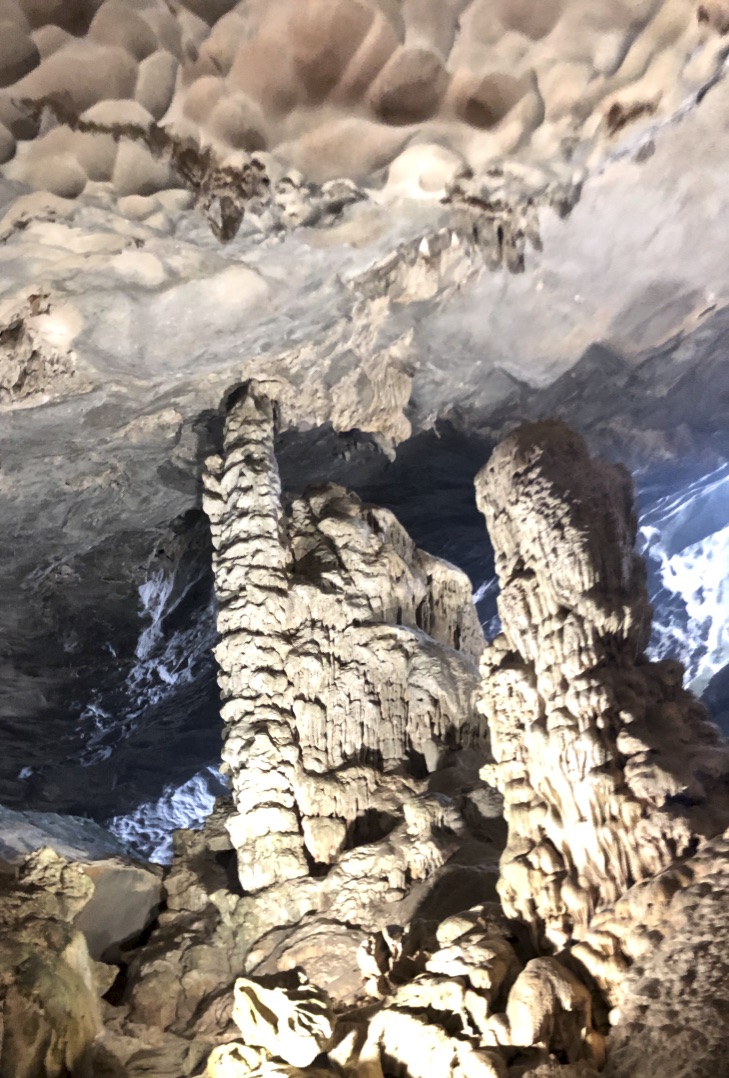
The ceiling of Hang Sung Sot cave ressembles the ocean floor or rippled sand and is evidence that this cave was once submerged under the sea. The cave is filled with lore about various rock formations that ressemble turtles, swords, horses, flowers, etc. but the one that really caught our eye in the aptly named “happiness cave” is featured below:

After exploring Hang Sung Sot cave we returned to our mother ship for breakfast and a pack up before our return to HaLong Harbor. Laura and I enjoyed the last moments up on the deck in the cool breeze as we motored by giant (3 ft. in diameter) jelly fish that populated the waters. We later learned that during the summer months, HaLong Bay is full of these jellyfish such that the water is truly dangerous for swimming. So between the trash and the jellyfish, HaLong Bay’s waters are truly inhospitable which is a real shame given the spectacular scenery.


We traveled by van back to the airport, shared one last Vietnamese meal of pho and other fresh salads before boarding our separate flights to Hong Kong and Seoul. It was such a memorable, magical weekend with some of our very best friends!
 seoulfulsojourn.net