Ever since my youngest sister Julie fell under India’s spell 27 years ago, I’ve been interested in the country and wondered why she stayed 3 years longer than she had originally planned. Following her graduation from Wesleyan University, Julie made the bold move to follow Sri V. Nagarajan her Indian music professor to Chennai (known then as Madras) to further her study of the kanjira, a small hand-held frame drum played in South Indian Carnatic classical music. The kanjira is part of the tambourine family but much more difficult to master. Despite all the challenges of daily life in India, and especially those of pre-internet/cell phone India, Julie kept extending her time there and began to take vocal lessons as well. Although my time with Julie during these years was brief, I loved hearing about her life in Madras but also had a difficult time relating to her experiences or picturing her daily routine. My mom was able to travel over to India to visit Julie and their tales only piqued my interest further. In response, I became an avid armchair traveller, reading lots of Indian novels, watching movies set in India and eating/cooking mangos, curries and naan, all the while biding my time til I could experience it all first hand.
During the past two years in Seoul, Bill has visited Korean banking clients doing business in India 5 times, returning after each visit with stories and a firm conviction that we need to plan a family trip to this country. This, of course, is easier said than done now that our kids are scattered all over the U.S. and marching to different work/school schedules. So when Bill suggested I join him on a business trip to Mumbai in late November, I decided to “jump” despite the 9 hour flight and abbreviated agenda for what I’d envisioned for the family trip. We met with Lynden and Matthew Cooper, Australian friends here in Seoul who lived in India for 10 years, to pick their brains about what to see/do/pack. All their tips were enormously helpful, especially the importance of hand sanitizer! My e-visa only took a day to procure…BUT the immigration line at the brand new, beautiful Mumbai airport (see below) took considerably longer


so I was a tad tired when I arrived at the Trident Hotel at Nariman Point at 3am Indian time (6:30am Seoul time, but is this calculation ever really helpful?). Guess who was waiting for me in the hotel lobby?! My favorite man on Earth…Bill Stanton!
We slept in til 8:30am, grabbed a quick breakfast and met our guide Ida and driver in the lobby to begin our Mumbai adventure. While similar in population to the 25 million folks living in Seoul’s Capital Area, the city of Mumbai has a much greater population density than Seoul (est. 44,500 people/sq.km vs. Seoul’s 17,000/sq.km). As a result, Mumbai feels far more colorful and crowded, not to mention noisier, smellier, and less orderly, than Seoul, but then again, Seoul is uniquely clean, efficient and quiet. In the photos below you can see the colorful buses, Hindu offerings for sale or decorating cars, mini taxis (Hyundais to Bill’s delight!) and mix of old and new modes of transportation.


When we remarked on the chaotic traffic around us, Ida laughed and explained that here in Mumbai, versus other cities in India, folks actually drive in lanes and obey traffic signals more or less! Still, pedestrians dart out to cross busy city streets at all times and there’s a plethora of carts, buses and animals to avoid on the streets. The streets of Mumbai are very loud as everyone uses his horn instead of turn signals/blinkers when passing/turning so there’s a constant cacophony of car and motorbike horns beeping. We didn’t see a single accident, road rage incident or ever feel unsafe and we were thankful for our driver Purushottam’s ability to remain calm and patient despite all the craziness. Here’s an attempt by Bill to capture the sights and sounds on a typical street without getting hurt himself while filming:
VIDEO
The scariest moment of the entire weekend though was Bill’s near death experience as he set out to cross the road and looked LEFT instead of right. In this former British colony, cars drive on the right side of the road and so Bill failed to notice that large bus careening around a corner as he stepped into the traffic. I screamed…really screamed…to warn him and he jumped back just in time. We are very grateful that a splattered Bill didn’t add to the mess on the streets that day. Ida attributed it to Bill’s good karma.
Ida began our day by driving a short distance north from Nariman Point where all the splashy hotels, including the famous Taj, are located on a stretch of waterfront abutting the Arabian Sea. Tourists and locals meander along this inverted circular drive whose street lamps look like a string of pearls at night (hence the name “Queen’s Necklace”) and hang out at Chowpatty Beach. We meant to stroll here every evening, but were too tired at the end of each day so enjoyed the views from the car/taxi. As we traveled through the well-heeled part of southern Mumbai (Malabar Hills) which is Mumbai’s most exclusive neighborhood, ironically, I saw a RAT on the street! I didn’t see another one the rest of the trip. Go figure.
Situated directly in front of the Arabian Sea, The Taj Hotel was constructed in 1903 by the Tata family, still today one of India’s wealthiest families. Large in scale with over 600 rooms, The Taj was the first hotel to have electricity, fans, German elevators, Turkish baths and then later home to India’s first-licensed bar in India. Directly adjacent is the famous Gate of India which was built to commemorate the visit of King George V and Queen Mary by steamship to then Bombay in 1911.. The two buildings together are quite splendid and a very popular tourist destination. Coincidently, we were visiting on the anniversary of the terrorist bombing that occurred at the Taj in 2008 and so there was a giant stage in the plaza for planned festivities. Here are some photos we took at night when we went for dinner (yummy curries and cool flower arrangements) and then from the ferry when we traveled to Elephanta Island. Where’s Waldo?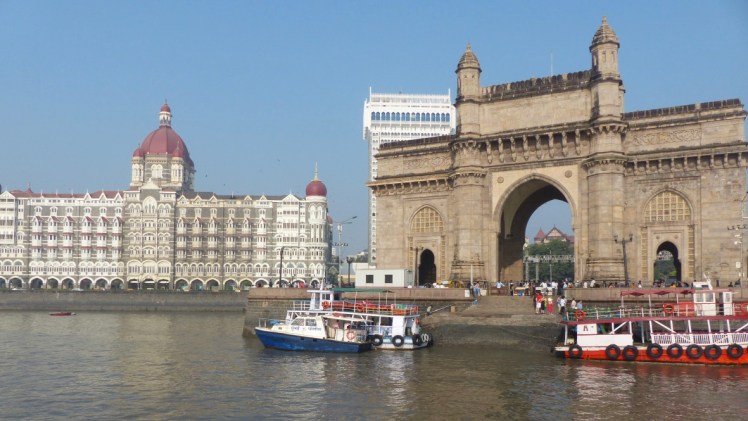


Other sites we saw from the car include the Antila which is the world’s most expensive single-family home owned by India’s wealthiest man, Mukesh Ambani. This 400,000 sq.ft. high-rise residence is 27 stories tall, looks like a modern office building and certainly stands out.
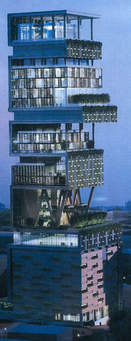 Mukesh, his wife and 3 children live in the house along with 600 servants which is just astounding given the population density surrounding them. His brother and mother live in separate, but equally fancy “digs” nearby. When I queried Ida about the common Indian’s feelings towards the Ambani family, expecting resentment/envy, she surprised me by saying that everyone believes the Ambani’s just have good karma and must have done something wonderful in a previous life! Suffice it to say that her response didn’t make this jaded American feel very good AND it was yet another example of my infamous “tact”?!
Ida’s comment provoked one of many discussions the three of us had about Hinduism during our visit. Roughly 67% of Indians are Hindus, 18% Muslims, and the remaining folks are Jains, Sikhs, Christians and other. As far as we can tell, Hinduism is a rather fluid belief that does not mean the same thing to every Hindu and within India there are many different languages and cultures that have over the years developed into different interpretations of Hinduism. At this point, our understanding of the religion is cursory at best and I won’t begin to try to explain the 330 million (!!) Hindu gods that exist. We experienced Hinduism primarily through our tummies since the majority of the population is vegetarian and menu items which contain beef are highlighted as exceptions, the inverse of what we find in the US and certainly in pork/beef loving Korea. We didn’t mind this “veggie” field trip and were surprised by just how filling we found the various Indian dishes we sampled to be.
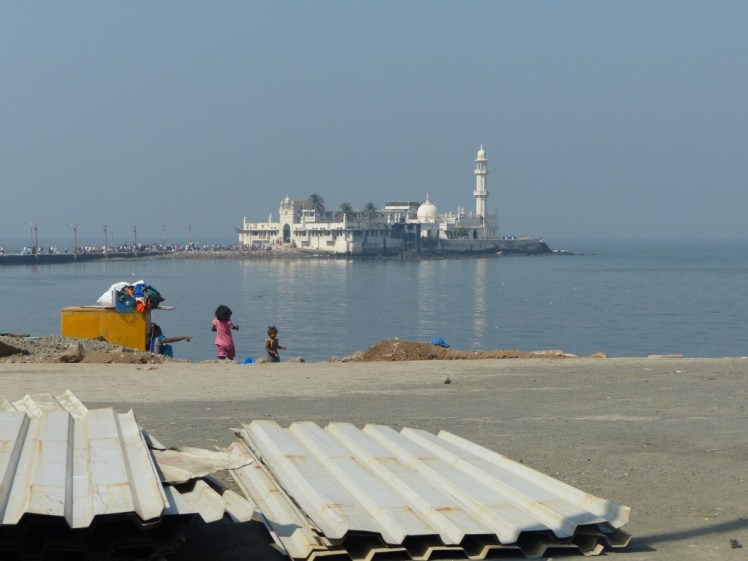
We drove by a famous Jain temple on the water. This temple is actually a tomb so women are permitted to enter its interior whereas at all other Hindu temples this is not the case. As you can see below, it is quite pretty and a popular destination, but per the recommendation of our Seoul friends, we decided not to make the trek in the heat and a did a “drive by” instead.
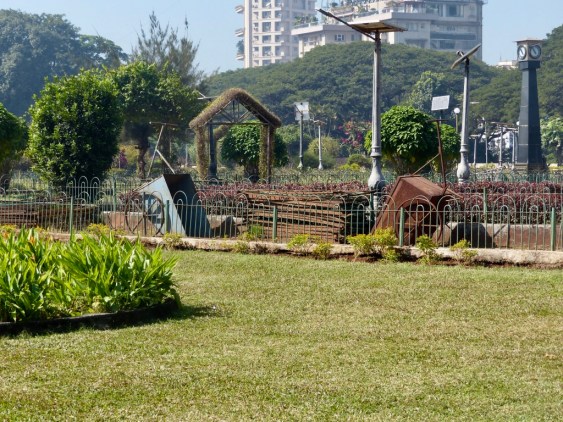
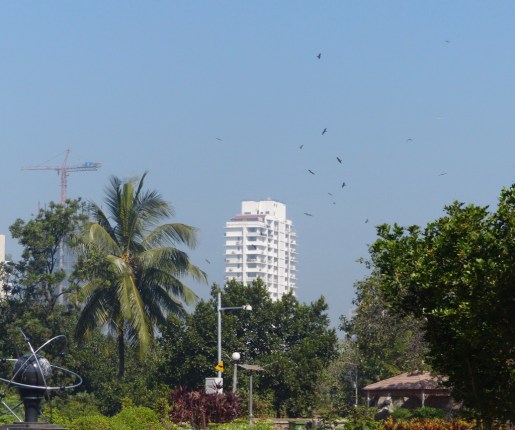
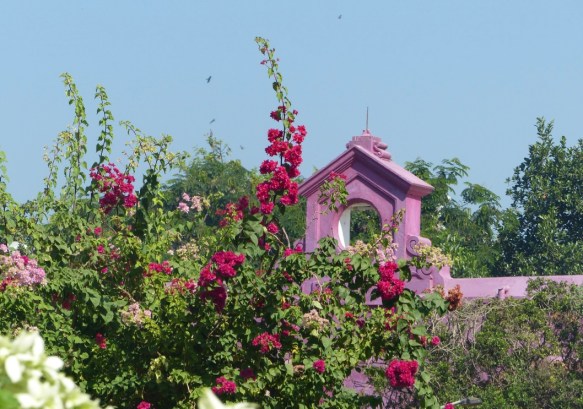
 Soon afterwards, though, we did get out of the car to tour the Hanging Gardens which is now a public park used by locals to jog, practice yoga or participate in a Laughing Club (yes, a real club!) as well as a tourist destination. We found the gardens themselves to be quite underwhelming but we could imagine how for locals this green space is a nice respite amid the concrete jungle of Mumbai. Built in 1880 the Hanging Gardens are situated on top of a huge water reservoir fed by 5 lakes surrounding Mumbai. The gardens serve as a cover/top for the reservoir underneath which prevents pollution from the adjacent Towers of Silence, a Parsi cremation site. Even today, the Parsi dead are brought to the pink temple (see below) and laid to rest for 14 days while vultures “do their thing”. The remains (bones) are then put into wells whereupon chemicals are poured to completely “cremate” the bodies and the fumes are funnelled into chimneys. Prior to the construction of the Hanging Gardens, bones and bits of the dead would sometimes fall into the water reservoir as the vultures flew over thereby rendering the water rather non-potable! As you can probably tell, I found all of these details gruesomely fascinating and just HAD to share! Do notice the circling birds of prey below? Ida said we’d see over 200 birds of prey in the air if bodies were up there.
Two years ago, Bill briefly toured some of Mumbai’s sites and the Gandhi Museum left an indelible impression so he was keen to revisit this small house where Gandhi once occupied a room. One of Gandhi’s key achievements was to design a spinning wheel that could be used in the home by ordinary people. As a protest against the British dominance of the Indian textile industry and their large mills/factories, Gandhi urged all Indians to learn how to spin cotton themselves and thereby reduce their reliance on Britain. Below is a photo of his room and several prototypes of the spinning wheel that eventually inspired India’s to seek independence from Britain. 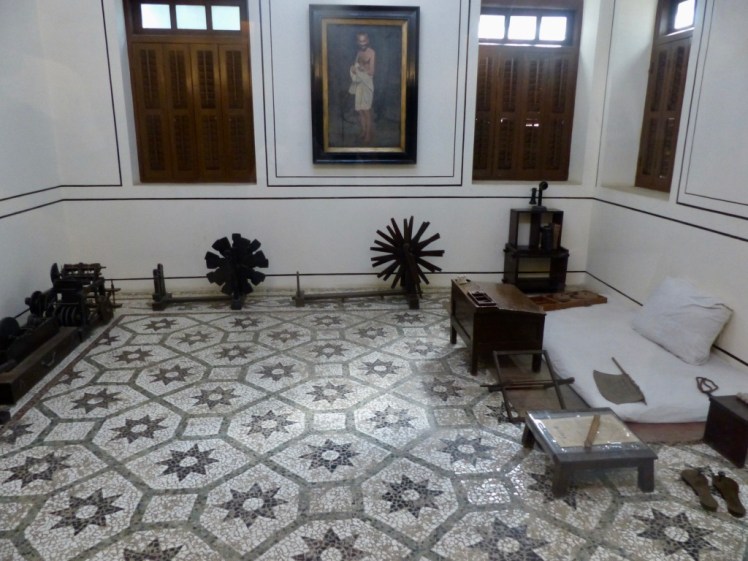 Signifying freedom from the British Raj, the spinning wheel had always been the sole image on India’s flag throughout the years.
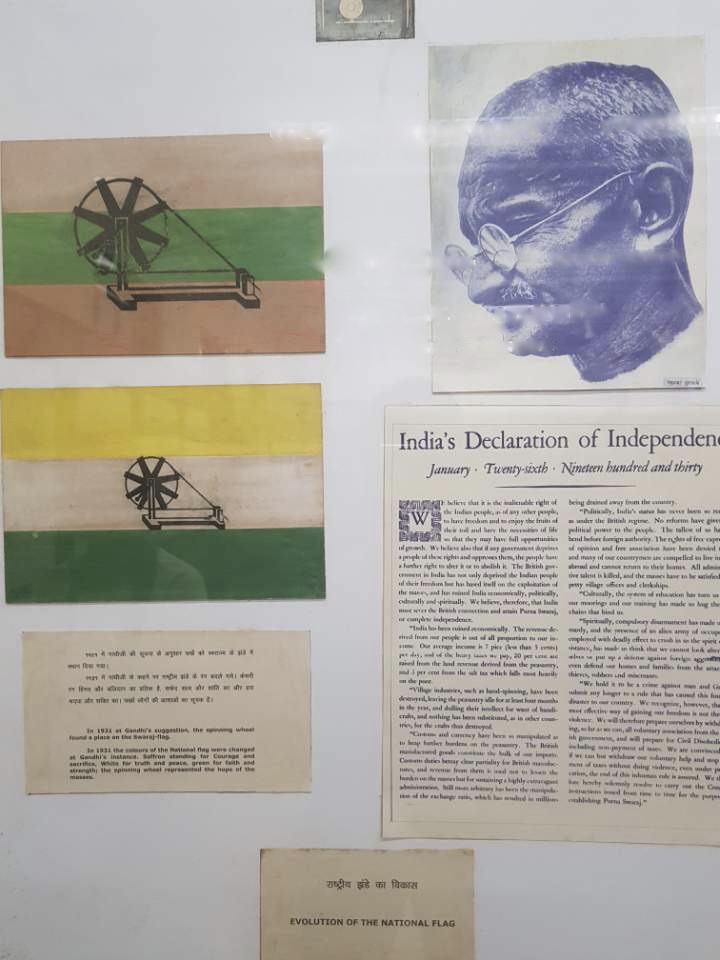
It is hard to articulate just how moving this small museum is, but like Gandhi himself, the photos, framed quotations, books, artifacts and dioramas of key moments in his life, all capture and exude the humility, quiet strength and magnitude of this great leader.
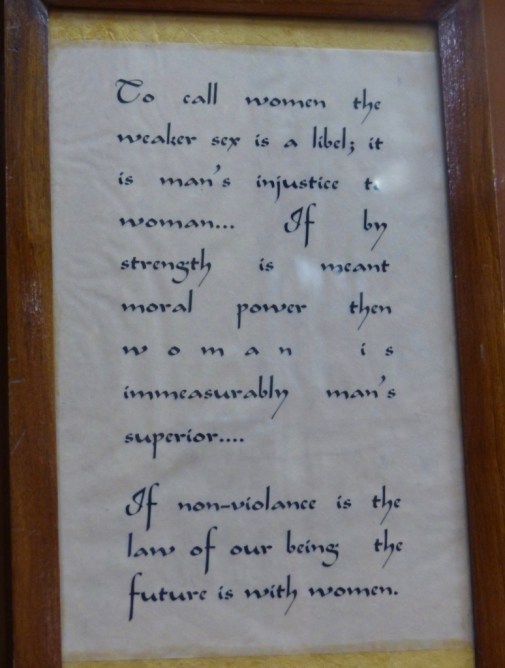

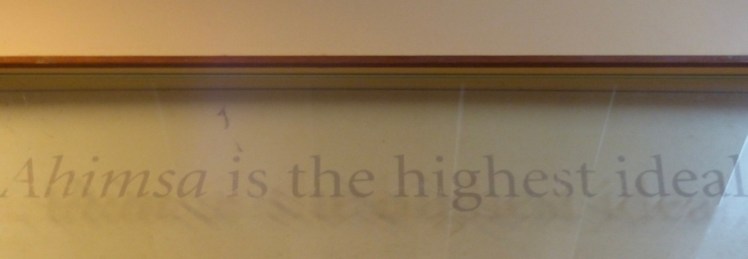 If only Gandhi’s message of non-violence (Ahimsa) and his style of leadership could be adopted by the world today. I wanted to take pictures of everything and peppered Ida with questions as we sat in the library, trying to grasp how this unassuming, humble man was able to help his Country and its people achieve so much.


The Gandhi museum was so thought-provoking that we’ve asked all of our kids to find their way to this intimate museum one day and recommend the same to you!
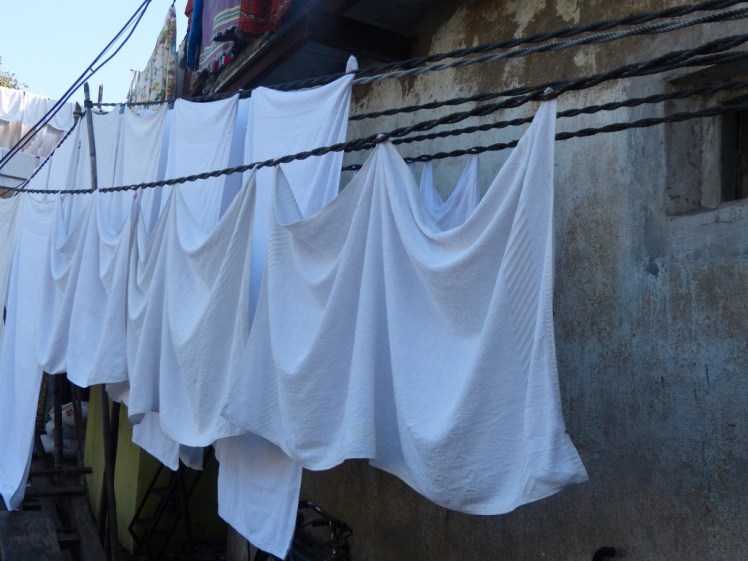
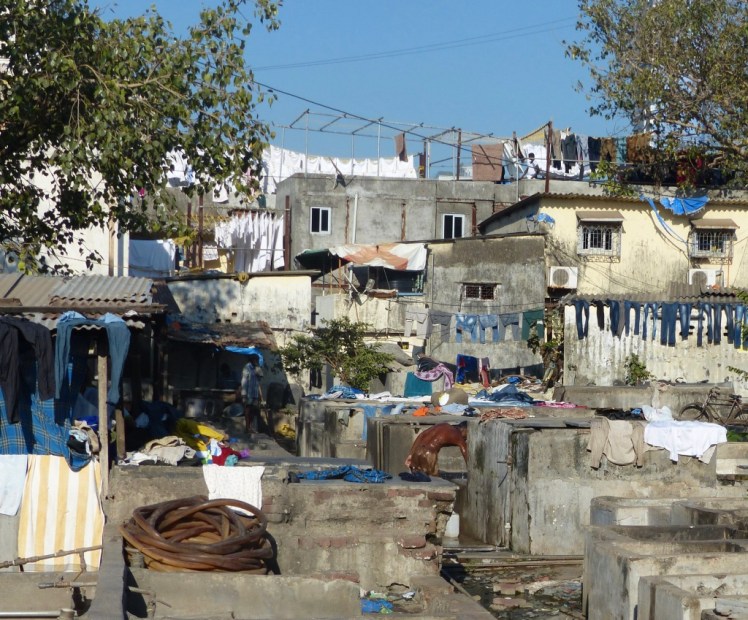
We next drove to the Mahalaxmi Dhobi Ghat, the famous laundry site that has been in operation since 1890. Located in the heart of Mumbai and occupying roughly 1 sq.km, this gigantic open-air laundromat bustles with nearly 7,000 workers who wash, dye and/or iron an estimated 1,000,000 articles of clothing everyday. This site is also home to roughly 200 dhobi (launderer) families who have passed the business down from generation to generation over the years. Starting at 7:30am, laundry from hospitals, hotels and individuals are hand-washed/flogged really in the cement tubs (ghats) you can see below. 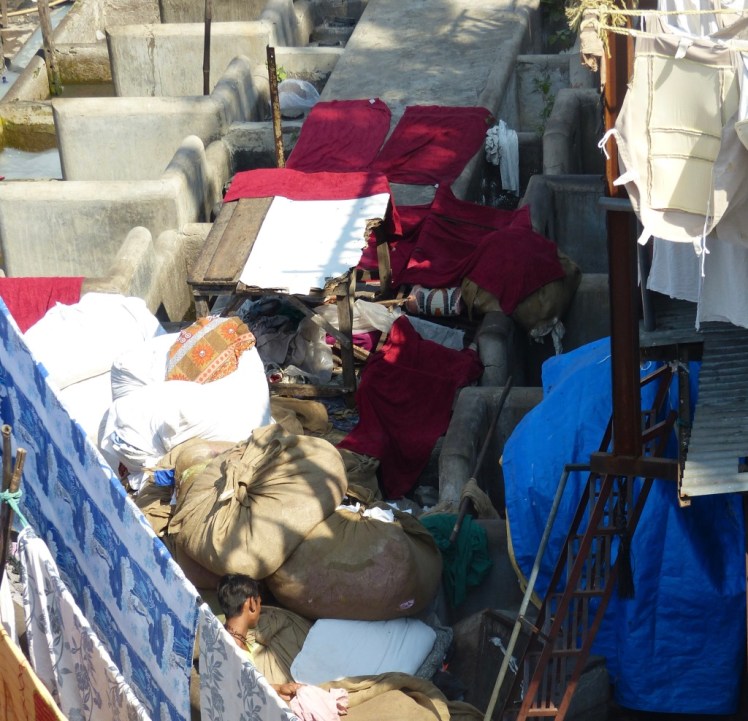 By the early afternoon when we visited, the laundry was mostly drying or being ironed. Next-day service is promised for all items and pickup/delivery/payment can now all be done online. Some wealthier dhobis have electric machines but we couldn’t see any sign s of mechanization. Although the water looked dirty and the scene chaotic, all the clothes, blankets, car covers, etc. hung out to dry were neatly ordered, brightly colored/sparkling white and efficiently handled. However, with rising wealth and standard of living in India, more people can afford washing machines of their own or other laundry services so the dhobi ghat business is changing. As we peered at the high-rises at the perimeter, we also wondered if the prime real estate on which the laundry pit sits is perhaps a gold-mine for these dhobi families…as well as an approaching dilemma for those whose families have been dhobis for generations.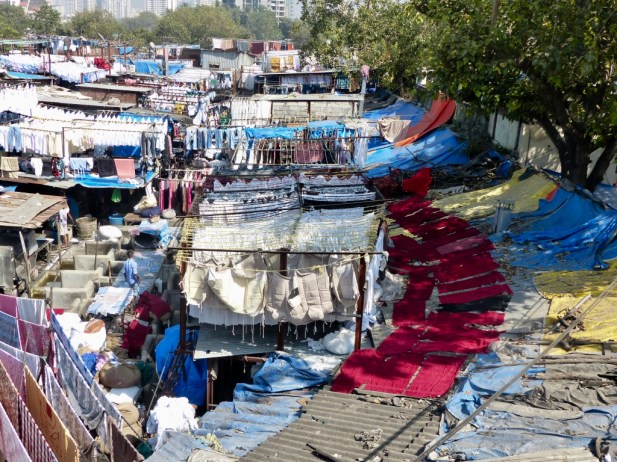
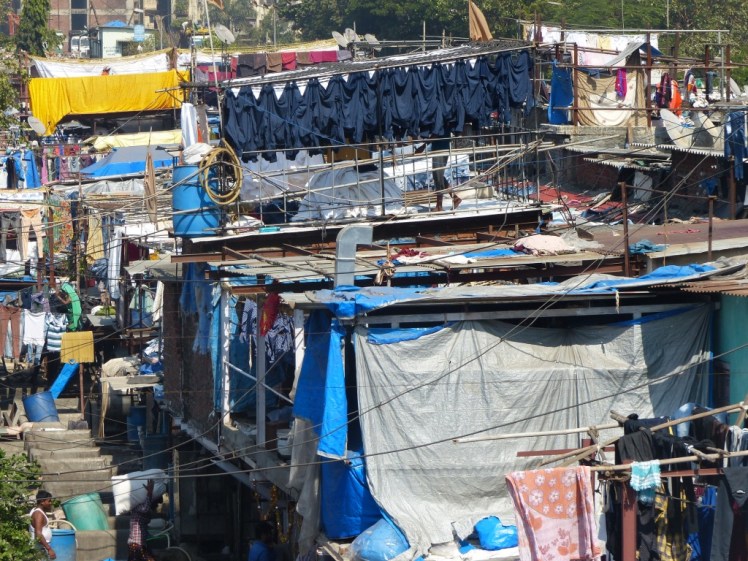
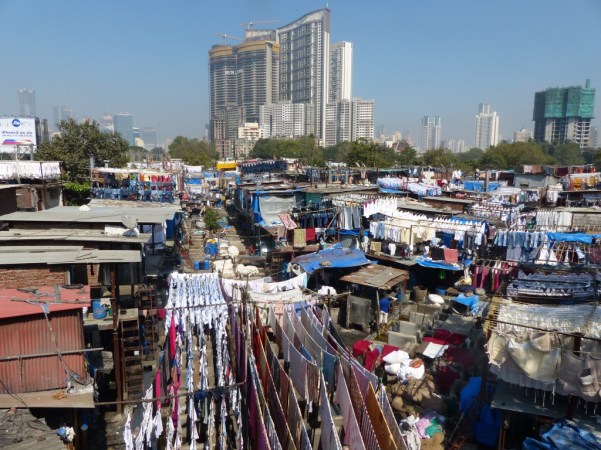
We were not able to descend into the pit at this dhobi ghat, but it is one of many throughout Mumbai and Ida took us to another one later where we were able to meander around and even watch some kids playing a cricket. For the dhobi families, the laundry area is a community where they live, work, go to school and play.


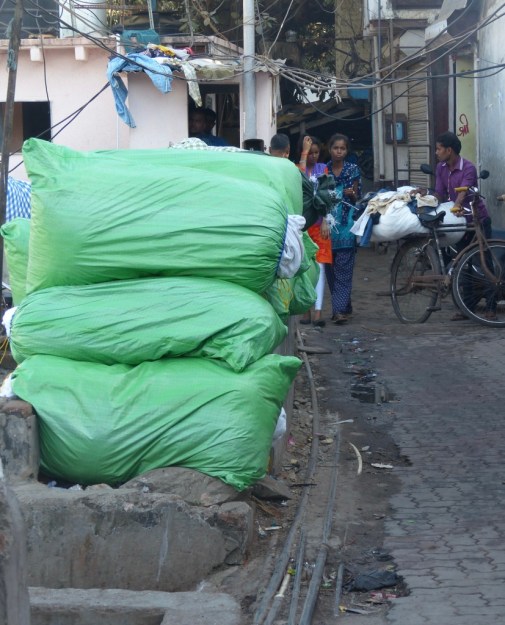
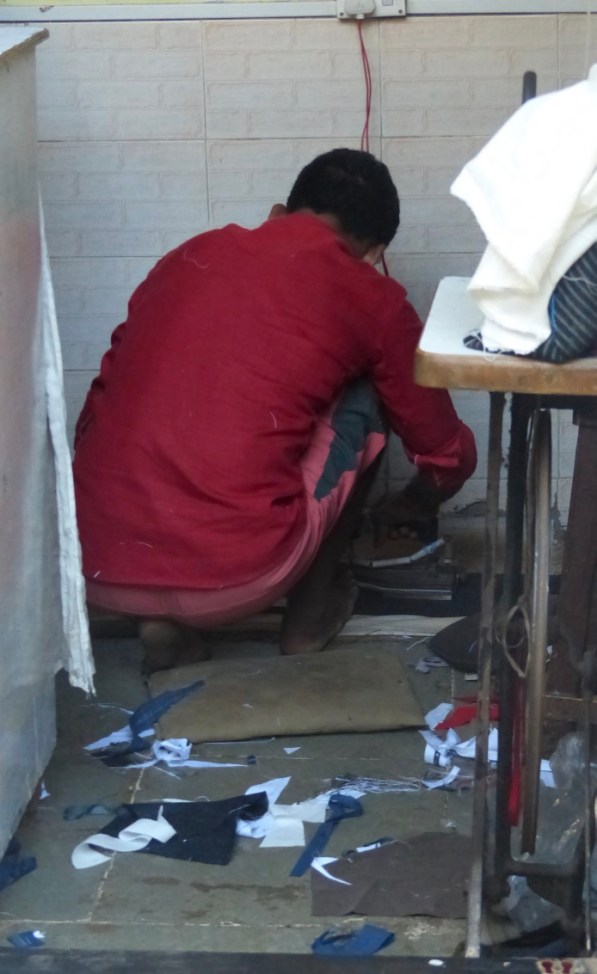
Here, the heavy washing was finished for the day and the dhobis themselves were showering. We could see the huge green bags used for delivery to/from the dhobi ghat, some folks ironing as well as the clever hanging method which obviates the need for clothing pins which just crack in the hot Indian sun.
We ate more delicious curries and naan at a simple restaurant for lunch before visiting some of Mumbai’s landmarks most of which date from the colonial period: Mumbai University with its pretty clock tower and the Victoria Train Station. The wonderful dance scene in “Slumdog Millionaire” was on a train platform here. A World Heritage UNESCO site, the train station is a majestic building through which 3 million passengers travel daily. One cannot enter without a train or group tour ticket however. Admittance to the Mumbai airport is similarly restricted and one must show a boarding pass before entering the building, all of which are necessary in this Country of 1.3billion!


Our last stop was Crawford Market where one can buy all sorts of beautiful produce and spices. I was practically drooling at the sight of fruit selection since the variety in Seoul is VERY limited. The funky artichoke-looking things below are custard apples.


Pineapples were being prepared in a beautiful swirly manner and I got a kick out of the man “catching flies” (literally probably since there were quite a few in this market!) in the left hand corner of the picture below.


Bill was losing patience and interest at this point, so I quickly scooped up some organic spices/curry blends to tuck into my luggage and we retreated back to the hotel for some R&R (yoga, massages and dinner in the hotel). Great day!
We began our second day at Churchgate Train Station to observe the dhabbawallas in action. Dhabbawallas are a lunchbox delivery and pickup service whose logistical model has been studied worldwide by companies and universities for its amazing efficiency and accuracy. Roughly 5,000 dhabawallas move almost 200,000 lunches a day and this service continues to grow each year. Not only is the monthly cost ($31/mo) less than eating out but home-cooked meals also provide the largely Hindus population assurance that the food is vegetarian and sanitary. This dhabbawalla service dates from 1890 and is world-renowned for its accuracy and efficiency since virtually no mistakes are made despite the lack of automation and enormous scale. In the olden days, home cooked food was put into stacked containers (tiffens) and these were color/symbol coded by the largely illiterate dhabawallas. Today, more modern lunch boxes are also used and the addresses are written. Some dhabbawallas still wear the traditional white kurta and caps too.


Workers generally leave home at 5am before mom/wife/maid has prepared their lunches. A bit later in the morning, dhabawallas collect the prepared lunch boxes from homes, travel by train with them into the city center and then gather to sort the boxes according to destination.  Once sorted, the lunch boxes then set out on the heads, bikes or carts of dhabbawallas for offices. All of this happens quickly and within 30 minutes the street once filled with dhabawallas, lunchboxes, carts and bicycles was empty. To Bill and I , the thought of navigating the streets of Mumbai by bike was unimaginable, let alone on an ancient bikes loaded down with lunchboxes!


Next on the agenda was a tour of Mumbai’s Dharavi slum also featured in “Slumdog Millionaire”. For this excursion, Ida recommended we wear “solid” shoes (vs. open-toed sandals), and long pants/sleeves in case we got sick from brushing up against something?! Consequently, I was apprehensive and expecting to see/smell raw sewage, rats and abject poverty. I can happily report that there were NO rat sightings or smelly sewage odors though there is certainly poverty within this huge slum. We spent two hours inside this “city within a city”, meandering in and around its maze of narrow walkways. These photos may give you a sense of this vast slum community, full of homes, tiny alleys and stores, Hindu shrines, kids in uniform headed home from school and of the wider market streets an array of fruit, rice and lentils were for sale. I even thought (briefly) about sampling some coconut water from the vendor below.


The Dhavari slum is home to perhaps a million (no accurate numbers available) residents, many of whom are second-generation slum dwellers. This slum covers over 2km in the center of Mumbai and is the second-largest slum in all of Asia. The slum also dates from the time of the British Raj and was home to many of the workers employed in the British textile factories. Today, it is an inexpensive place to live for many as well as home to several cottage industries which together account for an estimated $1 billion/yr.
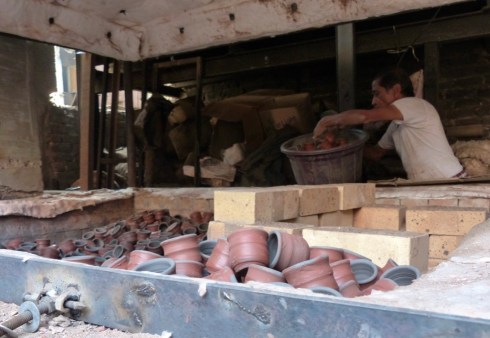
The first cottage industry we came across was a neighborhood of family owned pottery manufacturers. We walked by sacks of earth, deep pits where the clay is mixed, piles of small vessels drying in the sun or awaiting firing in the smoky kilns nearby. All the little pots you can see below are made by hand and then sold to wholesalers throughout the city.


We stopped to talk with a father-son team who were loading up a kiln and Bill asked all sorts of questions about the firing process and history of their family business, sharing details of his own fatherless upbringing. It was a tender moment and I was once again struck by Bill’s unique ability to connect with people despite vast cultural/language/economic divides. I could tell Ida too appreciated Bill’s sensitivity, something I feel very fortunate to have in my life.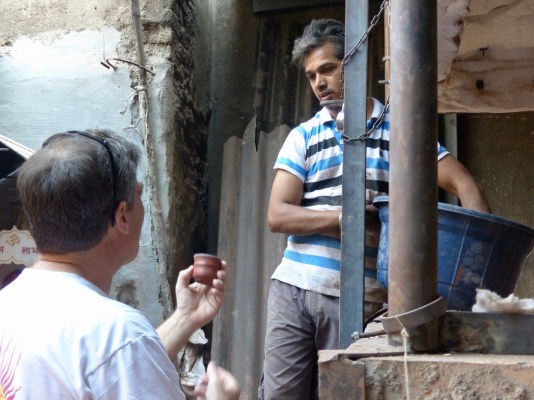
We next walked through a papadam (Indian snack made usually made from chick pea flour and flavored with peppers, chilies, etc) section where women and children were rolling out the dough into flat circles and then placing them to dry on baskets in the sun. It was a quaint area with mothers teaching young children the art of pampadams, but we were not allowed to take pictures of women or children in the Dhavari slum so I found the one below on the internet. 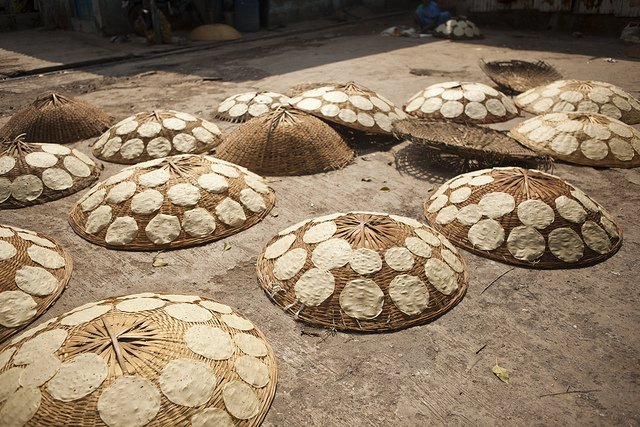
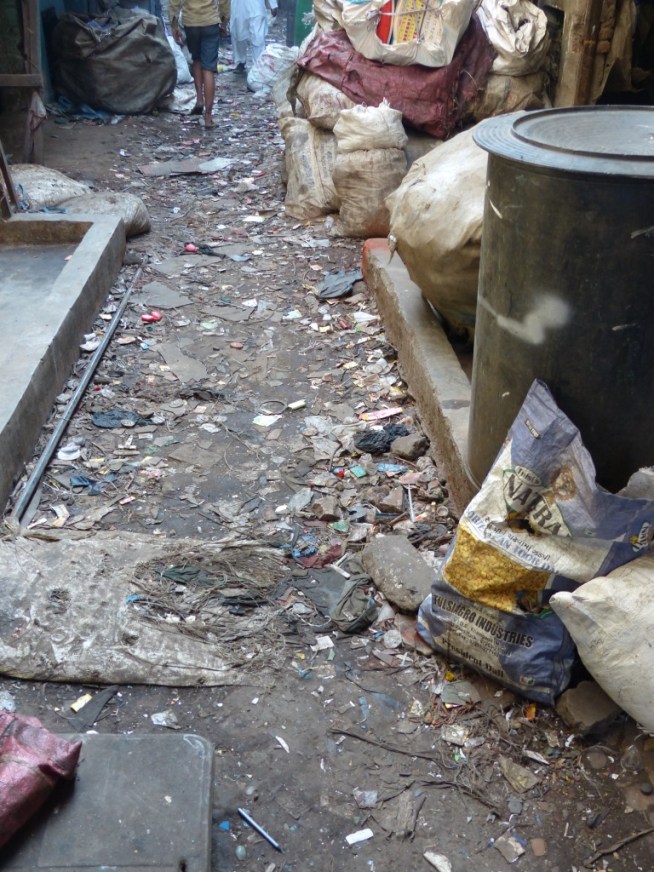
We then crossed over to the much more polluted section of the slum where a massive amount of material is recycled. The air here was chemical-laden and the walkways littered with debris/small bits of plastic. In this area of the slum, roughly 250,000 workers sort, break-down, wash, melt and then re-formed plastic waste sourced from all over Mumbai. Heavy machinery and furnaces spew out lots of noxious fumes, the air is noticeably thicker and there lots of puddles of dirty water to avoid. As we peered into the doorways, we could see workers toiling away in dark spaces or catching naps in their small living spaces. No photos are allowed in this area either, but every now and then, Ida would let me snap a few that provide a sense of this more industrial, dirtier and poorer part of Dharavi slum.
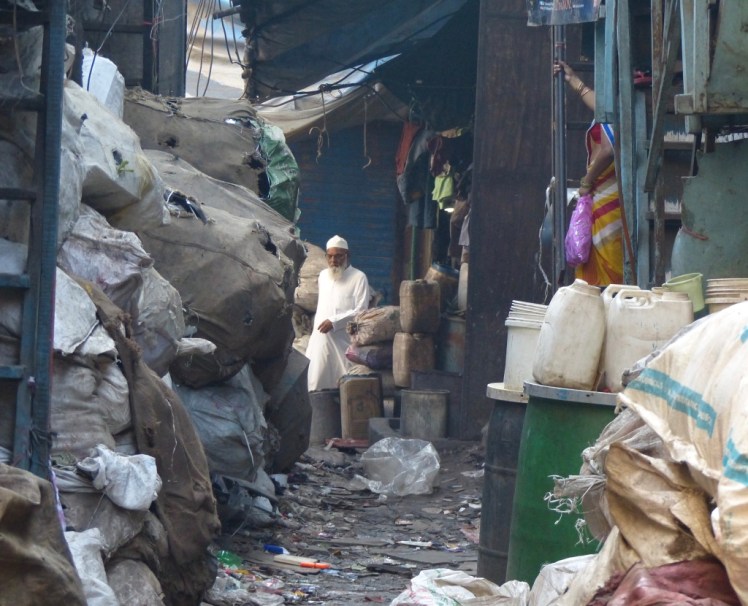
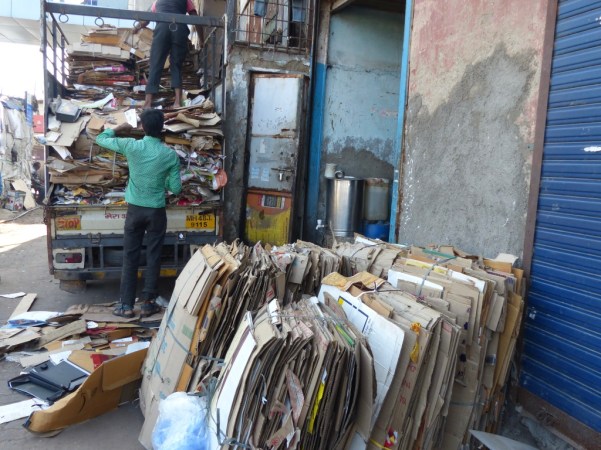
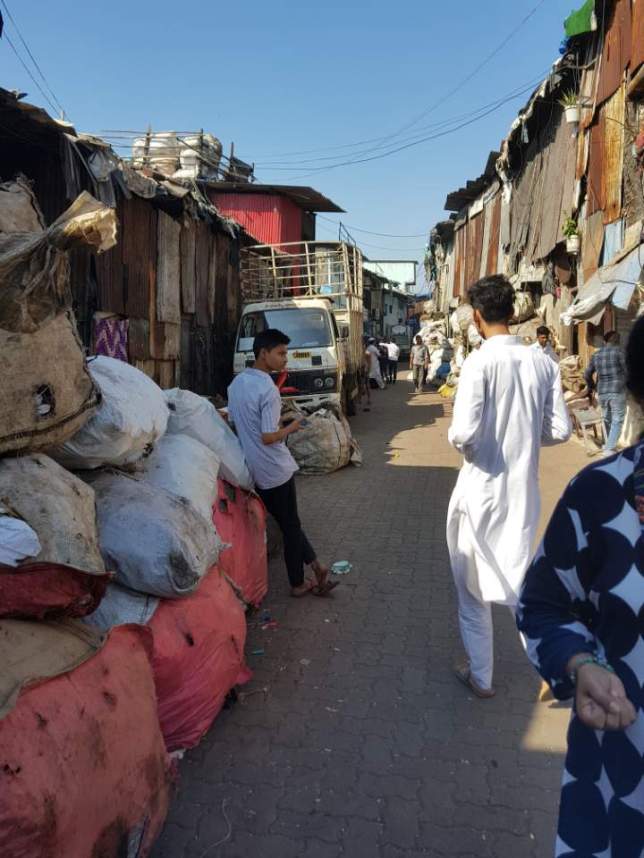
Along some of the wider market alleys, we passed groups of schoolchildren, many of whom asked us to take their photo and then show them the image on our cameras. It would have been wonderful to have a Polaroid camera here to leave them with an actual photo. The boys loved hamming it up (just like someone else!) as you can see below.


Together, the plastic, aluminum, pottery, textile, pampadam industries all generate an estimated $1 billion annually. Until just recently, there was also a vibrant tanning industry run by a predominantly Muslim population. However, in June this year, President Modi, a vegetarian Hindu himself, called for a nationwide ban on the sale and slaughter of cattle. The declaration resulted in a complete closure of the tanning and soap production areas, leaving behind wide open spaces within the otherwise crowded and cramped slum community. Modi’s ban remains very controversial for the beef eating Muslim and Christian populations who feel the “secular” government of India has overstepped its authority.
We grabbed some snacks after our long, but very stimulating morning. Can you tell which one is made with chia seeds, glass noodles, mango sherbet and ice and which was felt distinctly American?


We nabbed some pool time back at the hotel in that late afternoon, did some more yoga and took a curry break, opting for an italian dinner instead.
We decided to make the most of our last day and tried not to think about the night flight, with a changeover in Hong Kong, ahead of us. Ida had suggested a visit to Elephanta Island which is accessible via ferry’s leaving from the Gate of India. After two days exploring crowded Mumbai, spending some time on the water sounded attractive to us. The shipping traffic was interesting to see and the winter sun not too scorching hot.


Like everyone else, we rode the silly little choo-choo train from the port to the entrance area which was noisy, smelly and sloooooow. It felt a bit like Disneyland gone bad. Bill was THRILLED to find a Diet Coke and cheap sunglasses to replace the one’s he’d left in the hotel lobby.


We walked up some stairs under a covered walkway filled with tourist trinket shops to the entrance to the large temple carved into a mountain. Originally discovered in 1630 by Portuguese merchants who were drawn to the large elephant (most probably an image of the Hindu god Ganesh but it has since been destroyed) sculpture on the shores of this island, decided to drop anchor and explore this small island. They were amazed to discover a huge Hindu temple built-in cave under the island’s mountain. Using only crude hand tools, generations of Hindu monks carved this amazing temple honoring the Hindu god Shiva between the 5-7th centuries. Work began at the top of the mountain with the construction of 36 massive pillars. 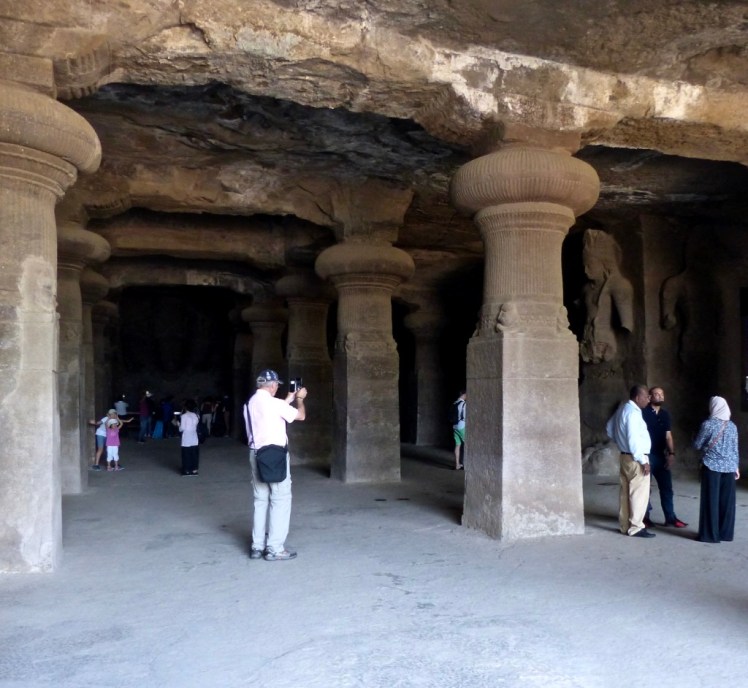 Excavation of the interior space to create 9 separate caves followed. Within each cave there are intricate carvings depicting important moment’s in Shiva’s life. Most of the reliefs were damaged or defaced with little or no attempt at repair. There are various theories as to who caused the damage, but Ida shares the popular belief that the Portuguese deliberately defaced these non-Christian icons, using them as target practice. The carved figures were nonetheless beautiful and we enjoyed all the stories Ida shared with us, especially since there wasn’t ANY SIGNAGE at all. Lest you think I’m about to launch into a Hindu Shiva lecture, I will allay your fears and leave you with just a few highlights!
All the millions of Hindu gods stem from 3 main ones: Brahma (the creator), Vishnu (the preserver) and Shiva (the destroyer…of evil things). In addition to paying homage to these three main gods, all Hindus also worship a family god that is passed down from generation to generation. At anytime, for any reason, one can also “switch gods”, choosing to favor/pay special honor to the one who best suits his/her situation.
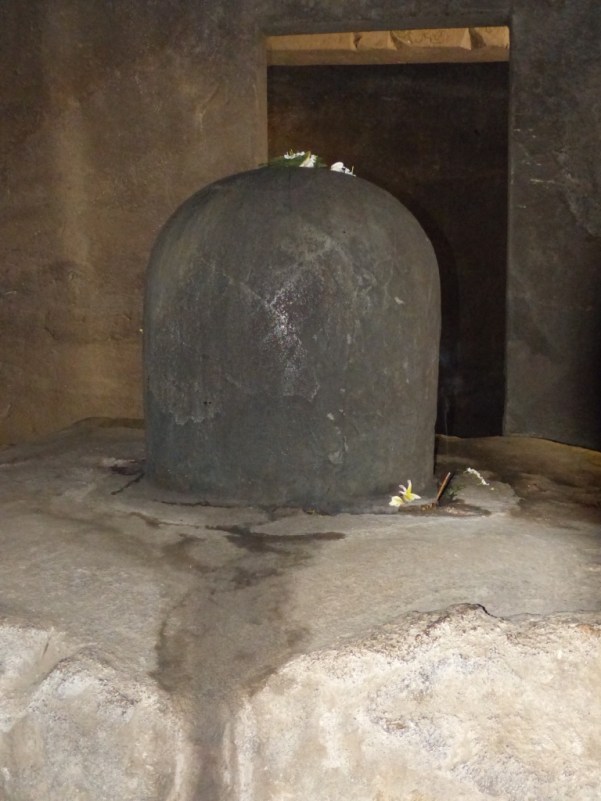
One of the most popular sites at this temple is the central shine featuring a huge Shiva’s Lingam (a symbol of fertility…can you guess why in photos below?). Many visitors leave offerings here instead of posing proudly, but then again maybe Bill has reason to do just that!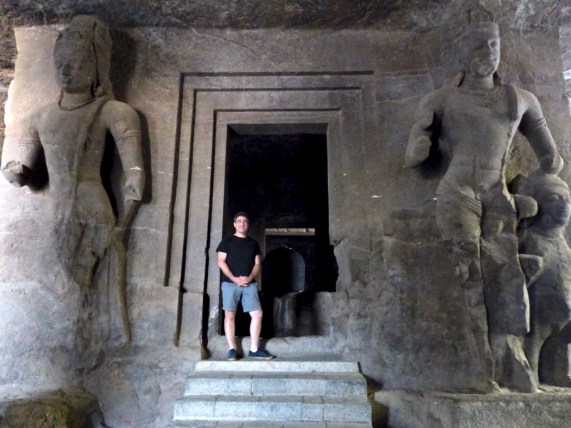
We lingered awhile to admire the carving of Shiva below depicted as both male and female to signify the interdependence of both masculine and feminine elements of the universe. 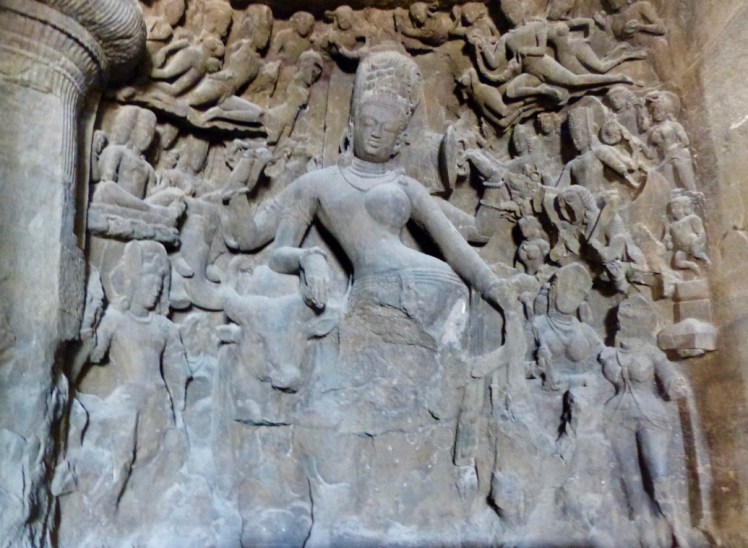 Ganesh, Shiva’s son and god of wisdom and good luck, too garnered our interest and Bill now has a Ganesh t-shirt in his collection. According to Ida, almost every business and school has a statue of Ganesh at its entrance.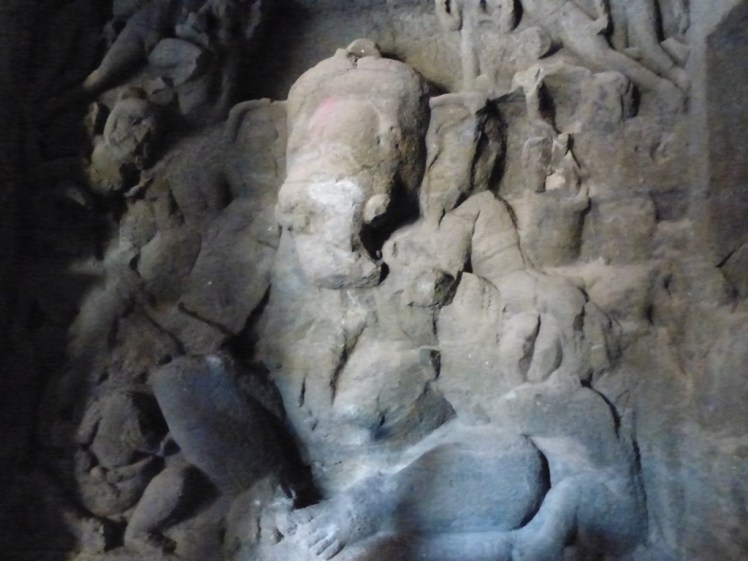
By the time we rode the ferry back, the hot Indian sun had begun to take its toll on us as did the lack of food. Upon our return, we scarfed up the “high tea” nibbles on offer in the hotel lobby, headed to the pool for some late afternoon reading and tried not to focus on our 2AM departure and long trip home through Hong Kong. As we now know well, sleep deprivation doesn’t kill you and the rewards are WELL WORTH IT!!
 seoulfulsojourn.net