Perhaps appropriately, we visited Vietnam during the Tet Holiday which is how the Vietnamese refer to the Chinese Lunar New Year, the country’s most important and joyful holiday each year. Previously, I had only associated the word “Tet” with the huge military campaign (Tet Offensive) launched by the North Vietnamese Communist forces and the Viet Cong in January 1968 that resulted in many, many casualties on both sides of the conflict. Launched on the Tet Holiday, the scale and surprise of this well-coordinated attack shocked the US and its allies, as well as the American public who were under the impression that it was winning the war. In fact, until we visited Vietnam, I was completely unaware of the positive connotation of “Tet”.
Koreans generally call this holiday the Lunar New Year holiday, omitting “Chinese” perhaps on purpose. In Seoul, it was apparent that a lot of the young adults, students and families were travelling to their more rural “hometowns” to spend a night with grandparents and extended family since trains/planes/subways were jam packed. Rather than stay in cold Seoul, we decided to spend the long weekend in Vietnam, a country which we felt we should visit while in the Far East given the War’s indelible mark on our country. Also, remember that we are still Dead Heads at the ripe ages of 52/53 so the Vietnam War’s influence on music was also a compelling reason for us to check out this country which is only a 5 hour flight away from Seoul.
Being the ditz and “piss-poor” geography student that I am, I somehow confused Hanoi and Ho Chi Minh (formerly Saigon but now ONLY referred to as the namesake city of the former great leader who unified Vietnam…more on this later). Based on the Hanoi weather forecast I researched, I told the “troops” to pack for mid-60 degree weather, only to land in HOT Ho Chi Minh City which is a good 600 miles south/2 hr. flight away from Hanoi. The warm weather was a pleasant surprise at least, although we did have to “recycle” our shorts/tees a bit. Perhaps this adventure in the Far East is one giant “experiential geography lesson” for this ignorant NJ housewife….?
We stayed at the Park Hyatt which is centrally located, offers good dining options, has a nicely landscaped pool on the roof where one doesn’t notice the city hubbub, a gym and spa for massages (and yes, we all got one!) and very comfortable rooms. We highly recommend this hotel if you visit Ho Chi Minh City. The hotel also arranged for us to tour sites along the Mekong Delta and Cu Chi Tunnels with “Sunny”, yet another wonderful guide who undoubtedly enriched our visit to Vietnam.
In Vietnam, the Tet Holiday officially lasts for 3 days but most everyone takes the entire week off according to Sunny. Our hotel was full of tourists like ourselves, but the city traffic was light and we felt lucky to witness this celebratory time. As you can see from the pictures below, the hotel and city streets were all decorated for the Tet Holiday with flowering fruit trees welcoming the advent of spring and the New Year. 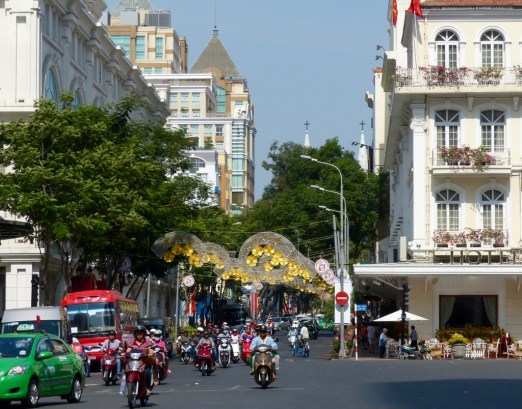
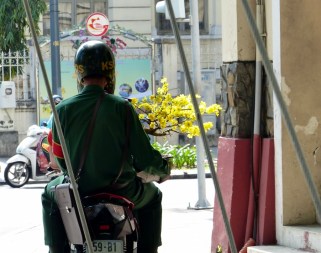
 Everywhere we saw Vietnamese markets selling, and customers buying, yellow flowering apricot, peach and kumquat trees that were then scooted home on motorcycles. In the Chinese tradition, red gift envelopes with money (generally only small token amounts) are hung on the trees to honor/thank/wish luck to relatives, teachers, superiors and it was cute to see how excited our 20+ year old waiter was for the envelopes…a bit like a child at Christmas time!
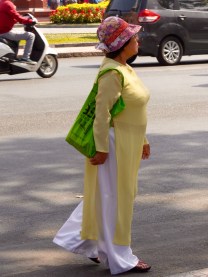
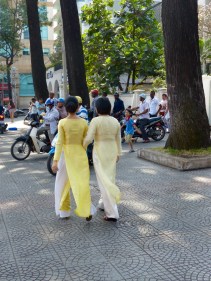
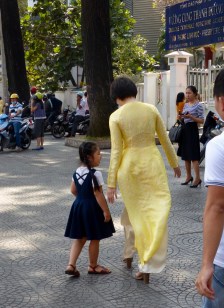
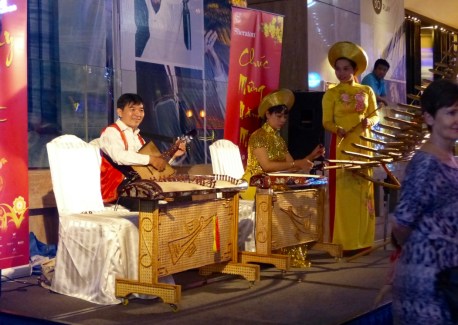
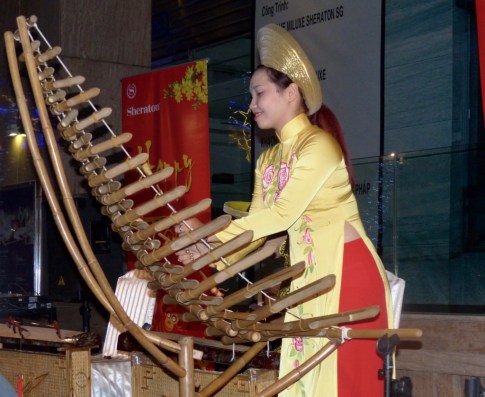
Before the holiday, the Vietnamese clean everything thoroughly…houses, shops, cars…get haircuts, etc. all in an effort to welcome in the New Year. We could see a bit of the cleaning frenzy before shops closed for the celebrations. Many Vietnamese chose to dress in long pale yellow dresses as they strolled the streets and several of the bands playing on the Giao Thura (New Year’s Eve and the most sacred point of time) were also dressed in yellow.
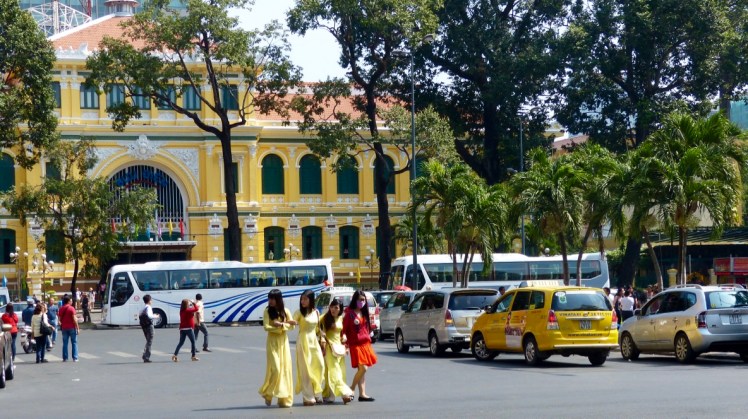
The evening of Giao Thura, Bill and I checked out the street musicians and traditional Vietnamese instruments, none of which were remotely familiar. The city’s main flower market was a gathering spot for many families. This pedestrian street had various floral displays commemorating the advent of spring and the Year of the Monkey (some more garish than others…but check out the Citibank sign behind Mr. Monkey…a highlight for Bill!) At times, it felf like a small, Vietnamese version of the Philadelphia Flower Show which I am missing for the first time in years.
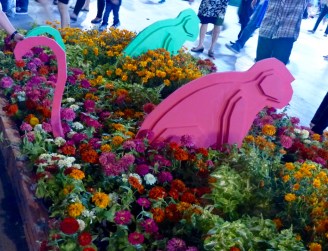
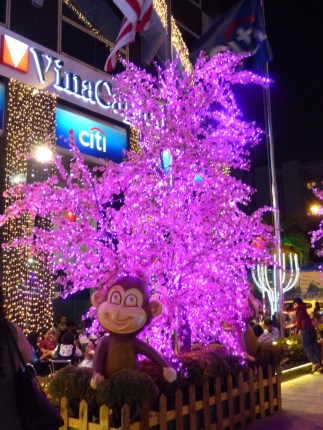
There was a wonderful fireworks display at midnight…or so we were told since we were sound asleep…of course! Daphne and Zoe elected to skip the Tet festivities all together, preferring spa massages and room service.
On our first day of touring with Sunny, we drove an hour outside of Ho Chi Minh City for a tour of the Mekong River Delta. Bill and I pelted Sunny with questions about Vietnamese history and culture the whole ride. Sunny provided lots of facts and perspective on how, in general, the Vietnamese people have put the past behind them, and now welcome American, French and any other tourists/businesses. Certainly, this is very different from how Koreans view their enemies of old, particularly Japan as we are reminded by the daily articles on Japan’s refusal to apologize for the abuse of Korean “comfort women” years ago. We drove through rice paddies in the countryside farms, each with a pagoda to worship ancestors and the land, and thought of our Princeton friends, the Powers, who biked through rainy rice paddies years ago.
We fortunately had warm, sunny weather, but due to the holiday we did not go to the giant floating market on the Mekong river. We did however take a boat tour on this very muddy, grey-brown river which surprisingly is full of very fertile aleuvial soil. This was hard to imagine as you can see by the “less-than-clear blue” water in the pictures below. During the rainy season, the water is even murkier!!!!


The river mud/soil is highly valued and great efforts to prevent erosion were apparent on the riverbanks. Lots of fruit (much of which was unfamiliar to us) is grown alongside the Mekong River and many of the long barges have floating fisheries underneath them where catfish, crabs, etc. are “harvested” for sale throughout the country and beyond. It was interesting to learn from Sunny how the Chinese aggression in the South Seas is affecting the Vietnamese fishing industry today. Large Chinese fishing boats are dominating the deeper waters and posing a danger to the smaller traditional Vietnamese fishing vessels, thereby driving the Vietnamese closer to shore where there are fewer/smaller fish. Yet another example of how China is “flexing its muscle” in Asia I’m afraid.
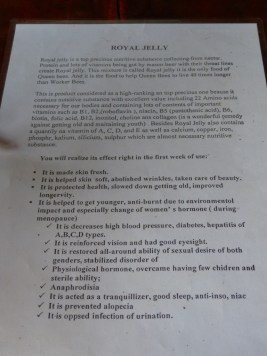
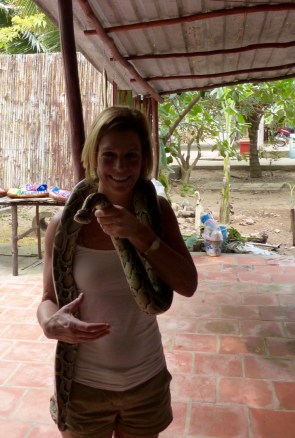
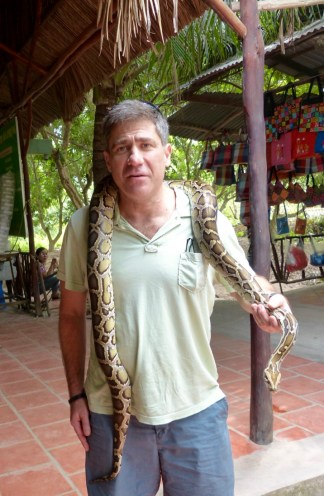
We stopped off at a farm that harvests bee pollen and queen bee jelly for ALL THE COMPELLING reasons listed on the sheet below. Like true tourists, we bought some queen bee jelly which was delicious there, but is decidedly AWFUL tasting now that we are home so I may forego all the benefits and chuck the jelly despite having paid $20 for this elixir. Bill and I were “lucky” enough to hold the “pet” boa constrictors at this farm as well, much to the surprise of Daphne and Zoe who, like their grandmother Libbie, were cowering in fear!
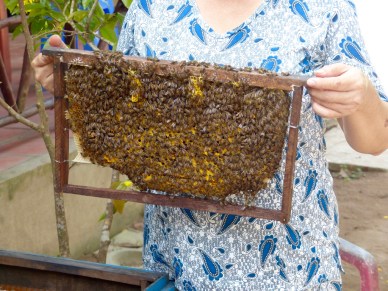
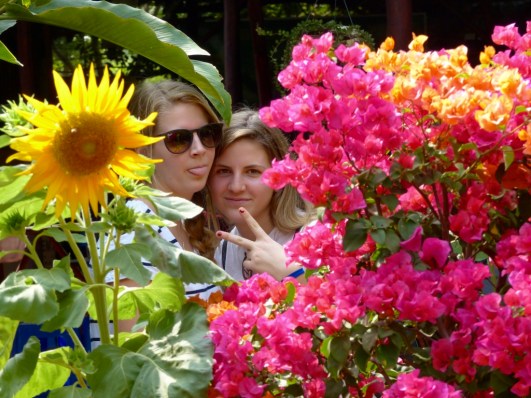
We walked through the jungle alongside the riverbanks to a coconut farm and learned how the fruit is processed into candies, lotions, liquor, etc. Again, some tourist purchases were made, more successfully this time. We stopped off at a cafe to snack on dragon fruit, pomelos, watermelon, jack fruit and longans (small fruit that when peeled resembles a large eyeball but is quite delicious!) while enjoying local music. 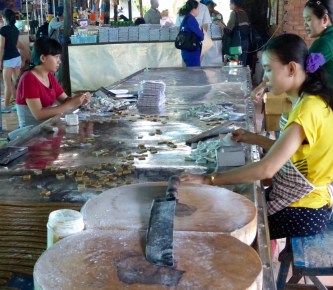
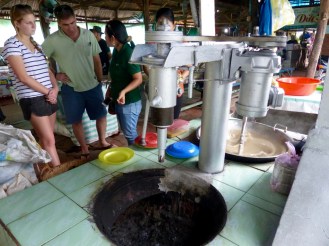
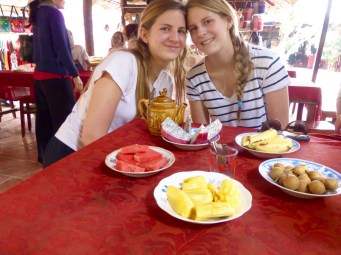
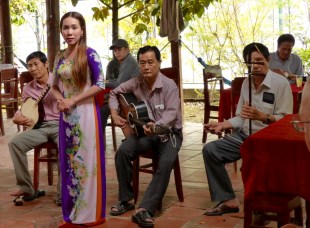 Much to our surprise, Sunny jumped up and sang a traditional love song…a guide with many talents! We also saw how rice is cooked and then made into the rice paper that is essential to all the delicious fresh spring rolls we consumed on our trip. Generally, we found the food much less spicy that the Korean and Thai cuisines; Daphne loved this while my “old” tastebuds found the cuisine a bit too bland. The variety and different ingredients we tasted over the long weekend however were a very welcome change from the rather repetitive and limited Korean fare.


Hammocks are everywhere in Vietnam! Boat captains lounged idly in them as we motored by, Daphne and Zoe enjoyed a rest after lunch at a restaurant and in Ho Chi Minh city, we saw several bus drivers resting in hammocks suspended in the luggage compartments.


It was peaceful to be on the water after living for so many months in the bustling city of Seoul. We particularly enjoyed the smaller canoe ride through the narrow canals where we could see star anise fruit growing, ducks swimming and NO crocodiles…much to the relief of Zoe! 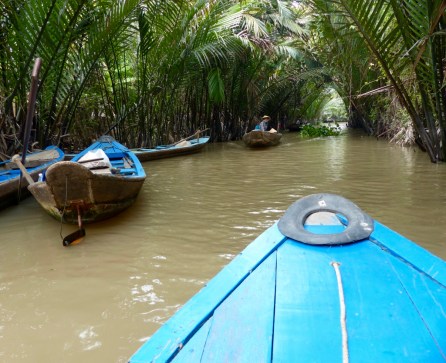
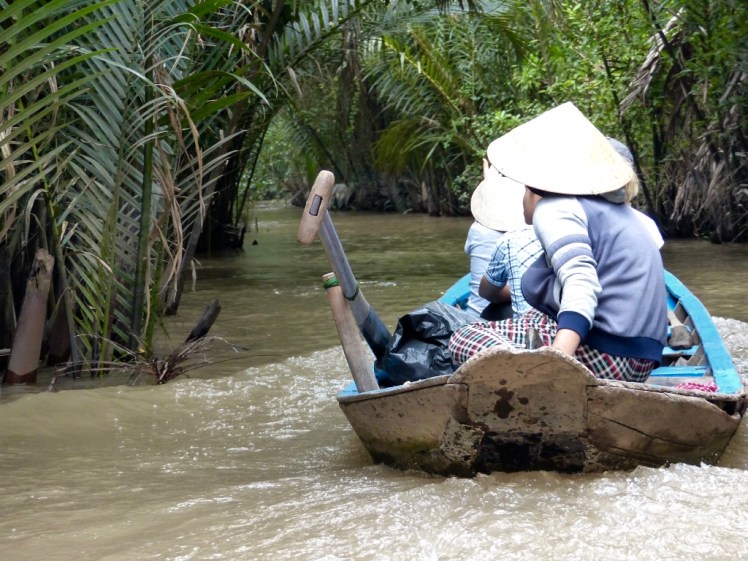
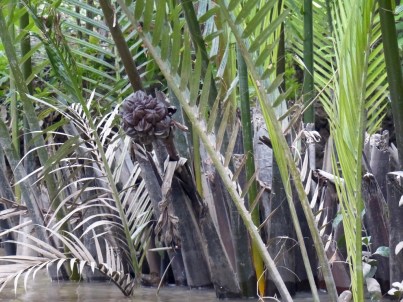
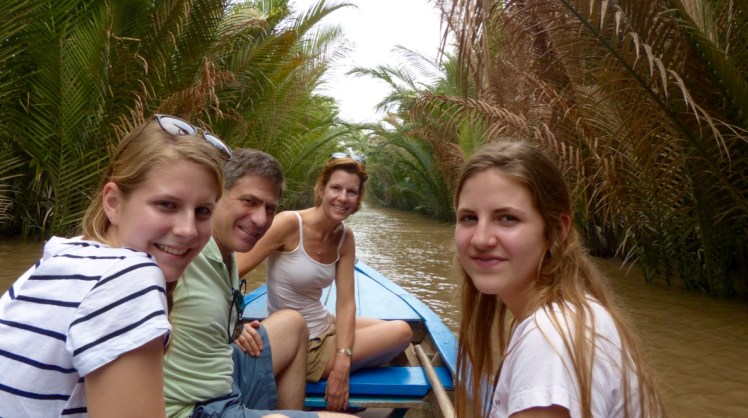
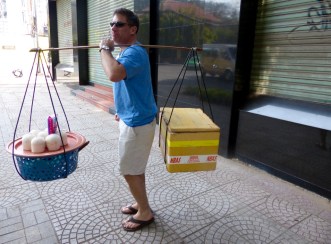
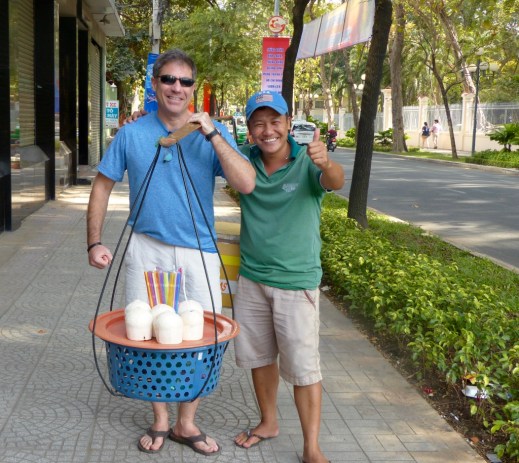
The next day we decided to explore some of the sites in Ho Chi Minh all by ourselves since most of them were within walking distance. Surprisingly and contrary to what is true in the U.S., most of the government buildings and museums were open during the Tet Holiday which is a reflection of how vital tourism is to the Vietnamese economy. We enjoyed our stroll along a tree-lined park near the cathedral and in front of the Reunification Palace and sipped on coconut milk we bought from street vendors. “Lucky Bill” got to pretend he was such a vendor for a brief moment before he conceded that the burden is in fact quite heavy.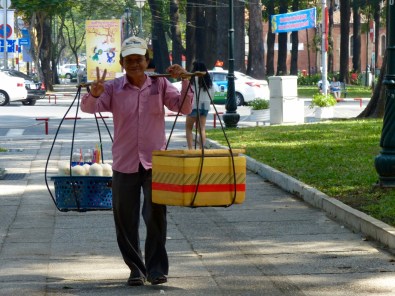
 We had a wonderful lunch at a nice café called “Au Parc” which, again, we recommend to anyone traveling to Ho Chi Minh City. A highlight for me was finding GOAT CHEESE on the menu…something I’ve yet to find even in Seoul’s fanciest cheese shops. There is no word in Korean for “cheese” which kind-of says it all; it is, in fact, an adopted English word, pronounced “cheese-ew”, like so many others (“Kaw pi”, “Kew ri se tew ma sew”, “han dew po new”, “Dah pew ni”, “Ba sew kew Rob in sew ews” which are coffee, Christmas, handphone, Daphne and Baskin Robbins for those of you who need assistance!). Just over-pronouce every syllabel and you’ll get the hang of it…or come visit?!!
As we walked around, it was very apparent to us how diminutive in stature the Vietnamese people are. Not only were all of us “Stanton shrimps” taller than EVERYONE around us, but we towered over many adults. Even ubiquitous plastic stools outside simple street cafés like the ones we see in Seoul were smaller in Vietnam than Seoul. Sunny, our guide, was definitely well under 5 feet tall. Sadly, this is a reflection of the poverty of the country and the impact the years of French occupation and War had upon its population. The triangular straw hats with kerchief chin straps were visible on every street as were hoodie sweat shirts and bright floral clothing. We welcomed the colorful change in “fashion” from Korea’s love of black, grey, white, navy and very muted colors. Loud speakers on the front of motorcycles allow motorized vendors to attract customers…clever..and a bit like the loud speakers on fish trucks in Seoul that advertize…?…who knows what in loud Korean!


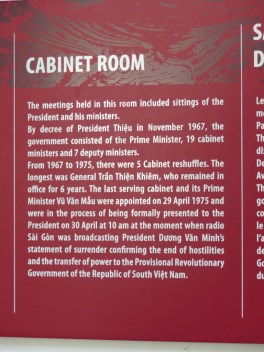
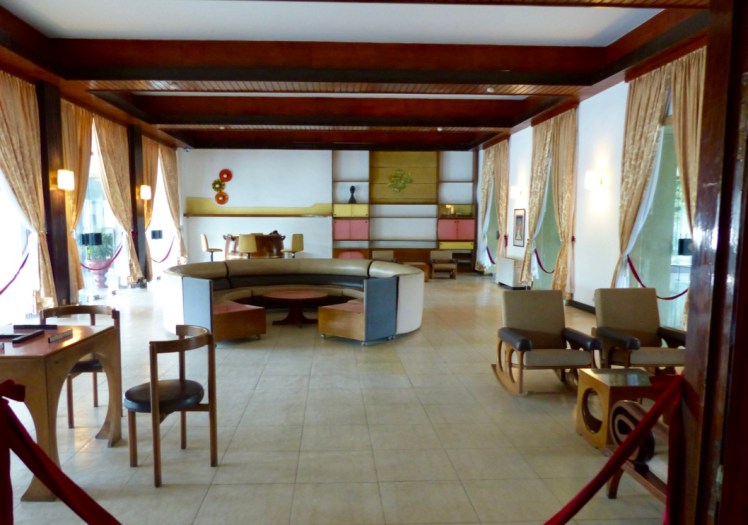
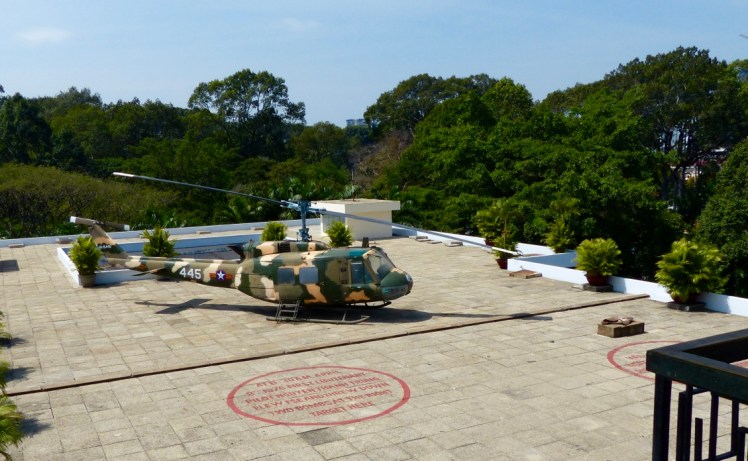
Daphne and Zoe learned a lot about the Vietnam War during our visit. Much to our surprise, this conflict is referred to as the “American War” by the Vietnamese people and it is presented in a very different manner than it is in our American history books, museums, etc. This was quite a shock to all of us and it was a bit hard to stomach at times. Walking through the Reunification Palace was a bit like being in a time-warp, as all the decor was from the 1960s as you can see from the “funky/cool modern” furniture in the game room of this palace. Security was mellow, almost non-existant, and we were allowed to bring in our coconut drinks and sip them as we toured the various rooms where key military and diplomatic decisions were made during and after the War. Today, the Palace is only used for ceremonial purposes. On the roof, there were big red circles marking where bombs had fallen on the palace during the Fall of Saigon. 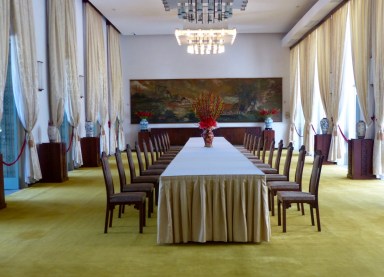
Afterwards, we set out for a lacquerware shop friends in Seoul had recommended we visit. While the shop certainly catered to tourists it was nonetheless authentic and very interesting, as we were able to watch the craftsmen working with these traditional materials and ask questions (me…of course!) about the process. As you can, see some workers were working harder than others….Basically, a design is first etched onto the work surface, resin is applied as “glue” and then either tiny pieces of broken duck egg shells or mother-of-pearl enamel are applied. Multiple sandings and layers of shellac follow and eventually, after almost 3 months, the finished product (painting, tray, box, etc.) is ready. Some of the designs are very traditional with representational themes and muted tones, while others were quite modern, abstract and colorful. 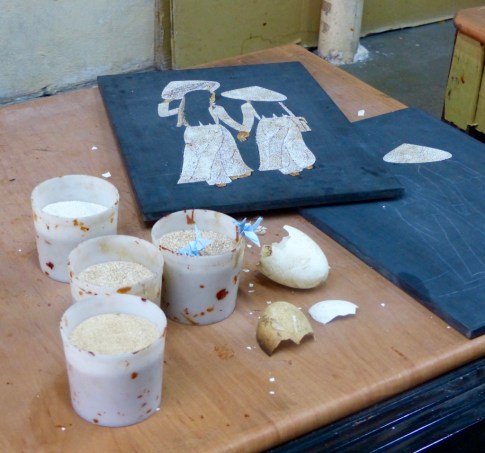
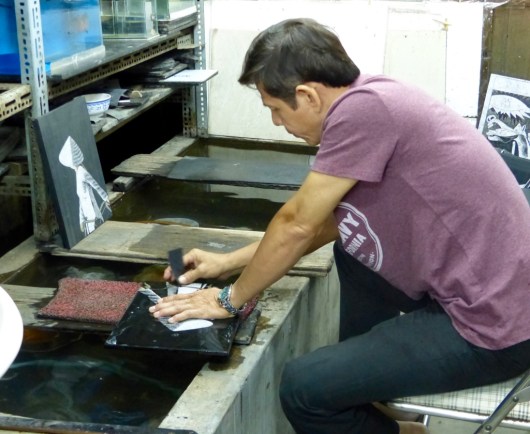
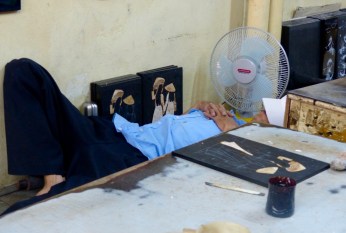 We were definitely drawn to the items that depicted typical Vietnamese figures in straw hats, on bikes, working in rice paddies, etc. and struggled to understand the appeal of a copy of Van Gogh’s “Starry Night”, for example…but to each his own as we all well know. After considerable deliberation and some successful negotiation (by Bill, the master!) we all purchased some wonderful items that will forever remind us of our trip. Again, we would recommend a visit to this factory if you find yourselves in Ho Chi Minh City.
Our final stop in the city was the War Memorial Museum. We had been warned by friends that the exhibits would be quite biased and anti-American. This was an understatement and came as quite a shock to all of us. I don’t think Daphne or Zoe will ever forget some of the ghastly photos of victims of the “American War” on display in this museum. The rooms dedicated to the defoliant Agent Orange and the effect of napalm were particularly upsetting and a reminder of how truly awful ANY war is for all parties involved. I did not take any pictures here as those that were on display are indelibly etched in our minds. While this museum was a somber and eye-opening experience for all of us, it was also an important one that helped us better understand how far this country has come since the war and why it so reveres Ho Chi Minh, the leader who unified the Vietnamese people and ended 10 years of conflict.
Throughout the city, in fact, there are what we first thought to be typically communistic propaganda posters like ones we associate with other authoritative/dictatorial regimes and repressive governments. Here is an example.
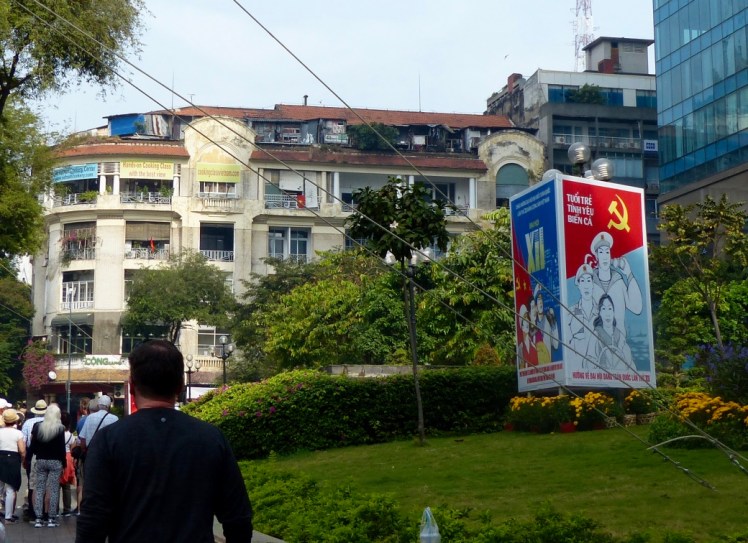 By the end of our stay however, we came to understand that the Vietnamese are very proud of their Communist form of government and believe it to be responsible for the country’s emergence out of poverty, etc. Aside from some corruption, the communist government functions well, there is peace and growing prosperity, both of which eluded this country for so long. All denominations of money have just one face…that of Ho Chi Minh…and it is a smiling, gentle image very unlike the stern, cold ones we see in our history books. By the way, there are no coins in Vietnam which is perhaps a first for us in all our travels.
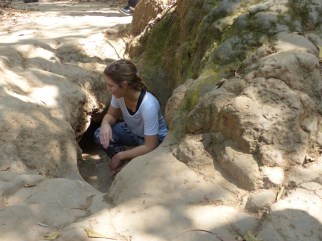
For our final day in Vietnam, Sunny took us to an area outside of the city that has preserved the infamous underground tunnels used by the Viet Cong and other guerrilla North Vietnamese soldiers who lived/fought below the 17th parallel, wreaking havoc on the South Vietnamese/Allied Forces during the War. The Cu Chi Tunnel area we toured consisted of 220 km of tunnels, under 17 acres of land that connected 6 different villages, all underneath the South Vietnamese and American forces. Originally built over a period of 25 yrs. during the French occupation of Vietnam, these secret tunnels were TINY. Today, many of the openings and tunnels have since been enlarged to allow tourists to descend into some of them. “Ever-ready Bill”, volunteered to descend into one opening and it was tight, as you can see! We were often near another group of very large, Middle-Eastern tourists who “skipped” this opportunity to go into the tunnels, understandably most of them were in long robes. The very same male tourists, however, happily volunteered to fire off the AK-47 firearms that were available to shoot at the firing range a bit later on the tour. Although Daphne and Bill were interested in this activity, the wait for shooting practice was too long so we moved on.


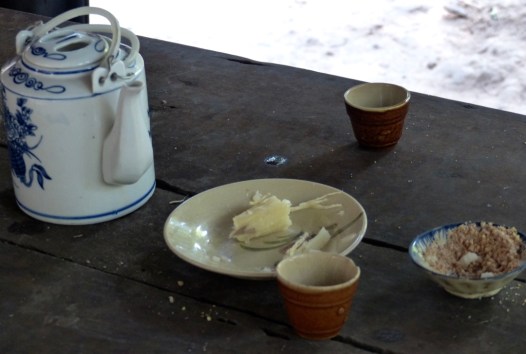
The tunnel design was fascinating and ingenious. Sunny explained how for nearly 10 years, guerrilla fighters, mostly male, lived underground while their wives and family kept up the illusion of simple villagers above ground, bringing them food and other supplies occasionally. The soldiers lived mostly on a diet of rice and boiled taro (tapioca/cassava) root which grows in the surrounding jungle. We tried some of the tapioca and it was tasty, though mostly due to the sugar, salt, crushed peanuts into which we dipped the otherwise bland root. Air was allowed to flow into the tunnels through hollow bamboo shoots that were placed in termite mounds, all of which was cleverly camouflaged as part of the natural jungle surroundings. A mixture of ground chilli peppers and garlic was placed near these termite mounds to deter German shepherds used by the opposition to seek out these fighters. The warren of tunnels had meeting rooms, dining halls, medical stations (NONE OF US would have wanted our wounds attended here btw!), kitchens, etc since these soldiers truly lived underground for nearly 10 years during the long War. The smoke from kitchen fires was cleverly released through small ground vents in the early morning or at dusk so as to appear as fog to helicopters flying overhead. 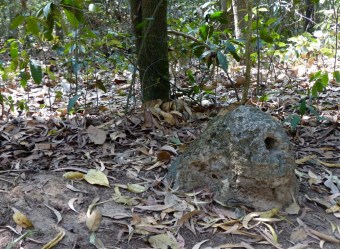

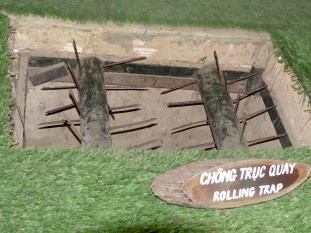
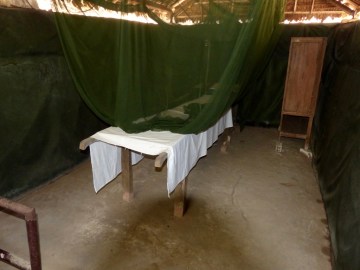
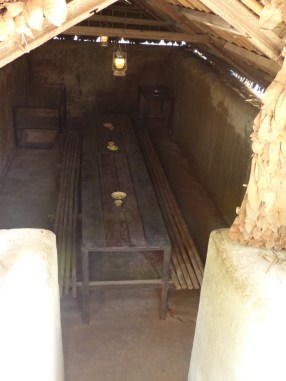
 While it was gruesome to see the infamous makeshift traps and bomb devices used by these guerrilla fighters, it was also disturbing to imagine how these poor villagers subsisted for a decade. The casualty rate for the Viet Cong in the Cu Chi tunnels was very high…of the 16,000 fighters, 12,000 were either injured or killed during the War. Allied bombings, malaria, poisonous insect infestations, and malnutrition all contributed to this high fatality rate.
Without a doubt, our lasting impression of our time in Vietnam is one of MOTORCYCLES. They are zooming around all over and absolutely the dominant form of transportation. Everywhere, there were entire families riding on one small bike; in fact, almost never was there a single driver and frequently there were 3 and 4 folks perched on these bikes. Again, we were reminded of the small stature of the Vietnamese people, as certainly one couldn’t begin to fit 2 Americans (let alone, Dutch) on these bikes. Most surprising and alarming of all though is that NONE of the youngster wear helmets??!!! We asked Sunny about this and she cheerfully explained that until an infant/toddler reaches the age of 2, his/her neck is too weak to support the weight of a helmet and therefore it would be “dangerous” to wear. AND, there are lots of accidents daily (we saw 3 ourselves) since the city is full of rotaries without any traffic lights/signage. 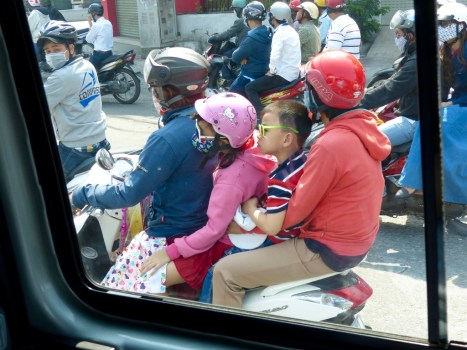

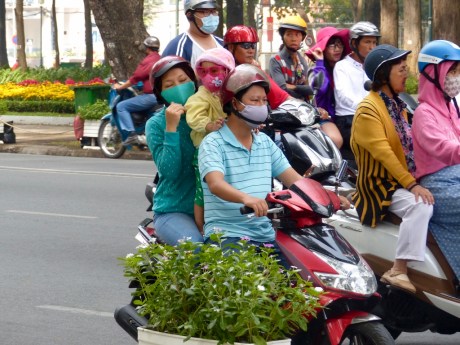
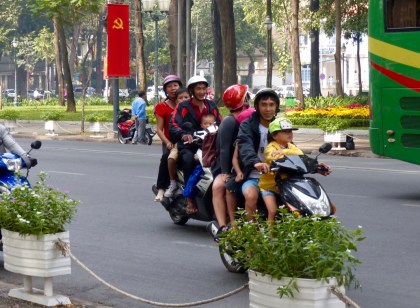
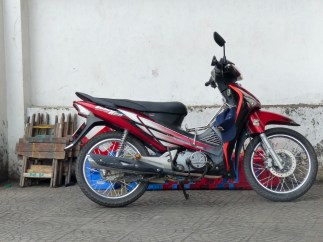
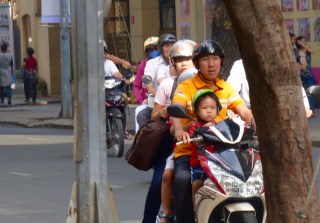
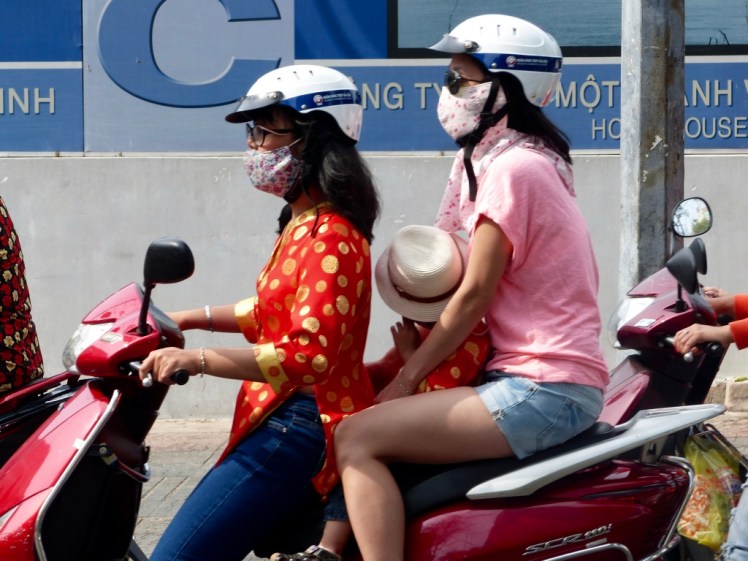 It wasn’t until this trip, however, that we realized the economic prosperity/development of a country in Asia is directly related to the dominant mode of transportation. During our visits to Thailand and Vietnam, we were struck by the millions of motorcycles, certainly relative to Seoul and Hong Kong. Now we get it! First one walks, then one rides a bicycle, and then a motorcycle becomes affordable and the best way to move around/transport goods. Finally, one can afford a car. America didn’t follow this progression but a lot of Asian countries are/have as we have seen first hand.
This “fun fact” was confirmed recently when Bill went on a business client call with the single distributor of Harley Davidson motorcycles here in Seoul who is a 45 yr. old native Korean but decidedly atypical in many respects. He broke out some of his fine wine collection to share with Bill at 11am, waxed philosophically on several subjects and told story after story of his childhood in Seoul and how much life has changed in just a short period of time. Only 30 years ago in Seoul, motorcycles too were a primary mode of transportation and his family relied on theirs as a small car with a large storage box on the back, like we still see today used by delivery persons. Therefore, Koreans for the most part, associate motorcycles with a lower standard of living/days of the past when the country was much poorer. The idea of a luxury motorcycle, such as a Harley Davidson, is a concept Koreans find wholly unappealing since they are generally striving to afford high-end Mercedes, Maseratis, Porsches, etc. The standard Harley Davidson business model/luxury image was a challenging “sell” for many years in this market, but Bill’s customer is finally having good success. Bill and his biker customer really “hit it off”, in fact to such a degree that Bill had to come home and take a “nap” after the appointment, but the client is certainly a happy Citi customer with an American banker who finally “gets it”!
Here are some of the lessons our family learned from our visit to Vietnam: America has not won all its wars, America has committed atrocities, American democray is not the only successful form of government, Amerian cars are unneccarily large and energy inefficient…and all Asians are NOT ALIKE…as we now well know having been here 7 months!
 seoulfulsojourn.net